
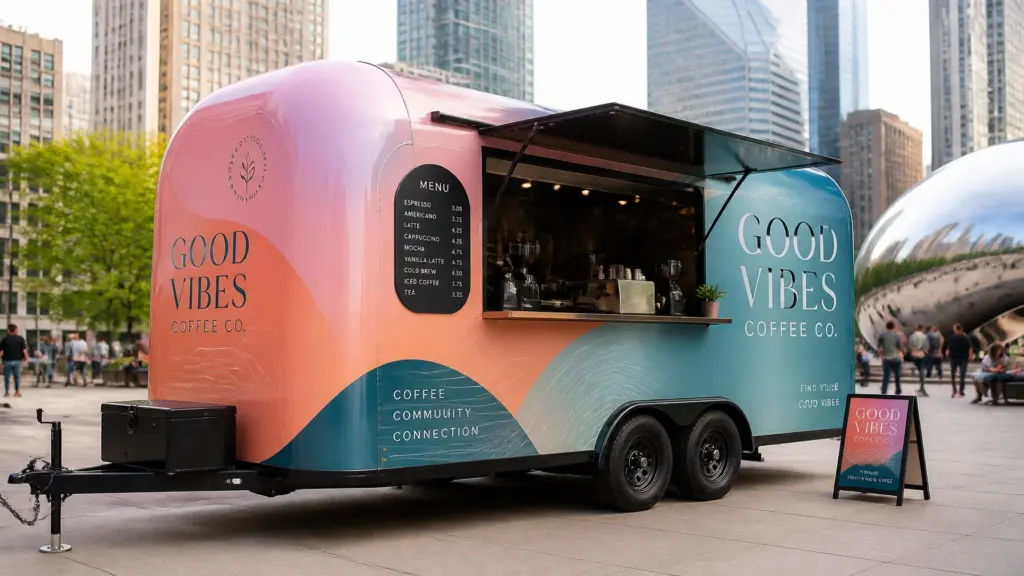
INTRODUCTION Chicago, a global hub of architectural innovation and a cornerstone of the American coffee culture, represents one of the most lucrative yet regulated markets for mobile food and beverage entrepreneurs. As a fast-growing destination for specialized culinary concepts, the Windy City offers a high-volume environment for those who can successfully navigate its dense urban landscape. For the entrepreneur looking to bypass the astronomical overhead of a traditional downtown storefront, a mobile coffee trailer is not just a trend; it is a strategic maneuver into the heart of the city’s busiest districts.
At Pourter, we specialize in engineering high-performance mobile food trailers that meet the rigorous standards of metropolitan centers like Chicago. Whether you are an established brick-and-mortar brand looking to expand your footprint or a new operator ready to make your mark, understanding the local "blueprint" for success is essential. Operating a 5×10 unit in a plaza near the Loop requires more than just high-quality beans; it requires a deep dive into the specific permitting, zoning, and design requirements of the City of Chicago.
Defining the Unit: Why 5×10 is the Chicago Standard
In a city defined by its verticality and narrow streetscapes, footprint is everything. A 5×10 unit is often the "sweet spot" for Chicago operations. This compact size allows for placement in high-traffic urban plazas, near commuter transit hubs, and within private parking lots where space is at a premium. Unlike larger, blocky utility trailers, a Pourter build features sleek, rounded corners and a full-unit brand wrap that transforms a functional kitchen into a sophisticated brand activation.

When designing a unit for the Chicago market, aesthetic integration is as important as mechanical function. City officials and private property owners are more likely to approve units that enhance the visual appeal of the neighborhood. Our commitment to avoiding hard edges and utilizing vibrant, professional wraps ensures that your mobile kiosk looks like a permanent staple of the urban fabric, rather than a temporary installation.
Navigating the Red Tape: MFD vs. MFP Licenses
The first hurdle for any mobile coffee operator in Chicago is determining which license category your business falls into. The City of Chicago classifies mobile food vendors into two primary categories through the Department of Business Affairs and Consumer Protection (BACP):
1. Mobile Food Dispenser (MFD)
Most mobile coffee trailers fall under this category. An MFD license is for vendors who serve previously prepared food that is wrapped for sale, or who dispense beverages like coffee. Because coffee is explicitly listed in the city's code under the MFD definition, trailers that focus on brewing, espresso service, and selling pre-wrapped pastries usually qualify here. The benefit is a slightly lower license fee (approximately $700 for two years) and a streamlined inspection process compared to full-scale mobile kitchens.
2. Mobile Food Preparer (MFP)
If you plan to do more than just brew coffee: such as cooking breakfast sandwiches on a griddle or preparing fresh crepes: you will need a Mobile Food Preparer license. This requires a more intensive process involving fire safety certifications and more stringent health department oversight. The license fee is approximately $1,000 for a two-year term.
For most coffee-centric operations, staying within the MFD category allows you to maximize efficiency while minimizing regulatory friction.
The Commissary and Shared Kitchen Requirement
One of the most common misconceptions for new entrepreneurs is the idea that they can prep and clean from home. In Chicago, this is strictly prohibited. Every mobile food vendor must have a signed agreement with a licensed commissary or shared kitchen.
The commissary serves as your "home base" where:
- Fresh water tanks are filled and grey water is properly disposed of.
- Inventory is stored in a temperature-controlled environment.
- Equipment is deep-cleaned and sanitized.
- The trailer is securely stored when not in use.
When applying for your license via Chicago Business Direct, you must provide the name and address of your commissary. If you are operating an MFP unit, your commissary must be pre-approved by the Chicago Department of Public Health (CDPH) to ensure it meets the specific needs of a high-volume preparation site.
Engineering for the Chicago Elements
Chicago’s weather is legendary, and a successful mobile coffee unit must be built to withstand everything from 90-degree summer humidity to sub-zero winter blasts. This is where the engineering of a Pourter unit shines. When we design bar and beverage trailers, we focus on high-efficiency insulation and climate control systems that keep both the baristas and the equipment functioning at peak performance.

A 5×10 trailer provides just enough space for a high-end espresso machine, grinders, refrigeration, and a multi-sink sanitation system without feeling cramped. By utilizing vertical storage and custom-engineered cabinetry, we ensure that every square inch of the interior is optimized for workflow.

The GPS and Compliance Layer
Chicago is unique in its tech-forward approach to enforcement. Every mobile food vendor is required to install and maintain an active GPS device. This device must be powered and transmitting whenever the trailer is in operation. The city uses this data to ensure vendors are complying with distance restrictions: specifically, the rule that mobile units cannot operate within 200 feet of the entrance of a brick-and-mortar restaurant or another competing food establishment.
Additionally, you must submit a GPS affidavit with your license application. This level of transparency is a cornerstone of the Chicago regulatory environment, designed to balance the growth of the mobile industry with the interests of existing property owners and retailers.
Strategic Placement: Private vs. Public Land
While the idea of roaming the city streets is romantic, the reality of Chicago coffee service is often found in strategic placement.
- Public Streets: Operating on public streets requires strict adherence to parking laws and the 200-foot restaurant rule. You are also prohibited from using amplified music or loudspeakers to attract customers.
- Private Property: Many Pourter clients find the most success by partnering with property owners in the Loop or West Loop. Parking a sleek, branded coffee trailer in a private plaza or an office building's courtyard provides a captive audience of professionals. However, you must have written permission from the property owner to operate on private land.
Final Steps to Launch
Launching your mobile coffee trailer in Chicago is a marathon, not a sprint. The timeline generally follows these key milestones:
- Business Formation: Register your LLC and obtain your Federal EIN and Illinois Business Tax (IBT) number.
- Unit Procurement: Work with Pourter to design a 5×10 unit that meets CDPH standards, featuring rounded corners and a full-unit brand wrap.
- Plan Review: Submit your equipment list, floor plan, and menu to the Chicago Department of Public Health for a preliminary review.
- License Application: File your MFD or MFP application through the BACP portal, including your commissary agreement and insurance proof.
- Inspection: Pass the CDPH health inspection and, if necessary, the Chicago Fire Department safety review.
For a closer look at what we've built for other successful operators, explore our gallery or about us page to see the quality and craftsmanship that goes into every Chicago-bound unit.
A mobile coffee trailer in Chicago is more than just a vehicle; it is a high-performance business tool. With the right blueprint and a custom-built Pourter unit, you can turn the Windy City's morning commute into your most profitable window of the day.