
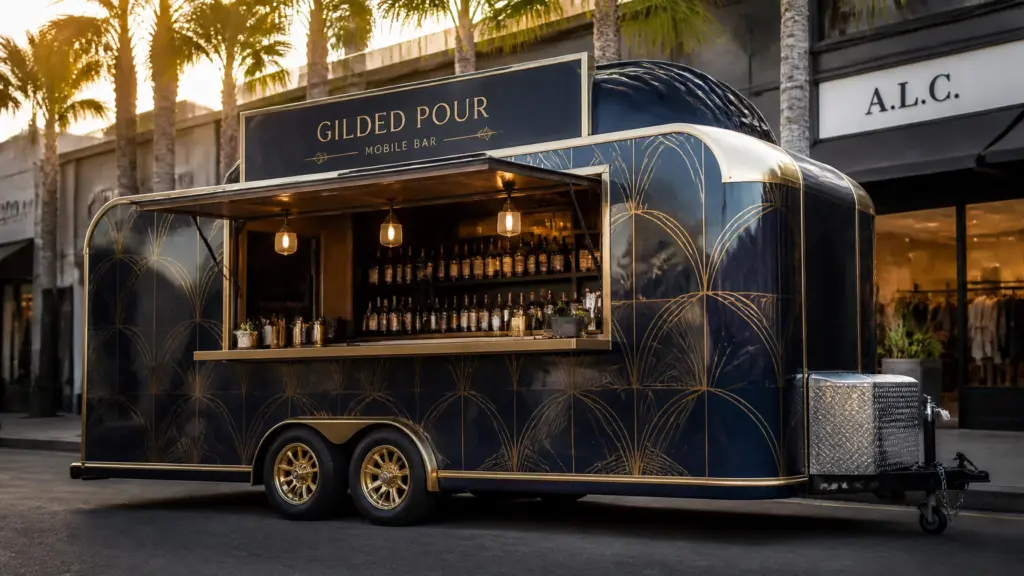
INTRODUCTION. Pourter, a premier manufacturer of custom mobile food and beverage units, stands as a cornerstone for entrepreneurs looking to navigate the complex landscape of Los Angeles hospitality. As the mobile beverage industry experiences a fast-growing surge in Southern California, understanding the intersection of design, health codes, and liquor laws has never been more critical. Los Angeles is a lucrative but demanding market, where the aesthetic of a unit must match the rigor of its compliance. From the beachside events of Santa Monica to the high-end private parties of West Hollywood, the demand for sophisticated mobile bar services is reaching a historic peak. However, before you can pour your first craft cocktail under the California sun, you must navigate a labyrinth of state and local regulations.
The "Dry Hire" Reality in California
In the world of Los Angeles mobile bars, the "dry hire" model is the standard operating procedure. California is a "dry hire" state, which means that mobile units typically cannot sell alcohol directly to consumers unless they are tied to a physical brick-and-mortar location with an existing California ABC (Alcoholic Beverage Control) license. For most entrepreneurs starting out, this means your business provides the bar, the equipment, the staff, and the expertise, while the client: the host of the event: is responsible for purchasing and owning the actual alcohol.
This model is a staple of the industry because it simplifies the licensing burden for the mobile operator. In a dry hire scenario, you aren't "selling" the booze; you are selling the service. This allows a Pourter bar trailer to operate at a private wedding or a corporate mixer without the operator needing a permanent liquor license for the trailer itself. However, even within this model, your staff must be properly trained. As of 2022, all alcohol servers and their managers in California are required to have RBS (Responsible Beverage Service) certification. This ensures that every member of your team is equipped to handle ID checks and prevent over-service, maintaining the professional reputation of your brand.
Navigating the ABC: When You Want to Sell
If your goal is to transition from service-only to actually selling alcohol at public events, the regulatory bar is raised significantly. To sell alcohol from a mobile unit in Los Angeles, you generally need to be an extension of a licensed "home base." This is often a restaurant or bar that holds a Type 41 (Beer and Wine) or Type 47 (Full Liquor) license. Once you have this established, you can apply for "catering permits" or "event authorizations" that allow you to serve off-site.
For many multi-unit or chain restaurants, adding a custom mobile unit to their fleet is a popular way to expand their footprint without the massive overhead of a second physical location. By leveraging their existing ABC license, these established businesses can take their brand directly to festivals like Coachella or local street fairs in the LA area. For the independent entrepreneur, this often means partnering with a local brewery or distillery to act as the licensed entity for public-facing events.

LA County Health Department: The "Mobile Food Facility" Factor
One of the most common misconceptions in the mobile bar world is that if you aren't serving food, you don't need a health permit. In Los Angeles County, this is rarely the case. The LA County Department of Public Health classifies units that handle unpackaged food: which includes ice, garnishes, and fresh juices: as "Mobile Food Facilities."
This classification triggers a specific set of requirements for your unit's construction. To pass an LA County health inspection, your mobile bar must typically include:
- Multiple Sinks: A dedicated hand-washing sink with hot and cold pressurized water, as well as a three-compartment sink for washing, rinsing, and sanitizing barware.
- Proper Surfaces: Non-porous, easy-to-clean surfaces throughout the interior. This is where Pourter’s commitment to high-end finishes and stainless steel integration pays off.
- Commissary Agreement: You must have a contract with a licensed commissary: a "home base" where the unit is stored, cleaned, and supplied with potable water.
Failing to account for these codes during the design phase can lead to costly retrofits or the inability to operate legally in the city. At Pourter, we design with these health department codes in mind, ensuring that the sleek exterior of your trailer is matched by a fully compliant interior.
Design as a Compliance Tool
In a market as visually driven as Los Angeles, the appearance of your unit is your best marketing tool. However, at Pourter, we believe that design also serves a functional purpose. Our units are characterized by their signature rounded corners, a departure from the blocky, utility-style edges seen in traditional trailers. These curves aren't just for aesthetics; they contribute to a more aerodynamic tow and a more approachable, high-end look that fits seamlessly into upscale Los Angeles environments.
Furthermore, our focus on full-unit, sleek graphic wraps ensures that your brand is unmistakable. We move beyond simple "sticker" logos to create a cohesive visual identity that covers the entire unit. In a city where brand activation is a major revenue stream, having a unit that looks like a permanent piece of a high-end venue: rather than a temporary trailer: is a significant competitive advantage.

Momentum: From Concept to the Streets of LA
The transition from an idea to a fully operational mobile bar in Los Angeles requires a clear strategy and a partner who understands the local landscape. The process begins with identifying your business model: dry hire or full service: and then designing a unit that meets the specific health codes of LA County.
The momentum of the mobile beverage industry shows no signs of slowing down. As existing brick-and-mortar establishments look for ways to reach new neighborhoods and entrepreneurs seek to disrupt the traditional bar scene, the mobile unit has become a transformative tool for growth. By focusing on stability, compliance, and high-impact design, you can ensure that your venture is not just a trend, but a lasting staple of the Southern California hospitality market.
When you are ready to take the next step, our team at Pourter is here to guide you through the custom build process. We don't just build trailers; we build compliant, high-performance business assets designed to excel in the most competitive markets in the world.

Conclusion
Navigating the regulations of Los Angeles may seem daunting, but it is the price of entry into one of the most vibrant beverage scenes in the country. By adhering to the dry hire model, securing the necessary RBS certifications, and ensuring your unit meets LA County's rigorous health standards, you position your business for long-term success. With a Pourter build, you gain a partner dedicated to delivering a unit that is as legally sound as it is visually stunning.