
INTRODUCTION
San Diego, a premier destination for sunshine and coastal commerce, serves as a cornerstone of the modern "pop-up" movement. For established brick-and-mortar brands and ambitious entrepreneurs alike, the city represents a fast-growing landscape where retail no longer needs a permanent foundation to thrive. Moving from a traditional storefront to a custom-built mobile unit is a transformative event, shifting the focus from waiting for foot traffic to actively pursuing it in high-volume areas like Mission Beach, North Park, and the Gaslamp Quarter. However, transitioning into the mobile sphere requires more than a great product and a sleek aesthetic; it demands a thorough understanding of the local regulatory framework. In this edition of Ask Pourter, we break down the specific licensing, permitting, and design requirements necessary to launch a successful mobile retail shop in America’s Finest City.
The San Diego Mobile Retail Opportunity
San Diego is a city of distinct neighborhoods, each acting as a localized market with its own demographic and vibe. From the historic charm of Little Italy to the high-energy crowds of the Pacific Beach boardwalk, the opportunities for mobile retail are vast. Unlike traditional food trucks, which have a well-defined path for permitting, mobile retail: often referred to as "boutique trucks" or mobile pop-ups: operates within a more nuanced regulatory environment.
Launching a mobile shop in San Diego is an efficient way to test new markets without the long-term commitment of a commercial lease. It allows brands to maintain a physical presence at major events like Comic-Con, the San Diego County Fair, or the various farmers' markets that populate the county every week. To make this move successful, you must first secure your administrative foundation.

Step 1: Core Licensing and Administrative Essentials
Before your mobile unit ever touches the pavement, there are two non-negotiable documents every San Diego operator must hold: the City Business Tax Certificate and the California Seller’s Permit.
City of San Diego Business Tax Certificate
Any business operating within the city limits, whether mobile or stationary, must obtain a Business Tax Certificate from the Office of the City Treasurer. This serves as your primary business license. Even if your headquarters are located elsewhere, if you are conducting sales within San Diego city limits, you are required to register. This process ensures you are recognized as a legitimate entity and are contributing to the local economic infrastructure.
California Seller’s Permit
Because your mobile pop-up is a retail operation, you will be collecting sales tax. You must register with the California Department of Tax and Fee Administration (CDTFA) for a Seller’s Permit. This permit is free but mandatory. It allows you to purchase inventory at wholesale prices without paying sales tax upfront, while also obligating you to report and pay sales tax on the goods you sell to the public.
Step 2: Navigating Zoning and Land Use
This is where mobile retail differs significantly from mobile food. In the City of San Diego, mobile food trucks have specific land-use regulations that allow them to operate on private property in certain zones with a Mobile Food Truck Permit. For non-food retail, the rules are more restrictive.
The "Special Event" Strategy
Currently, San Diego zoning code does not provide a "general" permit that allows a retail truck to park on any street or private lot and begin selling goods. Instead, most mobile retail shops operate under the umbrella of Special Event Permits. When you join an organized street fair, festival, or community market, the event organizer has already secured the overarching permit for the location. Your mobile unit operates as a sanctioned vendor within that specific event's footprint.
Operating on Private Property
If you intend to set up your Pourter unit on private property: such as a brewery parking lot or a shopping center courtyard: outside of a larger event, you may need a Temporary Use Permit (TUP). A TUP is designed for seasonal or limited-time events at locations where retail use isn't typically authorized. It is essential to work closely with the property owner and the City’s Development Services Department to ensure your presence is compliant with local zoning laws.

Step 3: Engineering for Success: The Pourter Standard
In a market as visually competitive as San Diego, the physical appearance of your unit is your most powerful marketing tool. At Pourter, we have refined our manufacturing process to create units that don't just function: they command attention.
The Importance of Rounded Corners
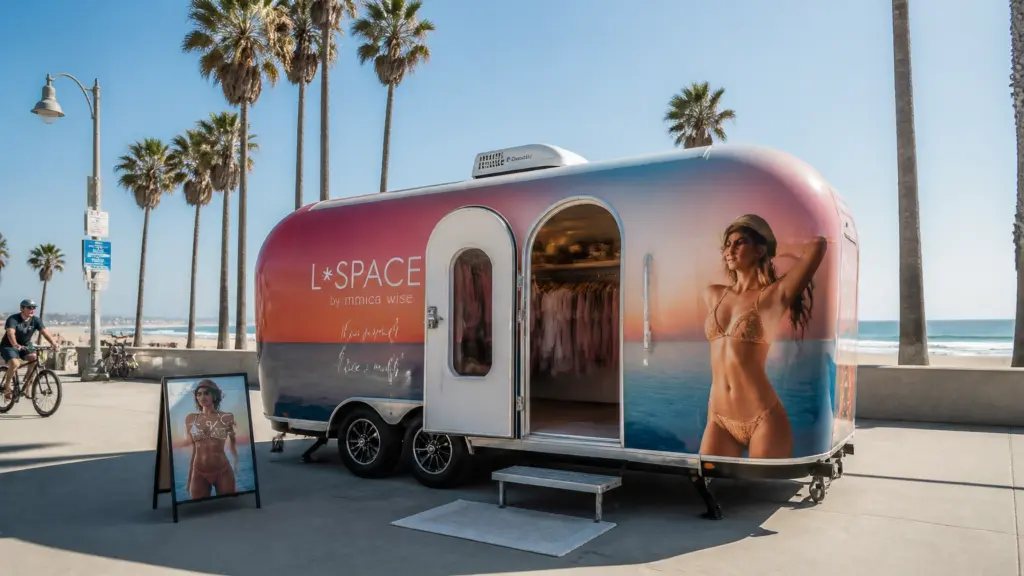
One of the most critical design elements we implement is the use of rounded corners. Traditional "utility style" trailers often feature blocky, hard-edged corners that look industrial and uninviting. In the retail world, aesthetic is everything. Our rounded-edge design provides a sleek, modern silhouette that mimics high-end automotive design. This softer profile is not only more aerodynamic for transport but also creates a more approachable and sophisticated "boutique" feel for customers.
High-Impact Full-Unit Wraps
In the mobile space, a simple logo on a white trailer is a missed opportunity. Every unit we build is designed for a full-body wrap. This isn't just a sticker; it is a comprehensive, on-brand graphic installation that covers the entire unit. A full wrap allows you to tell your brand story before a customer even steps inside. Whether it’s a minimalist matte finish for a high-end jewelry pop-up or a vibrant, tropical pattern for a San Diego surf brand, the wrap ensures your unit is a landmark, not just a trailer.
Step 4: Fire Safety and Inspections
Safety is a cornerstone of the permitting process. Even though you aren't cooking with open flames, the San Diego Fire-Rescue Department has specific requirements for any mobile structure where the public will enter.
- Fire Extinguishers: You must have at least one 10 BC-rated fire extinguisher on board, with a current annual inspection tag.
- Egress: Your unit must have a secondary emergency exit (typically a window or back door) of at least 24" x 36" that is kept completely unobstructed.
- Electrical Systems: If your unit uses a generator or an external power hookup for lighting and POS systems, the wiring must meet professional standards and be shielded to prevent hazards.
At Pourter, we integrate these safety features directly into the build, ensuring that your unit passes inspection the first time so you can focus on sales.

Strategic Locations for San Diego Pop-Ups
Success in mobile retail is heavily dependent on location. Once you have your custom retail trailer, you need to target areas with high dwell time and a demographic that aligns with your brand.
- North Park: Known for its craft breweries and artsy community, this is a staple location for boutique retail. Partnering with a local brewery for a "Pop-Up Saturday" is a popular move for apparel and lifestyle brands.
- Little Italy: With its heavy weekend foot traffic from the Mercato Farmers’ Market, Little Italy is a historic hub for high-end retail. A sleek, rounded Pourter unit fits perfectly among the upscale cafes and galleries.
- Liberty Station: This former Naval Training Center is now a premier dining and shopping destination. Its wide-open plazas are ideal for mobile units during seasonal events.
- The Boardwalks (Mission & Pacific Beach): For brands targeting the tourist or youth demographic, the boardwalk is an unbeatable location. A full-wrap unit with vibrant graphics will catch the eye of thousands of pedestrians daily.
Conclusion
Launching a mobile retail pop-up in San Diego is a sophisticated undertaking that requires a blend of administrative diligence and high-end design. By securing your Business Tax Certificate, understanding the nuances of special event permitting, and investing in a premium, rounded-corner unit with a full brand wrap, you position your business for immediate impact.
At Pourter, we specialize in helping businesses expand their footprint with units that are as stable and professional as a traditional storefront but with the flexibility to go where the customers are. If you are ready to take your San Diego brand mobile, we are ready to build it.