
INTRODUCTION
The Compact Mobile Food Operation (CMFO) permit, a cornerstone of the modern Los Angeles beach economy, represents the primary legal gateway for entrepreneurs looking to establish a presence on the California coastline. This regulatory instrument has become a staple for the region’s fast-growing mobile dining scene, providing a structured path for vendors to operate within some of the most high-traffic recreational areas in the world. As Los Angeles County formalizes its approach to sidewalk and beach commerce, the transition from informal vending to fully permitted operation has become a transformative objective for local business owners seeking stability and growth.
For those navigating the sun-drenched stretches of Santa Monica, Venice, or the unincorporated sands of Dockweiler, understanding the permitting landscape is no longer an optional task but a critical business requirement. The shift toward a formalized system ensures that every mobile food kiosk and custom food trailer meets rigorous safety standards, protecting both the consumer and the long-term viability of the industry.
The Foundation of Legal Vending: The SVRC
Before a single taco is served or a cold brew poured, every prospective beach vendor must secure their Sidewalk Vending Registration Certificate (SVRC). This document is the bedrock of legal operation in Los Angeles County. Issued by the Department of Economic Opportunity (DEO), the SVRC establishes a vendor’s right to occupy public space for commercial purposes.
The current fee structure for the Sidewalk Vending Registration Certificate is established at $604 per year. While this represents a significant investment for a startup, it serves as an authoritative badge of compliance, signaling to local authorities and customers alike that the business is a legitimate participant in the local economy. This fee covers the administrative costs of the program and ensures that vending locations remain organized and accessible, maintaining the orderly flow of foot traffic that makes LA beaches such lucrative locations for entrepreneurs.

Understanding the CMFO Health Permit
While the SVRC grants the right to vend, the Compact Mobile Food Operation (CMFO) permit ensures that the food itself is safe for public consumption. Managed by the LA County Department of Public Health (DPH), the CMFO is a specialized health permit category designed for smaller, non-motorized units.
The CMFO permit covers a range of equipment, from simple carts to highly specialized mobile bar units and compact food trailers. To qualify for this permit, a unit must adhere to specific California Retail Food Code requirements, which often include:
- Integrated handwashing sinks with pressurized water.
- Approved wastewater holding tanks.
- Smooth, non-absorbent surfaces that are easy to sanitize.
- Adequate protection from environmental contaminants.
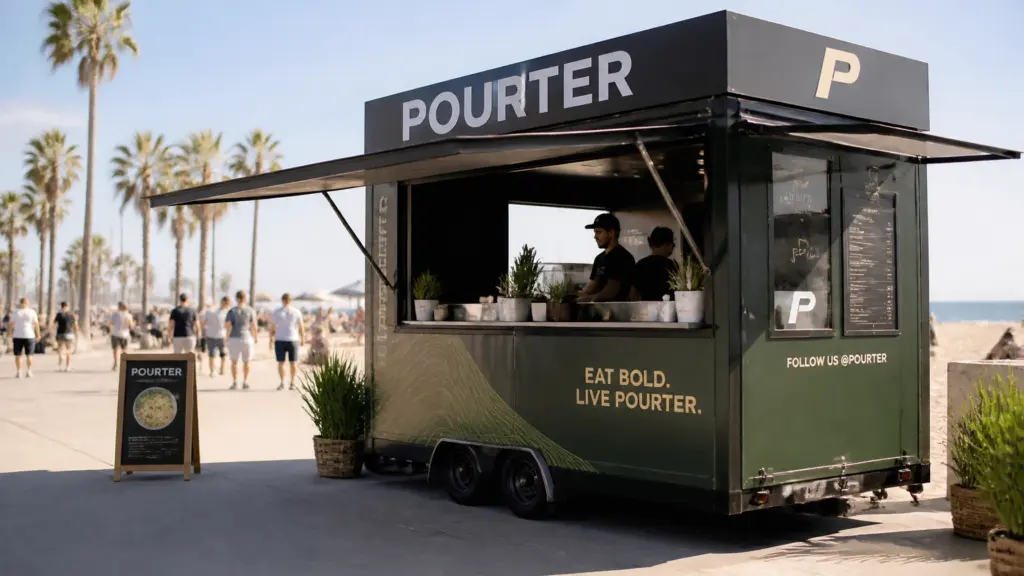
For many entrepreneurs, the challenge lies in the engineering of these units. This is where concession trailer manufacturers play a vital role. At Pourter, we specialize in designing units that are not only aesthetically pleasing but are built from the ground up to pass DPH inspections on the first try. Our design and engineering process prioritizes these compliance factors, ensuring that your investment is ready to hit the sand without technical delays.
Geography and Jurisdiction: Where You Can Vend
A common point of confusion for new vendors is the distinction between unincorporated LA County areas and specific city jurisdictions. Los Angeles is a patchwork of different governing bodies, each with its own specific rules for beach vending.
Unincorporated County Beaches
In areas like Dockweiler or parts of Malibu, the LA County Sidewalk Vending Ordinance is the governing law. In these locations, the SVRC and the CMFO permit are your primary requirements. These beaches are often managed directly by the Department of Beaches and Harbors, and they offer vast opportunities for vendors to tap into large crowds of locals and tourists alike.
City-Managed Beaches
Beaches located within city limits: such as Santa Monica or Long Beach: may require additional local permits on top of the County health permit. For example, the City of Los Angeles has its own specific sidewalk vending rules that align with the County health standards but require a separate city-level business tax registration. It is imperative for vendors to verify the exact boundary of their intended operation to avoid unexpected fines.

2026 Fee Structures and Financial Opportunities
The landscape of beach vending in 2026 is defined by a push for inclusivity and economic mobility. Recognizing the high entry cost of the $604 SVRC fee, the County has introduced several grant and subsidy programs designed to lower the barrier for dedicated entrepreneurs.
Health Permit Subsidies
Currently, LA County offers a 75% subsidy on health permit fees for qualifying sidewalk vendors. This dramatic reduction means that the actual out-of-pocket cost for a CMFO health permit is often a fraction of the standard commercial rate. This program is part of a broader effort to bring "legacy" vendors into the legal fold and encourage the adoption of high-quality, compliant equipment.
Formalization Grants
In addition to fee subsidies, the Small Business Mobility Fund provides formalization grants of up to $5,000. These funds are specifically earmarked to help vendors bridge the gap between their current setup and a fully compliant operation. These grants can be used for:
- Purchasing new, CMFO-compliant mobile food kiosks.
- Upgrading existing equipment to meet health code standards.
- Covering the costs of plan check submissions and inspection fees.
For an entrepreneur looking to launch a mobile bar unit or a high-end food kiosk, these grants represent a historic opportunity to offset the initial capital expenditure of a custom build.
Why Quality Equipment Matters
While the allure of a DIY cart is strong, the reality of LA County inspections often favors professional manufacturing. The Department of Public Health looks for consistency, durability, and safety: traits that are standard in units produced by professional concession trailer manufacturers.
A custom-built unit from our portfolio isn't just a point of sale; it's a mobile asset designed for the rigors of the beach environment. Salt air, sand, and high heat require materials that won't degrade over time. By investing in a high-quality unit, you are not just buying a trailer; you are securing a permitable workspace that protects your business's longevity.

Step-by-Step Path to Vending
- Define Your Product: Determine if your food or beverage requires "Limited Food Preparation" or if you are selling pre-packaged goods. This will dictate your CMFO requirements.
- Design Your Unit: Consult with a manufacturer to ensure your unit meets the 2026 LA County Public Health specifications.
- Secure Your SVRC: Apply through the EPIC LA portal for your Sidewalk Vending Registration Certificate. Be prepared for the $604 annual fee, unless you qualify for a current waiver.
- Submit to DPH: Submit your plans to the Department of Public Health for a plan check. This is the stage where your unit's design is reviewed for compliance.
- Final Inspection: Once your unit is built and the plan check is approved, you will undergo a final physical inspection to receive your CMFO permit sticker.
- Launch: With your SVRC and CMFO permit in hand, you are legally authorized to vend on the iconic shores of Los Angeles.
The momentum of the LA beach vending scene is undeniable. As the city prepares for global events and a continued surge in tourism, the demand for high-quality, mobile dining experiences has never been higher. By following the legal path and investing in compliant, professional equipment, you position your brand at the forefront of this vibrant market.
Ready to start your beach vending journey? Contact Pourter today to discuss how our custom food trailers and kiosks can help you secure your CMFO permit and launch your business with confidence.