
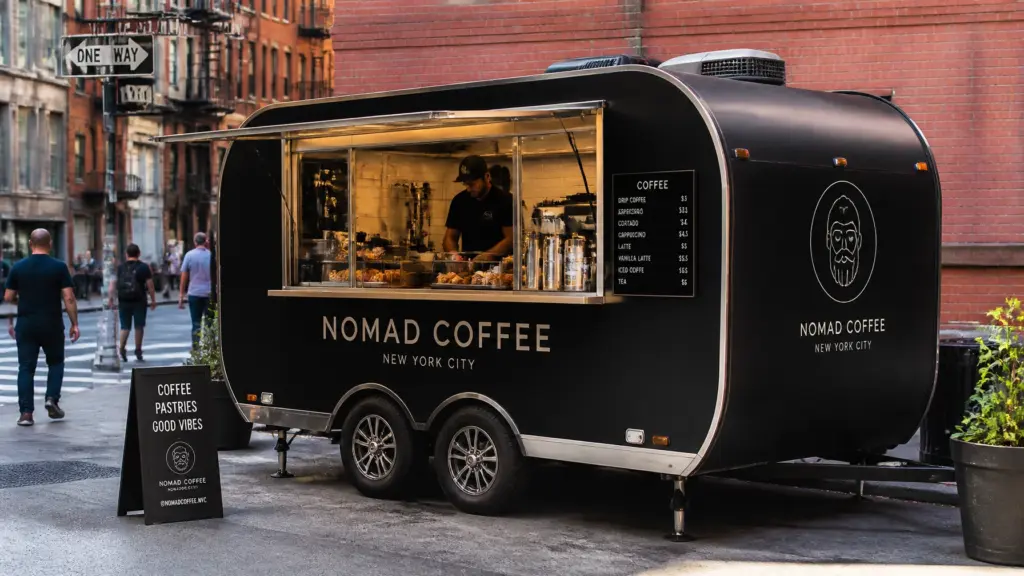
INTRODUCTION. New York City, a global culinary capital that serves as the ultimate proving ground for mobile food entrepreneurs, has entered a transformative era for street vending regulations in 2026. For years, the path to obtaining a mobile food vending permit was obscured by decade-long waiting lists and a complex web of departmental bureaucracy. However, following the full implementation of Local Law 18 and subsequent 2026 legislative updates, the landscape has shifted toward a more structured, high-volume permit issuance system. For entrepreneurs looking to launch a custom food trailer or a specialized beverage cart, understanding the distinction between a personal license and a unit permit is the first step in navigating the nation's most competitive market.
The Two-Tiered System: License vs. Permit
To operate a mobile food business in NYC, you must secure two distinct credentials: a Mobile Food Vendor License (the person) and a Mobile Food Vending Unit Permit (the vehicle).
The personal license is a photo ID badge issued by the NYC Department of Health and Mental Hygiene (DOHMH). This is a non-capped credential, meaning there is no waitlist to apply. Every person working on a food cart or truck: whether they own it or are just an employee: must carry this license. In 2026, the process remains strict: you must pass a 15-hour Food Protection Course, provide proof of sales tax authority, and clear any outstanding fines with the NYC Environmental Control Board (OATH).
The unit permit, however, is the "golden ticket." This is the physical decal attached to your cart or truck. Historically, these were capped at around 3,000 citywide, but as of July 1, 2026, the city is mandated to offer at least 2,200 supervisory license applications per year. This massive influx is designed to transition vendors from the "old" permit system to the "new" supervisory license system, which requires the permit holder to be physically present on the unit during operation.
Navigating the 2026 Waitlist and Supervisory Licenses
The 2026 calendar is pivotal for anyone on the DOHMH waiting lists. If you are a U.S. veteran or a person with a disability, specific citywide supervisory license opportunities were prioritized in the early months of the year. For the general public, the release of 2,200 new applications starting in July represents the most significant expansion of legal street vending in a generation.

When you receive an offer for a supervisory license, you have a limited window to apply for your unit permit. This is where your partnership with a manufacturer like Pourter becomes critical. You cannot get a permit for a unit that doesn't exist or isn't built to code. The DOHMH requires a physical inspection of the unit before the permit is issued. If your build fails inspection due to sink capacity, drainage issues, or improper materials, you risk losing your spot in the permit queue.
Building for the Inspection: The Pourter Standard
Passing a NYC health inspection in 2026 requires more than just a clean kitchen. The DOHMH "Self-Inspection Worksheet" (Appendix 6-A) is the blueprint for your build. At Pourter, we specialize in units designed specifically to meet: and exceed: these rigid standards.
Key requirements for 2026 NYC compliance include:
- Potable Water Capacity: For processing carts, a minimum 10-gallon tank is required, while trucks and larger trailers typically require 40 gallons.
- Waste Water Management: Waste tanks must be at least 15% larger than the supply tank to prevent overflows.
- Surface Integrity: All food-contact surfaces must be smooth, non-porous, and made of food-grade stainless steel or approved composites.
- The Commissary Requirement: In NYC, all mobile units must be stored and cleaned at a DOHMH-approved commissary or depot. Your unit must be designed for easy "daily servicing," meaning quick-connect water lines and accessible drainage.
The Shift to Sustainable Power
One of the biggest challenges for NYC vendors has been the noise and exhaust of traditional gas generators, which often lead to complaints and secondary inspections from the Department of Environmental Protection (DEP). In 2026, the trend has shifted toward high-capacity battery systems.

Pourter’s battery-powered units allow vendors to operate silently and without emissions. This is not just an environmental choice; it is a strategic business move. A silent unit can operate in high-traffic residential areas or near luxury retail storefronts where a noisy generator would be prohibited or discouraged. By integrating these power systems during the initial build, we ensure your unit is "future-proofed" against evolving NYC air quality and noise ordinances.
Step-by-Step Guide to Launching in 2026
- Secure your NYS Sales Tax Certificate: You cannot apply for a license without a Certificate of Authority from the NYS Department of Taxation and Finance.
- Apply for the Personal License: Schedule an appointment with the DCWP Citywide Licensing Center. Complete the Food Protection Course and get your ID badge.
- Check Your Waitlist Status: Use the DOHMH Waiting List Lookup Tool. If you are eligible for the 2,200 new supervisory licenses being released this July, prepare your documentation immediately.
- Finalize Your Unit Design: This is the moment to contact Pourter. We work with you to design a unit that fits your brand while strictly adhering to the dimensions (typically 10'x5' for pushcarts) and health codes required for NYC.
- Pass the Pre-Permit Inspection: Once your unit is built, you will schedule an inspection at the DOHMH's Maspeth facility. If the unit passes, the permit decal is applied, and you are officially cleared to vend.
Strategic Location and Operations
Once you have your permit, your operation is governed by the NYC Administrative Code regarding where and when you can vend. The 2026 rules have intensified enforcement around "prohibited streets": areas where vending is banned to prevent sidewalk congestion.

Success in the NYC market requires a mobile unit that is as agile as it is durable. Whether you are an existing brick-and-mortar looking to expand with a bar trailer or a new entrepreneur launching a coffee concept, the quality of your build is your best defense against operational downtime.
The momentum of the NYC mobile food industry is at an all-time high. With thousands of new permits entering the system this year, the competition will be fierce. A custom-built, NYC-certified unit from Pourter provides the stability and professional aesthetic needed to stand out on the crowded streets of Manhattan, Brooklyn, and beyond.