
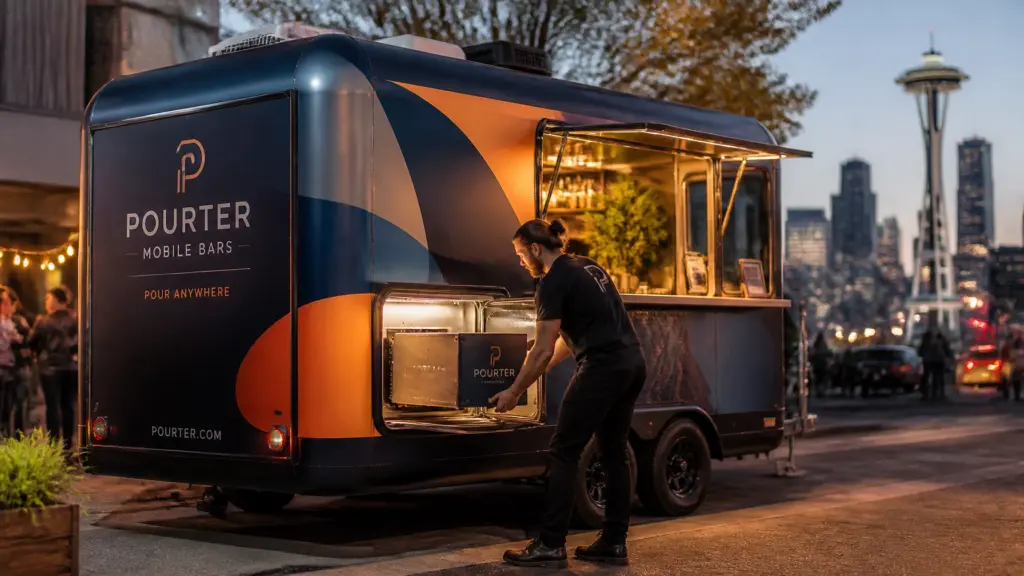
INTRODUCTION: Seattle, a metropolitan hub long defined by its pioneering tech industry and world-class culinary innovation, is currently undergoing a silent transformation within its vibrant mobile vending landscape. As the city continues to densify and prioritize sustainable urban living, the traditional, clamorous gasoline generator: once the reliable heartbeat of every street-side operation: is rapidly becoming an institutional relic. For the entrepreneurs behind the city's most popular mobile bar units and custom food trailers, a new technological imperative is emerging: battery swapping. This shift is not merely a preference for "green" energy; it is a calculated response to Seattle’s stringent regulatory environment and a strategic move toward operational excellence.
Key Takeaways
- Battery swapping helps Seattle vendors operate without generator noise or exhaust.
- Modular battery systems support longer service windows and simpler off-site charging logistics.
- Silent power can improve access to premium vending locations where generators are restricted.
- Pourter builds rounded, fully wrapped units designed for modern mobile food and beverage operations.
- Businesses exploring a battery powered food trailer near me or a Seattle food trailer near me should evaluate both permitting requirements and power strategy early in the process.
The Regulatory Horizon: Why the Generator Era is Ending
In the Pacific Northwest, the Sound of Progress is increasingly quiet. The Seattle Department of Transportation (SDOT) and the Department of Construction & Inspections (SDCI) have established a regulatory framework that is increasingly incompatible with traditional internal combustion power.
Central to this challenge is the Seattle Noise Code (SMC 25.08). This ordinance sets precise decibel limits: often as low as 57 dBA in commercial zones: that many industrial generators struggle to meet, especially during peak load or evening service. For vendors operating in high-traffic plazas or near residential edges, a single noise complaint can trigger a cascading series of permit reviews and potential closures. Furthermore, Seattle’s Street and Sidewalk Vending Program requires operators to maintain a "good neighbor" status to ensure long-term permit renewal.
As these standards tighten, the industry is looking toward modular power solutions that eliminate noise and exhaust entirely.

The Mechanics of Battery Swapping
While fixed lithium-ion battery banks have been a staple of modern food trailers for several years, "battery swapping" represents the next evolution in mobile power management. For operators searching for a battery powered food trailer near me, this approach stands out because it reduces dependence on fuel, cuts operational noise, and supports longer vending windows. The concept is straightforward: rather than a single, massive battery permanently integrated into the unit’s chassis, the power system is decentralized into several high-capacity, modular packs.
When a pack’s charge is depleted, it is swapped for a fresh one in a matter of seconds: much like exchanging a propane tank. This modularity offers several distinct advantages for Seattle street vending:
- Unlimited Up-Time: In a city where lunch rushes can extend into evening happy hours, battery swapping removes the "charging ceiling." A trailer can operate indefinitely as long as fresh modules are rotated into the bay.
- Infrastructure Independence: Traditional electric units require high-amperage "shore power" to recharge, which is notoriously difficult to find in the public right-of-way. Swappable packs can be charged at an off-site commissary or warehouse using standard infrastructure and then transported to the vending site.
- Redundancy: If one module fails, the entire unit doesn't go dark. The modular nature of systems like the ones integrated into Pourter’s latest builds ensures that the business stays online.

Design Without Compromise: The Pourter Approach
At Pourter, we recognize that a mobile unit is more than just a piece of equipment; it is a brand activation tool and a physical manifestation of a business's identity. Integrating high-capacity battery systems requires a specialized approach to manufacturing that balances weight distribution with aesthetic appeal.
Our engineering team prioritizes a "sleek and rounded" design language. Every Pourter unit features distinctive rounded corners that serve a dual purpose: they provide superior aerodynamics for transit between Seattle’s hilly neighborhoods and offer a modern, high-end silhouette that stands out in a crowded market. These units are never "boxy" or industrial; they are designed to be invitations to the customer.
Furthermore, we utilize full-unit wrap graphics on every build. Unlike traditional food trucks that often rely on decals or simple logos, a Pourter wrap provides a seamless, vibrant finish that protects the unit and communicates professional authority. When paired with the silent operation of a battery-swapped system, the result is a premium customer experience that gas generators simply cannot replicate.

Strategic Efficiency in the Seattle Market
The economic argument for battery swapping in Seattle is as compelling as the environmental one. For a multi-unit chain or a fast-growing entrepreneur, the ability to standardize power modules across a fleet of trailers simplifies logistics and reduces maintenance overhead. Gas generators require oil changes, fuel runs, and frequent mechanical repairs; lithium-iron-phosphate (LFP) batteries are virtually maintenance-free. For founders evaluating a Seattle food trailer near me, that efficiency can directly affect staffing, service reliability, and where a unit can realistically vend throughout the city.
In the competitive landscape of Seattle street vending, location is everything. Battery power allows vendors to access "quiet zones" and premium locations: such as public parks or historic districts: where noisy generators are strictly prohibited. By removing the barrier of noise and emissions, Pourter clients can secure permits for the city’s most lucrative foot-traffic zones.
The Future: A Self-Pour Revolution
This shift in power technology coincides with a broader trend in the beverage industry toward automation and self-service. Pourter’s Draft Self-Pour Trailers are already leading this revolution. By combining battery-swapping technology with digital self-pour systems, operators can reduce labor costs while maximizing throughput.
The integration of these technologies into a single, cohesive unit: wrapped in high-definition branding and featuring our signature rounded edges: represents the pinnacle of current mobile manufacturing. We are no longer just building trailers; we are building mobile storefronts that are as sophisticated as the brick-and-mortar locations they complement.

Moving Forward with Pourter
As Seattle continues to lead the nation in urban sustainability and street-vending innovation, the transition from gas to swappable battery power is inevitable. For business owners, the question is no longer if they should transition, but how they will implement a system that maintains their brand's high standards.
At Pourter, we specialize in this transition. From the initial design and engineering phase to the final application of a sleek, custom wrap, we ensure that your mobile unit is prepared for the regulatory and operational demands of the future. Whether you are expanding a beverage concept through our bar and beverage trailers or planning a new Seattle launch, the silent, battery-powered era of vending has arrived, and it is more efficient, professional, and profitable than ever before.