
Quick Summary / Key Takeaways
- The NYC Permit Expansion: Under Local Law 54 of 2026, New York City is rolling out approximately 11,000 new mobile food vending permits, creating a historic opening for street vendors and entrepreneurs.
- Battery-Powered Vending: While the Department of Health and Mental Hygiene (DOHMH) does not create a separate permit tier for electric carts, battery-powered food carts are fully permissible provided they meet strict sanitation, food safety, and fire safety codes.
- Inspection Readiness: Passing DOHMH and FDNY inspections requires precise engineering, integrating proper handwashing sinks, commercial-grade refrigeration, and secure lithium-ion energy storage systems.
- Scaling Nationwide: Whether launching in Manhattan, Brooklyn, or expanding to cities like Austin, modern operators are bypassing traditional gas generators in favor of clean, quiet battery power.
INTRODUCTION to the shifting landscape of metropolitan street commerce reveals a monumental regulatory milestone. New York City, recognized globally as one of the most dynamic and competitive street food markets, has officially initiated the rollout of 11,000 new mobile food vending permits under Local Law 54 of 2026. For aspiring culinary entrepreneurs, brick-and-mortar restaurant owners looking to expand, and independent operators, this landmark legislative shift represents an unprecedented opportunity to secure legal operating status in the five boroughs.
However, obtaining a coveted permit is only half the battle. Navigating the rigorous DOHMH health code alongside modern municipal expectations demands a meticulously engineered unit. In an era where traditional noisy, diesel-spewing generators face mounting restrictions, the battery-powered food cart has emerged as the gold standard for compliance, sustainability, and urban efficiency. Below is an authoritative guide on how to build, power, and inspect a battery-powered cart that satisfies New York City regulators and sets a new standard for modern street vending.

What Are the Core Requirements for the New NYC Mobile Food Vending Permits?
To understand how to position a mobile unit for success, operators must first grasp the mechanics of the new permit distribution. The city's multi-year expansion adds thousands of year-round citywide and non-Manhattan mobile food vending permits, paired with mandatory supervisory licenses.
According to municipal guidelines, vendors must hold both a Mobile Food Vendor license and a Mobile Food Vending Supervisory license to apply for these permits. Because demand vastly outstrips even this massive influx of 11,000 permits, compliance and preparation are critical. Regulators evaluate every applicant's operational readiness, meaning your cart, trailer, or pushcart must be fully realized and inspection-ready before your application cycle is finalized.
When entrepreneurs evaluate food trailers for sale or specialized pushcarts, they quickly realize that regulatory scrutiny in major metropolitan areas extends far beyond simple paperwork. Inspectors examine the physical build, layout, and utility systems down to the millimeter.
How Does the DOHMH Health Code Apply to a Battery-Powered Food Cart?
A common misconception among first-time operators is that electric or battery-powered carts require a special or experimental health permit. In reality, the New York City Health Code regulates mobile food units based on their sanitation equipment, food-contact surfaces, and temperature control capabilities rather than their exact power source.
Whether you are building a specialized coffee trailer or a compact street cart, DOHMH requires:
- Handwashing Facilities: An independent handwashing sink supplied with hot and cold (or tempered) running water, soap, and disposable paper towels.
- Potable Water and Wastewater Management: Fresh-water storage tanks and appropriately sized wastewater holding tanks to capture all gray water.
- Safe Temperature Maintenance: Commercial-grade refrigeration and hot-holding equipment capable of keeping potentially hazardous foods out of the "danger zone" (41°F to 135°F) throughout a full operating shift.
- Smooth, Cleanable Surfaces: NSF-approved, non-absorbent, corrosion-resistant stainless steel or food-safe composite surfaces that withstand rigorous daily sanitization.
Because the health code mandates continuous equipment operation without reliance on grid power while stationed on the sidewalk, an advanced energy storage setup is non-negotiable.

Why Are Operators Transitioning to Lithium Battery Power?
Traditional street vending relied heavily on noisy, fume-emitting gasoline or propane generators. In dense urban environments like Manhattan, Midtown, or busy Brooklyn commercial strips, municipal noise ordinances, environmental regulations, and local business complaints make gas generators increasingly untenable.
As detailed in industry insights on lithium battery power for food trucks and trailers, modern lithium iron phosphate (LiFePO4) systems deliver silent, emission-free power capable of running commercial refrigeration, espresso machines, and digital point-of-sale terminals for 10 to 12 hours straight.
By eliminating combustion engines on the cart, operators eliminate exhaust fumes near food preparation zones: a massive win during DOHMH sanitary inspections. Furthermore, clean battery setups align with broader municipal goals for urban air quality, reducing friction with local neighborhood associations and building inspectors.
What Are the FDNY and Electrical Safety Standards for Battery Systems?
While the DOHMH governs sanitation and food safety, the Fire Department of New York (FDNY) and electrical inspectors maintain strict oversight over high-capacity energy storage systems (ESS).
When building a custom battery-powered cart, your engineering must account for:
- Enclosure and Ventilation: Battery banks must be housed in secure, well-ventilated, weather-resistant compartments that prevent moisture ingress and accidental tampering.
- Component Certification: All inverters, charge controllers, and battery management systems (BMS) should feature recognized safety certifications (such as UL listings) to satisfy electrical inspectors.
- Overcurrent Protection: Proper fusing, circuit breakers, and emergency shut-off switches must be readily accessible to protect operators and inspectors alike.
Preparing for these dual-agency expectations requires partnering with experienced food truck manufacturers who understand how to integrate electrical engineering with mobile health code compliance.

How Do NYC Standards Compare to Other Rapidly Growing Food Trailer Markets?
While New York City's recent 11,000-permit drop is historic, the shift toward mobile, self-contained culinary concepts is a nationwide phenomenon. Entrepreneurs exploring opportunities outside of New York often evaluate regional hubs with booming street food cultures.
For instance, if you are looking for a custom food trailer in Austin, you will encounter a thriving ecosystem of permanent food truck parks rather than sidewalk carts. In Austin or Miami, health departments focus heavily on trailer towability, grease trap requirements, and fresh-water capacity, whereas NYC regulators pay acute attention to sidewalk footprint restrictions, mobility compliance, and secure overnight storage locations.
No matter the municipality: whether navigating street vending in Queens or opening a mobile bar concept in Chicago: investing in versatile, high-end custom food trucks and trailers ensures your business can adapt to shifting local ordinances. For operators looking to scale multiple units across state lines, exploring insights on looking at food trucks for sale provides valuable benchmarks on equipment quality and resale value.
How Can You Design Your Unit to Breeze Through Inspection Day?
Passing your initial health department and safety inspection comes down to meticulous preparation and avoiding common pitfalls. Here is a quick checklist for your build:
- Simulate Full-Shift Loads: Test your battery system under maximum draw (running refrigeration and water pumps simultaneously) to verify that battery voltage remains stable throughout a standard shift.
- Double-Check Tank Proportions: Ensure your wastewater tank is at least 15% larger than your fresh-water supply tank to prevent accidental greywater overflow violations.
- Secure All Food-Contact Surfaces: Eliminate exposed wood or porous materials. Every inch of counter space and shelving must be smooth, seamless stainless steel or certified food-grade polymer.
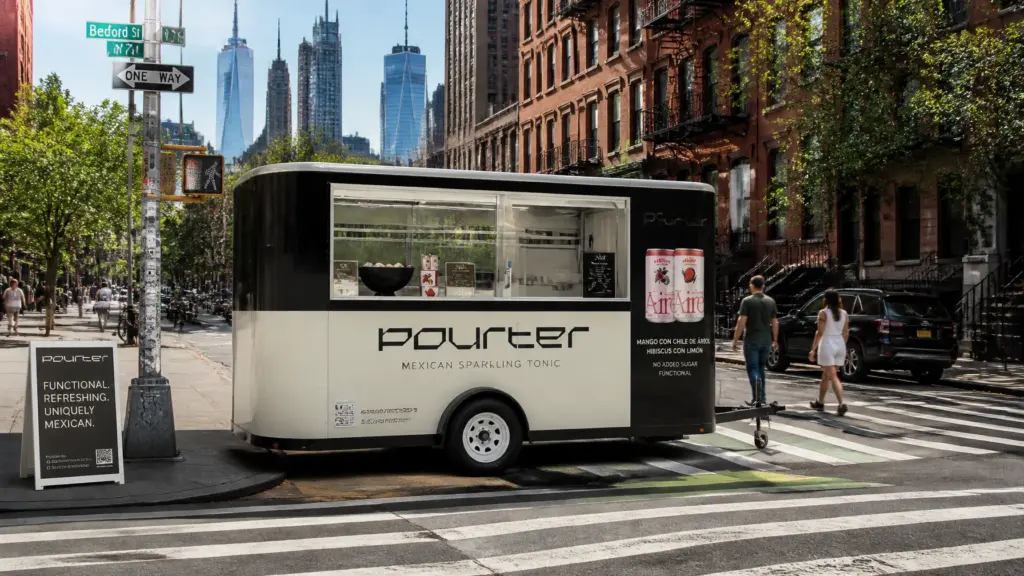
- Professional Branding: Ensure your exterior features crisp, professional, on-brand full-unit wrap graphics with rounded corners and clean aesthetics that project instant professionalism to inspectors and customers.
Whether you are searching for coffee trailers near me, food trailers near me, or custom food trailers near me, working with a specialized builder like Pourter ensures your mobile asset arrives engineered for strict municipal compliance.

Conclusion: Secure Your Permit and Build for the Future
The release of 11,000 new street vendor permits in New York City signals a lucrative new chapter for mobile culinary entrepreneurs. By combining the agility of street vending with the reliability and silence of advanced lithium-ion power, forward-thinking operators are building sustainable businesses that easily pass the toughest municipal inspections.
Ready to claim your stake in the booming mobile economy? Explore Pourter's premium lineup of draft self-pour trailers and custom mobile units designed to meet rigorous health and safety standards nationwide. Contact our engineering team today to start designing your custom battery-powered cart.