
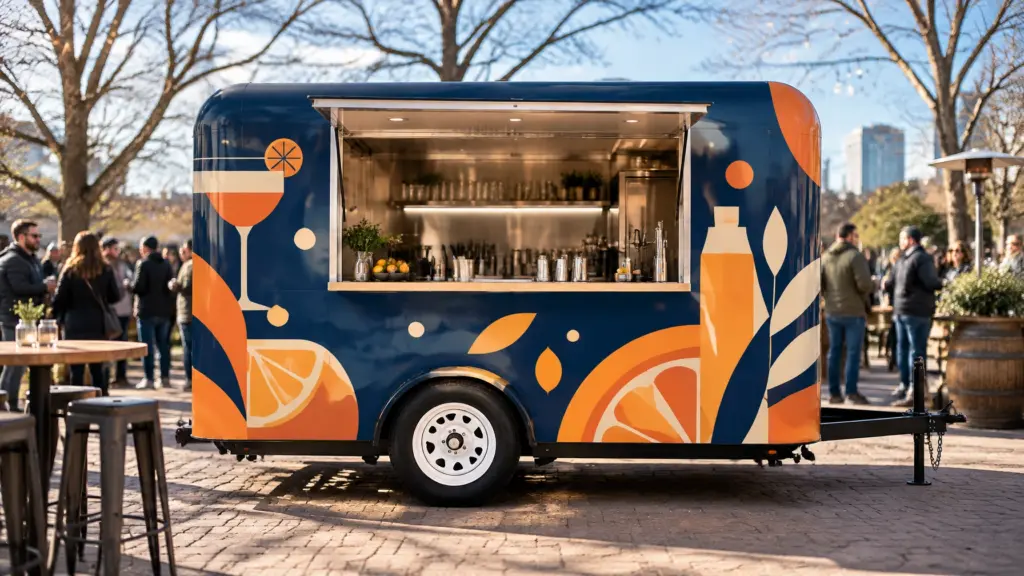
Focus keyword: mobile bar units
Meta description: Compare mobile bar units by layout, equipment, staffing, and seasonal inventory. Plan a custom beverage trailer for winter and Q1 events.
Key Takeaways
- Choose the unit around your menu, service pace, event locations, storage needs, and local permitting requirements.
- Prioritize a practical workflow, cold storage, protected ice handling, reliable power, water and wastewater capacity, and cleanable surfaces.
- Confirm who supplies alcohol, who serves it, and which permits or licenses apply before you buy or advertise.
- Keep winter and Q1 menus focused, with shared ingredients and appealing nonalcoholic choices.
- Specify a smooth, rounded-corner unit with a complete, sleek brand wrap, not a generic exterior with a logo added later.
INTRODUCTION
A mobile bar is a flexible extension of a restaurant, distillery, caterer, or event business, giving established operators and entrepreneurs a way to serve customers beyond a fixed location. If you are searching for mobile bar units near me, start with the work the unit must do, not just its appearance. The right build should support your menu, service model, staff, and event calendar while presenting your brand consistently.
Before winter and Q1 bookings fill the calendar, define what you plan to serve and where. A beverage trailer intended for private events may need a different layout from one serving a steady stream of customers at a venue or seasonal market. Pourter’s bar and beverage trailer projects illustrate how a custom unit can be designed around a specific beverage operation and service workflow.

What should you compare when buying mobile bar units?
Compare the entire service system, not only the trailer shell. Before requesting a quote, write down your planned menu, expected service style, event types, available power, storage location, and tow vehicle. Share those details with the builder so equipment and layout can be discussed in context.
Key specifications to discuss include:
- Service flow: Where will orders be taken, drinks prepared, and completed orders handed over? Separate order and pickup points may help reduce congestion when the footprint allows.
- Cold storage and ice: Match refrigeration and ice storage to the ingredients and drink volume you expect. Ask about drainage and how the ice will be protected and handled.
- Water and sanitation: Confirm handwashing, warewashing, potable water, wastewater, and cleanable work surfaces against the rules for the places where you plan to operate.
- Electrical needs: List each appliance and its power requirements. Ask how the proposed setup will work at venues with shore power, and what backup plan is appropriate for your operation.
- Weight and access: Review the unit’s loaded weight, towing requirements, doorways, parking, and venue access before committing to a design.
- Brand presentation: Specify rounded corners and a complete, sleek full-unit wrap that carries your visual identity across the exterior. A logo alone is not the same as a cohesive brand treatment.
Pourter’s Urban product collection, Classic & Vintage collection, and Next-Gen collection offer different starting points for a custom build. Ask how each option can be adapted to your beverage service, equipment, and local requirements. The homepage lists nationwide delivery and custom layouts, while noting that production timing varies with customization. Request current details directly before planning around a delivery date.
How do you choose a mobile bar trailer for sale?
A listing can tell you what is included, but you still need to check whether the unit suits your operation. When comparing a mobile bar trailer for sale near me with a custom build, request written details about the trailer’s condition, title and VIN, weight rating, electrical and plumbing systems, equipment specifications, warranty, and service access.
For a used unit, inspect the structure, tires, brakes, plumbing, power connections, refrigeration, and any signs of water damage. For a custom unit, ask for drawings and an equipment schedule before approving production. In either case, plan a test before your first booking: power up the equipment, check refrigeration, run water through the fixtures, and simulate a rush using your intended menu.
The layout should also account for staff movement and customer flow. Avoid a design where restocking, drink preparation, and order handoff all compete for the same narrow space. A short menu and clearly assigned stations can make service easier to manage.

How should you staff and stock for winter and Q1?
Staff to the menu and event, rather than assuming one staffing plan will work everywhere. A simple menu and steady pace may require a different setup from made-to-order cocktails during a busy rush. Assign clear responsibility for setup, drink preparation, payment, guest questions, restocking, sanitation, and closing. Add a runner or barback when the bartender would otherwise have to leave the service station to fetch supplies.
Train staff on the approved service procedures for your location, including age verification where relevant, responsible service, sanitation, allergy awareness, and how to handle a refusal or incident. Confirm whether your staff, client, or another licensed provider is responsible for purchasing and serving alcohol. That distinction can affect the business model and legal requirements.
Stock from a defined menu. Estimate quantities using the recipes, expected bookings, event duration, and a reasonable contingency. Choose drinks that share ingredients so you can carry useful options without building an unwieldy inventory. A winter and Q1 menu might combine a citrus or cranberry drink, a spiced seasonal option, a simple spirit-and-mixer choice, and at least one appealing zero-proof drink. Add coffee, tea, or a warm drink only if your equipment and service plan can support it.
Prepare a checklist for ice, chilled ingredients, mixers, garnishes, cups or glassware, napkins, cleaning supplies, waste bags, POS equipment, chargers, and backup service tools. Confirm venue rules on glassware, disposables, recycling, and waste disposal before ordering supplies.
What should operators consider in Miami, Phoenix, and Seattle?
The best plan depends on where the unit will operate. Weather, venue type, local permits, and alcohol rules can all change the requirements.
- Miami: Winter and Q1 events may call for quick cold-drink service, reliable refrigeration, protected ice, and a wet-weather plan. Check the City of Miami’s current Temporary Event Permit requirements, and confirm alcohol permissions with the relevant licensing authorities. Requirements can vary by event, venue, and service model.
- Phoenix: Plan for chilled drinks, water and nonalcoholic choices, shade where the venue permits it, and equipment placement suited to outdoor conditions. Check current city requirements and the applicable state alcohol rules before committing to a package or advertising service. The city’s License Services information is a starting point, not a substitute for confirming your specific event requirements.
- Seattle: Rain, wind, wet ground, and low light should inform the setup and power plan. If your menu or handling qualifies as food service, check the applicable health requirements. Seattle’s special-event food-service guidance explains permit considerations for vendors, food-worker cards, waste, and service facilities. Do not assume a food-service permit authorizes alcohol service.
If you are looking for a custom bar trailer near me, confirm that your builder can work from the operating rules for your intended cities. Local authorities and event organizers should be consulted early, before your menu or equipment choices are locked in.

What should you ask before placing an order?
Use the initial conversation with a builder to test whether your plan is specific enough. Ask:
- Can the layout accommodate my menu, equipment, and service flow?
- What are the unit’s dimensions, loaded weight, towing needs, and power requirements?
- Which water, sink, refrigeration, and electrical specifications are included?
- What documents, drawings, equipment details, and warranties will I receive?
- What design and wrap options are available, including rounded corners and full exterior coverage?
- What information should I confirm with local health, fire, zoning, and alcohol authorities?
- What are the current build timeline, delivery terms, and service arrangements?
Pourter’s article on common mobile bar unit mistakes offers additional planning considerations. For operators exploring Miami, read The Truth About Opening a Mobile Bar in Miami’s South Beach. Treat local regulatory guidance as location-specific and verify it with the relevant authorities before operating.
FAQ: What should you know before buying?
Can a mobile bar serve alcohol anywhere?
No. Rules depend on the state, municipality, event, venue, and service arrangement. Confirm the applicable licenses and permits before booking or advertising alcohol service.
Should I buy a used trailer or commission a custom build?
A used unit may suit an operation if its condition, equipment, layout, and documentation meet your needs. A custom build can be planned around a specific workflow and brand. Compare the full scope and verify the unit before purchase.
What is the most important equipment to plan first?
Start with the equipment that defines your menu and service: refrigeration, ice handling, power, water, sanitation, and POS. Confirm local requirements before finalizing the specifications.
Ready to plan your mobile bar?
A strong buying decision starts with a clear menu, realistic event plan, and a complete equipment list. Compare your options, confirm local requirements, and ask builders to explain how the layout supports your operation. When you are ready, explore Pourter’s product collections or request a custom trailer consultation.