
INTRODUCTION Nashville, the fast-growing cornerstone of the Southeast’s culinary and entertainment landscape, has officially entered a new era of urban commerce. Long celebrated as a staple of musical history and a popular destination for global tourism, the city has recently transitioned its approach to the streets themselves. For entrepreneurs and established brick-and-mortar brands looking to expand, the shift from a temporary pilot program to a permanent regulatory framework represents a transformative moment. Understanding the nuances of Nashville food truck permits and mobile vending laws is no longer just a hurdle; it is the strategic foundation for a successful custom food trailer operation in Music City.
The Permanent Shift: From Pilot to BL2024-391
For years, mobile vendors in Nashville operated under the uncertainty of a pilot program managed by the Nashville Department of Transportation (NDOT). That period of trial and error concluded with the passage of BL2024-391, a pivotal ordinance that codified the Truck Vending Permit Program. This legislation moved the authority from a temporary status to a permanent, year-round system, providing the stability that high-growth businesses require.
Previously, vendors were required to navigate two-month permit renewals, a frantic cycle that made long-term planning difficult. Under the new permanent system, permits are now issued for up to 12 months. This shift allows operators of a mobile bar Nashville or a mobile retail unit to secure their place in the market with far more confidence. It is a signal from the city that mobile vending is not a passing trend but a permanent fixture of the downtown economy.
The "150-Foot Rule": Navigating Lower Broadway
While the permit system has become more streamlined, the physical placement of your unit remains a tactical challenge. Nashville’s most iconic stretch: Lower Broadway: is a high-volume corridor where the competition for space is intense. To protect existing brick-and-mortar establishments, the city maintains strict proximity rules.
One of the most critical regulations to understand is the "150-foot rule." In key sectors of the Downtown Core, mobile units are generally prohibited from operating within 150 feet of the entrance of a licensed restaurant during its operating hours. This rule is designed to balance the vibrancy of the street scene with the interests of established taxpayers. For a battery powered food cart or a beverage unit, this means site scouting must be precise. Success in Nashville requires mapping out your footprint relative to the "Honky Tonk Highway" to ensure you are capturing the foot traffic without infringing on the restricted zones.

Sidewalk Logistics: The 8ft and 6ft Rules
Operating a mobile retail unit or food trailer in an urban environment like Nashville requires a deep understanding of pedestrian flow. NDOT is particularly protective of sidewalk accessibility, especially in high-density areas like The Gulch or 12 South.
When positioning your unit, you must adhere to the "8ft and 6ft" standards. Generally, mobile units must maintain at least 8 feet of clearance from the building face to ensure that entrances and exits are never obstructed. Simultaneously, a minimum of 6 feet of clear, unobstructed pedestrian path must be maintained on the sidewalk at all times. If your queue or your unit’s service window creates a bottleneck that shrinks the walking path below 6 feet, you are in violation. Pourter’s custom designs prioritize compact, efficient footprints that maximize internal workspace while keeping the external impact minimal, helping you stay compliant without sacrificing service capacity.
The Commissary Necessity: Notarized and Essential
In Nashville, your mobile unit cannot be a "lone wolf." Every mobile food and beverage vendor is required to operate in conjunction with a licensed commissary. This is more than a recommendation; it is a legal requirement for your permit. The commissary serves as the base of operations where all heavy cleaning, greywater disposal, and deep prep occur.
When applying for your Nashville food truck permits, you must provide a notarized commissary agreement. This document proves to the health department that you have a dedicated, sanitary space to maintain your unit. Because Nashville’s health inspectors are thorough, your our process at Pourter includes ensuring that your unit’s plumbing and storage systems are designed to interface seamlessly with standard commissary hookups, making your daily "pit stops" efficient and compliant.

The Pourter Edge: Battery Power and Noise Ordinances
Nashville’s Downtown Core is not just a hub of activity; it is also a zone of strict noise regulation. The city has become increasingly proactive in penalizing vendors who rely on loud, idling gas generators. Not only do these generators contribute to air pollution, but the decibel levels often exceed the city's noise ordinances, leading to hefty fines and potential permit revocation.
This is where Pourter’s engineering provides a distinct advantage. We specialize in units equipped with advanced, high-capacity battery systems that allow for completely silent operation.
- Zero Noise: Operate in noise-sensitive areas near residential lofts or hotels without issue.
- No Idling: Avoid the fines associated with engine idling in the Downtown Core.
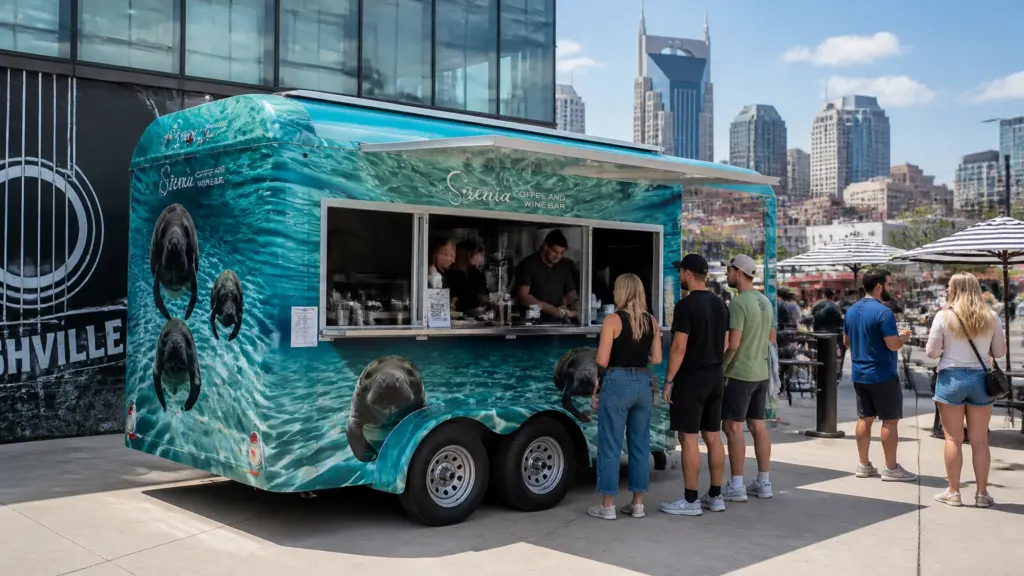
- Sleek Aesthetics: Our units feature signature rounded corners and full-unit brand wraps that look professional, unlike the "utility" look of a standard box trailer.
By choosing a battery-powered food cart or bar, you are not just being environmentally conscious; you are future-proofing your business against tightening urban regulations.
Design Matters: Wraps and Rounded Corners
In a city as visually driven as Nashville, the appearance of your unit is your primary marketing tool. Nashville’s Metro regulations often include language regarding the maintenance and aesthetic quality of mobile units. A rusted, blocky utility trailer can be an eyesore that draws the wrong kind of attention from both inspectors and the public.
Pourter units are built with a "design-first" philosophy. Every unit we manufacture features rounded corners: a sleek, modern look that avoids the harsh, industrial edges of traditional trailers. This architectural choice is paired with full-unit wraps that turn your trailer into a high-end brand activation. Whether you are serving craft cocktails at a private event in Belle Meade or street tacos on 2nd Avenue, your Pourter unit is designed to look like a permanent, premium installation rather than a temporary cart.

Final Steps for Nashville Success
Transitioning into the Nashville mobile vending market is a high-reward move for brands that do it correctly. With the permanent NDOT permitting system now in place, the path is clearer than ever, but the details remain demanding.
- Secure your Commissary: Get that notarized agreement early.
- Plan your Route: Respect the 150-foot rule and the 8ft/6ft sidewalk clearances.
- Invest in Silent Power: Avoid the generator trap and opt for battery-powered efficiency.
- Prioritize Design: Ensure your unit reflects the quality of your brand with rounded corners and professional graphics.
Nashville is a city that rewards those who contribute to its vibrant culture. By showing up with a compliant, beautiful, and silent Pourter unit, you aren't just vending on the street; you are becoming a part of the Music City story.