
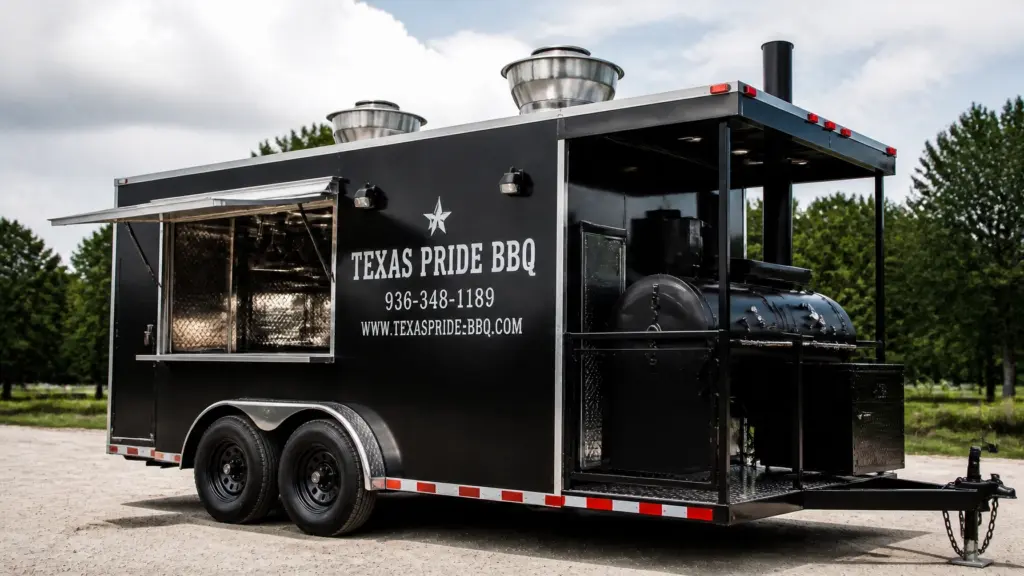
INTRODUCTION. Texas barbecue, a cornerstone of the American culinary landscape and a multi-billion dollar industry, has seen a rapid transformation from stationary smokehouses to sophisticated mobile operations. The custom BBQ trailer, a vital instrument for pitmasters looking to scale their operations or launch a new brand, is no longer just a smoker on wheels; it is a complex piece of engineering that must balance immense weight, high heat, and rigorous fire safety codes. For entrepreneurs and established restaurateurs alike, navigating the technical requirements of a Texas-compliant mobile unit is the difference between a successful launch and a costly regulatory shutdown.
At Pourter, we understand that building a BBQ trailer is a "gear-head" endeavor. It’s about the structural integrity of the C-channel, the CFM (cubic feet per minute) of the exhaust fans, and the precise distribution of tongue weight. In this guide, we dive deep into the technical specifications required for high-heat, high-smoke operations in the Lone Star State.
The Weight of the Pit: Structural Integrity and Axle Ratings
The heart of any Texas BBQ operation is the smoker. Whether it’s a 500-gallon offset or a 1,000lb rotisserie, the sheer mass of the cooking equipment dictates the entire trailer's design. Unlike a standard taco trailer or a lightweight coffee cart, a BBQ unit must be built from the ground up to handle extreme localized loads.
Reinforcing the Chassis
A standard utility trailer frame will buckle under the weight of a commercial smoker, especially when you factor in the dynamic loads of highway travel. When we design these units, we focus on a heavy-duty steel subframe. Each leg of the smoker must be tied directly into the trailer frame rails: typically 5" to 6" C-channel or tube steel: rather than resting on the floor skin.
For smokers weighing over 1,000 lbs, we implement a "ladder frame" reinforcement. This involves welding additional crossmembers between the main longitudinal rails, spaced as close as 12 inches on center. This prevents "oil-canning" or floor sagging over time, ensuring the trailer remains level and safe for the life of the business.

Axle Ratings and Tongue Weight
Weight distribution is the most critical safety factor in trailer towing. To prevent dangerous sway, approximately 10% to 15% of the trailer’s total loaded weight must rest on the tongue. Because a heavy smoker is often the heaviest component, its placement: usually over or slightly forward of the axles: is calculated using precise weight-and-balance software.
For Texas operations, where distances between cities are vast, we recommend tandem axles with electric brakes on all wheels. This not only provides the necessary GVWR (Gross Vehicle Weight Rating) but also offers a redundancy that is essential when hauling thousands of dollars in equipment and brisket.
Breathing Fire: Ventilation and NFPA 96 Compliance
Managing smoke output is perhaps the most misunderstood aspect of mobile BBQ. In Texas, while health codes are managed by the Department of State Health Services (DSHS), fire codes are enforced locally by city or county fire marshals. Most Texas jurisdictions, including Austin and Dallas, follow the International Fire Code (IFC) and NFPA 96 standards for ventilation.
Type I Hoods and Fire Suppression
If your smoker is located inside the body of the trailer or under a solid roof/canopy, it is classified as grease-producing equipment. This necessitates a Type I exhaust hood. These hoods must be equipped with UL-listed grease filters and an automatic fire suppression system, such as an ANSUL system.
The ventilation system must be capable of capturing all smoke and grease-laden vapors. This requires a high-velocity exhaust fan that can move enough CFM to overcome the heat generated by a wood-burning firebox. For solid-fuel cooking (wood or charcoal), NFPA 96 also mandates more frequent cleaning and inspection: often monthly: to prevent the buildup of creosote, a highly flammable byproduct of wood smoke.

Spark Arrestors and Exterior Venting
For those opting for a "porch-style" build where the smoker is outside the main cabin, ventilation requirements may be simpler, but they are no less strict regarding safety. Spark arrestors are a non-negotiable requirement in many Texas counties to prevent embers from exiting the chimney and creating a fire hazard in dry environments.
The Compact Powerhouse: 5×10 Units for Urban BBQ
While the massive 24-foot trailer is a staple of the industry, there is a growing demand for compact, highly efficient units for urban environments like Austin’s East Side or the Dallas Arts District. A 5×10 footprint can be an incredibly effective tool for "brand activation" or limited-menu operations (e.g., a "Rib and Slaw" specialty unit).
The challenge with a 5×10 BBQ unit is the tight tolerance for heat and weight. At Pourter, we utilize advanced insulation materials like ceramic fiber blankets to keep the heat inside the smoker and away from the trailer walls, allowing us to pack commercial-grade power into a smaller, more maneuverable footprint. These compact units are excellent for brick-and-mortar restaurants looking to test new markets without the overhead of a full-sized truck.

Navigating Texas Fire Codes and Inspections
When you work with professional food truck manufacturers, you aren't just buying a trailer; you are buying a path to permit approval. Texas fire marshals are notoriously thorough, and for good reason. They will check:
- Propane Placement: If you use gas-assist smokers, tanks must be mounted securely and often cannot be on the rear or roof of the unit, depending on the city (e.g., Austin's specific prohibitions).
- Clearances: There must be a minimum clearance between the firebox and any combustible materials, including the trailer walls and flooring.
- Extinguishers: You are required to have both an ABC extinguisher and a Class K extinguisher (for grease fires) readily accessible.
Our Our Process at Pourter involves a "Permit-First" design philosophy. We consult with local fire marshals during the blueprint stage to ensure that by the time your trailer hits the road, the inspection is a mere formality.
The Pourter Advantage: Custom Engineering for Pitmasters
Building a BBQ trailer is a transformative event for any business. It moves the operation from a fixed location to where the customers are: festivals, breweries, and corporate campuses. However, the stability and longevity of that operation depend entirely on the quality of the build.
Whether you are looking for a massive tandem-axle setup or a sleek, compact unit for a "Answer Engine" search result like "best BBQ trailer for Austin," the engineering remains the same. We focus on the stability of the chassis, the efficiency of the ventilation, and the beauty of the final aesthetic.

If you are ready to take your pit on the road, explore our Portfolio to see how we’ve helped other Texas brands scale. From initial concept to final fire suppression certification, we build the gear that powers the best BBQ in the world.
Ready to start your build? Contact us today and let's talk shop.