
Key Takeaways
- Brand activation units give marketers a physical platform for sampling, retail, hospitality, and product education across multiple cities.
- Food units, bar units, and retail units serve different campaign goals and should be selected around audience behavior and operational needs.
- Modular interiors make it possible to adapt one trailer for changing products, sponsors, menus, and event formats.
- Full-unit wraps, integrated technology, and battery power help a mobile asset perform indoors and outdoors.
- Campaign ROI should track more than impressions: sampling volume, leads, conversions, content, dwell time, and cost per engagement all matter.
INTRODUCTION
Brand activation units, the traveling physical environments that bring campaigns directly to customers, have become a cornerstone of experiential marketing. For consumer brands, restaurant groups, beverage companies, and sponsors, a custom mobile trailer can function as a food service point, hospitality venue, retail shop, product showroom, or data-capture station.
The appeal is straightforward: one branded asset can move from a festival in Austin to a sports event in Chicago, creating repeated visibility while giving audiences a reason to stop, interact, and remember the campaign. Instead of relying on a temporary tent or a static booth, marketers can build an environment designed around the brand’s identity and the customer journey.
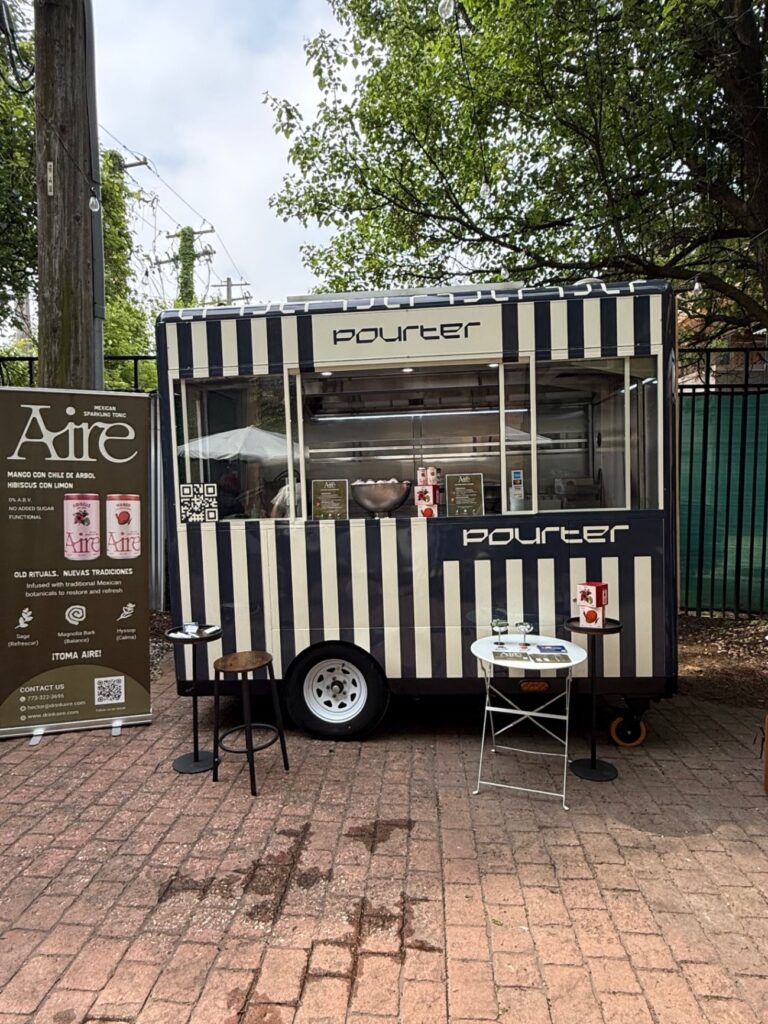
Pourter builds custom mobile units for these applications, including food trailers, bar and beverage trailers, and mobile retail concepts. The right specification starts with the campaign objective, not with a standard template.
What type of mobile unit is right for a brand activation?
The first decision is whether the campaign needs a food unit, bar unit, or retail unit. Each format supports a different type of interaction.
Food units for sampling, service, and trial
Food units are effective when the campaign depends on taste, speed, and repeat engagement. A branded food trailer can serve samples, limited menus, prepared items, or packaged products while giving guests a clear reason to approach.
For restaurant groups and consumer packaged goods companies, custom food trailers can also act as mobile test kitchens. A new menu item can be introduced in several markets before a permanent rollout, while established restaurants can reach neighborhoods outside their existing footprint.
Pourter’s food trailers can be configured around cooking equipment, refrigeration, handwashing, storage, service windows, and point-of-sale requirements. Depending on the campaign, the unit may operate as a concession trailer, a sampling kiosk, or a fully functioning mobile kitchen.
Bar units for hospitality and beverage discovery
A mobile bar creates a more social activation. It can support beverage sampling, premium tastings, sponsorship hospitality, event service, and self-pour experiences. A bar unit is especially useful when the campaign needs guests to stay longer and talk with brand ambassadors.
Pourter’s bar and beverage trailers can be designed for draft systems, refrigeration, sinks, back-bar storage, display shelving, and branded service areas. A coffee company may use the same planning approach to create a coffee trailer for an urban tour, corporate campus program, or festival partnership.
For brands researching “mobile bar units near me,” the important question is not only where the builder is located. It is whether the unit can support the campaign’s service volume, power plan, brand presentation, and tour schedule.
Retail units for product launches and mobile pop-up shops
Retail activations work best when the goal is product discovery, direct sales, merchandise distribution, or a controlled product launch. A mobile retail unit can serve as a compact showroom, apparel boutique, technology demo space, or branded gift shop.
A thoughtfully planned mobile pop up shop should make the customer path obvious. Visitors need to understand where to enter, what to see first, how to interact with products, and where to complete a purchase or sign up. Shelving, lighting, secure storage, checkout equipment, and display screens should be considered together rather than added after construction.
Pourter’s Urban trailer collection offers a compact platform for brands that need a polished mobile presence with flexible interior planning. Its use cases extend beyond food service to beverage, retail, and event-based brand experiences.

How should the interior be planned for a traveling campaign?
A touring unit needs to do more than look good. It must support a reliable workflow at every stop.
Modular interiors allow marketers to change menu components, product displays, storage systems, and technology as the campaign develops. A food-focused unit might include a compact prep line and high-volume service counter. The same footprint could later support packaged product sampling, merchandise shelving, or a sponsor showcase.
Planning should account for:
- Staff movement and service speed
- Product storage and daily replenishment
- Refrigeration, sinks, and sanitation requirements
- Point-of-sale systems and connectivity
- Screens, tablets, QR codes, and digital displays
- Accessibility and customer circulation
- Cleaning, maintenance, and overnight security
This is where experienced food truck manufacturers and mobile unit builders add value. The design must connect the creative concept to real operating conditions. A visually impressive interior will not perform well if staff cannot restock efficiently or if the service window creates unnecessary lines.
Pourter’s design and build process helps align brand goals, layout, equipment, engineering, and production before fabrication begins.
How do wraps and graphics turn a trailer into a marketing asset?
A traveling unit is visible before a customer ever interacts with it. Its exterior should communicate the campaign from a distance and remain recognizable in photographs, video, and social content.
Full-unit graphics are generally more effective than a small logo applied to an otherwise blank trailer. The wrap should account for service windows, doors, wheel wells, corners, lighting, and the primary viewing angles at each venue. Large visual elements should remain legible in crowded event environments, while QR codes and calls to action should be placed where guests naturally pause.
Rounded corners and a clean silhouette also help the unit feel like a finished brand environment rather than a temporary equipment box. Pourter’s portfolio demonstrates how custom graphics can cover the complete exterior while integrating the service area and interior experience.
When planning a tour, marketers should prepare a graphic system that can accommodate seasonal campaigns, co-branding, sponsor placement, and regional messaging without compromising the core identity.

Can mobile units work at indoor events?
Yes, but indoor use must be planned from the beginning. Convention centers, stadiums, hotels, malls, and corporate venues may impose restrictions on fuel, exhaust, noise, dimensions, loading access, and electrical connections.
Battery-powered units can make indoor activations more practical by reducing noise and eliminating the need for traditional generator operation. Pourter’s Urban collection highlights quiet, lightweight lithium-ion battery-powered options for mobile businesses and event environments.
Marketers should confirm:
- Door, elevator, and loading dock dimensions
- Venue power availability and restrictions
- Fire, health, and electrical requirements
- Ventilation and cooking limitations
- Floor protection and maneuvering space
- Setup, teardown, and storage windows
A battery-powered coffee trailer or retail unit may be appropriate for a lobby, showroom, or convention floor. Higher-power cooking or beverage systems require a more detailed technical review with the venue and local authorities.
For teams searching for “mobile food kiosks near me” for an indoor program, local access is useful, but venue compatibility and engineering support should be part of the selection process.
How can sampling and data capture work together?
Sampling creates the initial interaction. Data capture extends it.
A campaign can connect a sample or product demonstration to a QR code, digital survey, email sign-up, loyalty registration, giveaway, or purchase offer. Tablets and point-of-sale systems can collect consented first-party data while staff members explain the product.
The experience should remain simple. Asking visitors to complete a long form before receiving a sample creates friction. A better sequence may be:
- Invite the visitor to try or interact with the product.
- Explain one relevant benefit or story.
- Offer a clear digital action.
- Deliver an incentive, product detail, or follow-up message.
- Record the interaction in the campaign dashboard.
The unit’s layout should support this flow. A sampling counter, waiting area, display screen, and QR placement can be designed together so data capture feels like part of the experience rather than an interruption.

What does a multi-city activation tour require?
A successful tour is an operations project as much as a creative campaign. Before the first event, teams should define the route, venue calendar, staffing model, transport plan, storage requirements, product replenishment, insurance, permits, and contingency procedures.
Sponsorship adds another layer. A sponsor may require logo placement, exclusive product service, lead targets, hospitality access, or dedicated content deliverables. These requirements should be incorporated into the unit’s graphics and interior plan early.
A tour schedule should also allow time for:
- Transit between markets
- Setup and breakdown
- Cleaning and equipment checks
- Inventory delivery
- Weather or venue delays
- Driver and crew rest
- Local compliance reviews
Whether a campaign is looking for “custom food trailers near me” or comparing food trailers for sale across the country, the purchase decision should account for the full life of the asset. A durable, adaptable trailer can support future campaigns long after one tour ends.
How should marketers measure campaign ROI?
Brand activation ROI should combine immediate performance with longer-term brand value. Useful metrics include:
- Number of samples or products served
- Cost per interaction
- Leads and qualified sign-ups
- QR scans and offer redemptions
- Direct sales and average transaction value
- Dwell time and repeat visits
- Social content and earned media
- Sponsor impressions and hospitality attendance
- Conversion after the event
- Cost per city, event, and customer acquisition
The unit itself can also be evaluated as a reusable marketing asset. If a single trailer supports a sampling tour, a retail launch, a sponsorship program, and later community events, its value extends beyond one campaign budget.
Pourter’s previous mobile retail activation ideas and guidance on integrating brands into indoor events offer additional examples of how design, mobility, and operations can work together.
Where can brands deploy custom mobile units?
In Austin, a food or beverage unit can support music events, sports partnerships, tech launches, and neighborhood sampling programs. In Chicago, a branded trailer may serve corporate campuses, festivals, retail districts, or sponsor hospitality zones.
The same approach applies in cities such as Atlanta, Nashville, Dallas, New York, and Los Angeles. Local permitting and venue requirements will vary, but the core planning principles remain consistent: choose the right unit, engineer the workflow, build a flexible visual system, and define measurable campaign outcomes.
For companies searching for a “food trailer near me,” the best next step is to identify the experience the campaign needs to deliver. From a coffee trailer to a mobile bar, a concession trailer to a retail showroom, the unit should be built around that objective.
A well-designed activation trailer is not simply transportation for products. It is a repeatable brand environment: one that can move through multiple markets, create direct customer contact, and turn a campaign concept into a practical, measurable experience.

Focus keyword: custom food trailers
SEO title: Brand Activation Units: How Marketers Use Custom Mobile Trailers on Tour
Meta description: Learn how marketers use custom food trailers, mobile bar units, and mobile pop-up shops for sampling, retail, sponsorship tours, indoor events, data capture, and measurable campaign ROI.