
Meta description: Learn how to plan, equip, staff, license, power, and price a custom bar trailer for weddings and private events in 2026.
Key Takeaways
- A successful mobile bar starts with a focused menu, efficient tap system, and enough keg and cold storage for the guest count.
- Plan staffing around service speed, with approximately one bartender for every 40–50 guests for full cocktail service.
- Confirm liquor licensing, event permits, insurance, venue requirements, and local health regulations before booking events.
- Battery power, water systems, refrigeration, and POS equipment should be specified during the trailer design process.
- Price packages by guest count, service hours, staffing, menu complexity, travel, equipment, and included supplies.
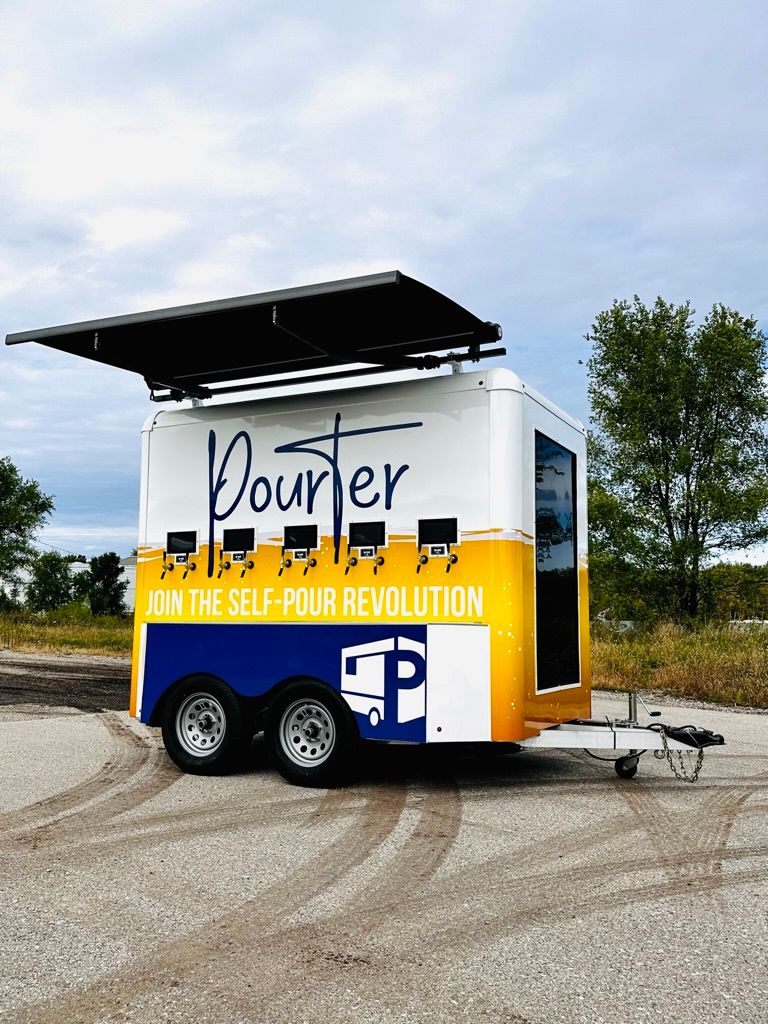
- Pourter builds custom beverage units with branded exteriors, flexible layouts, integrated power options, and commercial-grade service features.
INTRODUCTION
Pourter, a Michigan-based mobile unit manufacturer and established partner for food, beverage, and brand activation businesses, builds custom bar trailers for operators serving weddings, private celebrations, corporate events, and high-volume gatherings. The company’s work sits at the intersection of hospitality, fabrication, and event service, a growing market where presentation and operational reliability carry equal weight.
For an event operator, a mobile bar is more than a visual centerpiece. It is a compact service business that must chill products, organize staff, process payments, manage waste, and serve guests quickly in locations that may not have permanent utilities. The right unit supports that entire workflow.
Whether you are expanding an existing bar, launching a new event company, or researching a custom bar trailer near me, this 2026 playbook covers the decisions that matter most.

What should a wedding mobile bar serve?
The strongest event menus are focused rather than oversized. A short menu makes purchasing easier, reduces waste, and lets bartenders maintain consistent service during peak periods.
A practical wedding menu may include:
- Two draft beers, ciders, wines, or ready-to-serve cocktails
- Red and white wine
- A small selection of spirits
- Two signature cocktails
- Mocktails and non-alcoholic beverages
- Sparkling water, soda, tonic, and juices
- Fresh garnishes and premium mixers
Signature drinks give the event a personal identity. Operators can create one drink for each partner, match cocktails to the wedding colors, or build a menu around a venue, season, or brand.
For private events, batching is often the most efficient approach. Cocktails such as margaritas, palomas, spritzes, and punches can be prepared in advance and served quickly. More complex drinks can remain available as a premium upgrade, but the core menu should not depend on extended preparation at the point of service.
A Pourter unit can also be configured for related concepts, including a bar and beverage trailer, coffee service, self-pour systems, and other beverage-focused formats.
How many taps, kegs, and refrigerators do you need?
Capacity depends on guest count, service duration, beverage mix, and whether the bar is serving alcohol continuously throughout the event.
For many weddings and private parties, two to four draft lines provide a useful balance. Operators can dedicate the lines to beer, cider, wine, sparkling cocktails, or non-alcoholic options. Standard Sankey D couplers are commonly used for beer systems in the United States, but the equipment should match the products and distributors in your operating market.
A basic planning approach includes:
- Up to 50 guests: two draft lines may be sufficient, supported by bottled wine and cans.
- 50–100 guests: two to four lines, additional under-counter refrigeration, and reserve cold storage.
- 100–150 guests: multiple kegs, backup beverages, and a dedicated restocking plan.
- 150-plus guests: consider larger cold storage, support staff, and possibly a second service point.
Keg capacity should be calculated using expected servings, not just the number of guests. A standard keg may produce different yields depending on serving size, foam loss, and whether guests receive beer, cocktails, wine, or non-alcoholic drinks from the same operation.
Cold storage also needs to cover more than kegs. Plan space for wine, cans, mixers, fruit, garnishes, ice, and backup product. A visually polished unit is useful, but a well-organized refrigeration and storage plan is what keeps service moving.
How should staffing and service flow work?
A mobile bar should be designed around movement. Staff should not cross paths unnecessarily, reach over one another, or leave the service window repeatedly to retrieve supplies.
For full cocktail service, a useful starting point is one bartender for every 40–50 guests. Smaller events may operate with one bartender, while a 100-person wedding will usually benefit from two bartenders. Events above 150 guests often require additional support for restocking, glassware, ice, waste, and guest direction.
A strong service flow separates the work into clear stations:
- Order point: Guests view the menu and place requests.
- Production point: Bartenders pour draft products, build drinks, and add garnishes.
- Pickup point: Completed drinks are handed to guests without interrupting production.
- Restocking zone: Ice, cans, bottles, mixers, and backup kegs remain accessible.
- Payment point: POS equipment stays visible and reliable during the entire event.
Use menu boards to reduce decision time. Place the two signature cocktails at the top, identify non-alcoholic choices clearly, and list service limitations before guests reach the window.

What licensing and insurance basics should operators understand?
Alcohol service is regulated at the state and local level. Requirements may differ based on the venue, event type, service model, and whether the operator supplies the alcohol.
Common operating models include:
- Full-service bar: The operator purchases or supplies alcohol and manages beverage service.
- Dry-hire bar: The client or venue supplies the alcohol while the operator provides the trailer, staff, equipment, and service.
- Venue-partnered service: The mobile bar operates under the venue’s license or approved catering arrangement.
Before accepting an event, confirm the requirements with the relevant state liquor authority, city or county offices, venue management, and insurance provider. Ask whether the event needs a temporary permit, catered event authorization, certificate of insurance, or additional insured documentation.
Most professional operators should also review:
- General liability insurance
- Liquor liability coverage
- Workers’ compensation requirements
- Commercial auto or trailer coverage
- Food and beverage handling requirements
- Fire, electrical, and plumbing inspections where applicable
Licensing rules are not interchangeable between cities. An operator serving weddings in Detroit may face different requirements from one working in Austin or New York City. Treat compliance as part of the business plan, not an item to address after the trailer is built.
Can a mobile bar operate without a venue hookup?
Yes, but the power system must be designed around the actual load.
Battery power can support lighting, POS equipment, pumps, small appliances, and selected refrigeration systems. Pourter’s Urban trailer collection highlights lightweight lithium-ion battery operation, compact layouts, and flexible plumbing and electrical configurations.
For larger events, operators should evaluate:
- Battery capacity and usable runtime
- Inverter output
- Refrigerator and keg-cooling loads
- POS and Wi-Fi requirements
- Interior and exterior lighting
- Shore-power connection
- Generator compatibility, if permitted by the venue
- Fresh-water and grey-water capacity
Battery systems are especially useful at outdoor weddings, private estates, gardens, rooftops, and venues where generator noise or fuel handling would affect the guest experience. Pourter also addresses battery-powered event operations in its guide to integrating mobile units into indoor events.
Power planning should happen before equipment is selected. A trailer that supports a two-tap beer program may require a different electrical design from one serving frozen cocktails, espresso drinks, or several refrigerated keg lines.
How should you price event packages in 2026?
Event pricing should account for the complete service, not only trailer rental. A package may include the unit, delivery, setup, staff, menu design, mixers, ice, cups, garnishes, cleanup, insurance, and administrative time.
A practical structure includes three tiers:
1. Essential package
Designed for up to 50 guests, this package may include:
- Four hours of service
- One bartender
- Beer, wine, and simple mixed drinks
- Basic mixers and ice
- Setup and breakdown
A planning range of approximately $1,100–$1,800 may be appropriate depending on the market, travel distance, staffing, and inclusions.
2. Signature wedding package
Designed for 50–100 guests, this package may include:
- Five hours of service
- Two bartenders
- Two signature cocktails
- Draft service
- Premium garnishes
- Custom menu signage
- Setup and breakdown
A starting range of roughly $2,000–$2,500 or more can provide room for labor, product coordination, design, and operational overhead.
3. Premium private-event package
Designed for 100–150 or more guests, this package may include:
- Multiple bartenders and support staff
- Four draft lines
- Full cocktail menu
- Mocktail or coffee station
- Custom branding
- Extended service
- Dedicated restocking and cleanup
Premium packages commonly begin around $3,000 and increase with guest count, travel, alcohol sourcing, specialty equipment, and service hours.
Price travel separately when appropriate. Additional hours, specialty cocktails, champagne pours, espresso service, custom decals, premium glassware, and late-night service can also be listed as add-ons.
Where can operators use a mobile bar?
Location affects both demand and design. In Chicago, a mobile bar can support rooftop weddings, gallery receptions, private courtyards, and corporate events where a permanent bar is unavailable. In Austin, operators may serve outdoor weddings, ranch venues, festivals, tasting events, and private celebrations with flexible beverage programs.
The same model works in Detroit, Nashville, Dallas, New York, and other markets where event venues need attractive service infrastructure without a permanent buildout. If you are searching for a custom bar trailer near me, compare builders based on their ability to support your local towing, electrical, plumbing, permitting, and branding requirements: not only on the exterior appearance.
Pourter’s Classic and Vintage trailers offer a polished retro direction, while the Next-Gen collection is designed for premium customization, full-unit branding, and advanced features such as self-pour technology.

What should you ask a trailer manufacturer before ordering?
Ask how the builder approaches layout, equipment integration, compliance, delivery, warranty support, and future upgrades. Confirm the intended guest count, menu, service model, storage needs, power requirements, and operating locations before finalizing the design.
Pourter’s mobile food business guide explains how concept, equipment, branding, permits, and location strategy influence a mobile unit investment. Those same principles apply to a bar-focused operation.
For operators comparing food truck manufacturers, food trailers for sale, or a concession trailer, the central question remains the same: can the unit support the business model efficiently? A beverage trailer should make service faster, compliance clearer, and the brand more visible.
A well-designed mobile bar unit gives event operators a repeatable platform for weddings, private parties, corporate hospitality, and brand activations. With the right menu, storage plan, staffing model, licensing process, battery system, and pricing structure, a custom build can become a dependable revenue channel rather than a one-time event feature.
