
Key Takeaways for Denver Mobile Food Operators
- Dual Permitting: You must secure both a Denver Retail Food Mobile License and a Denver Fire Department permit (including a specific propane permit if applicable).
- Location Strategy: High-traffic hubs like RiNo, LoDo, and Civic Center Park remain the premier spots for mobile vending in 2026.
- Climate Resilience: Custom builds for the Mile High City require specialized insulation and HVAC to handle rapid temperature shifts and snowy winters.
- Reciprocity: New Colorado laws for 2026 allow for statewide license reciprocity, but you must still notify Denver authorities 14 days before operating.
INTRODUCTION
Denver, Colorado, a high-altitude metropolis known for its burgeoning culinary scene and craft beer culture, has become a cornerstone for the mobile vending industry. The city's appetite for innovative, on-the-go dining has transformed its streets into a fast-growing marketplace for entrepreneurs and established brick-and-mortars alike. As the Mile High City moves through 2026, the demand for high-quality, custom mobile units has surged, driven by a community that values both aesthetic appeal and operational excellence. For those looking to establish a presence in this competitive landscape, understanding the intersection of strict municipal regulations and the necessity for durable, climate-ready hardware is the first step toward building a successful mobile brand.
Navigating the Denver Permit Landscape in 2026
Operating a food trailer in Denver is a sophisticated undertaking that requires meticulous attention to licensing and safety codes. Unlike traditional food trucks, custom food trailers offer a unique flexibility for brands looking to expand their footprint without the overhead of a dedicated vehicle engine. However, the regulatory path remains rigorous.
What licenses do I need to start?
To legally serve the public in Denver, your business must secure a Retail Food – Mobile license through the Denver Department of Public Health & Environment (DDPHE) and Excise & Licenses (EXL). This license is mandatory regardless of whether you are a local startup or an established brand moving into the mobile space.
Key requirements for this license include:
- Commissary Agreement: Your unit must report to a licensed commissary kitchen daily for cleaning, water refills, and food preparation.
- Operations Plan: You must provide a detailed document outlining how you handle wastewater, food storage, and equipment maintenance.
- Plan Review: Unless you are utilizing the 2026 state reciprocity path, you must submit technical blueprints of your unit, including plumbing and ventilation layouts, before you begin operation.

Does Denver require a Fire Department permit?
Yes. The Denver Fire Department (DFD) is a staple in the mobile food safety process. Every vendor must pass a DFD inspection. If your unit utilizes propane for cooking or heating, common in many beverage and food trailers, you must obtain an annual Denver propane permit.
Pro-Tip: Denver enforces a strict "no bungee cord" rule for propane tanks. All tanks must be securely mounted with metal straps. Pourter units are engineered with these specific safety standards in mind, featuring integrated, secure housing for fuel sources that meet or exceed local fire codes.
The Denver 200-Foot Rule and Siting Regulations
Denver's zoning laws are designed to balance the growth of mobile vending with the interests of existing brick-and-mortar establishments. One of the most important rules to remember is the 200-foot rule: your mobile unit must be parked at least 200 feet away from any permanent restaurant and at least 200 feet away from any other food truck or trailer.
Furthermore, most public zones limit vending to a maximum of 4 hours per day per zone lot. This encourages a dynamic, rotating food scene but requires operators to have a highly mobile and efficient setup. This is where the advantage of a Pourter build becomes clear; our units are designed for rapid deployment and breakdown, allowing you to maximize your four-hour window without wasting time on complex setups.
Custom Builds for the Mile High Climate
Denver's weather is notoriously unpredictable, often swinging from 70-degree sunshine to heavy snow within hours. A generic food trailer build often fails to provide the thermal protection necessary for year-round operation in Colorado.
At Pourter, we prioritize climate-ready engineering. Our units feature:
- Advanced Insulation: To keep heat in during snowy RiNo winters and maintain cool temperatures during the summer heat.
- Robust HVAC Systems: Essential for maintaining a comfortable environment for your staff and ensuring food safety temperatures are never compromised.
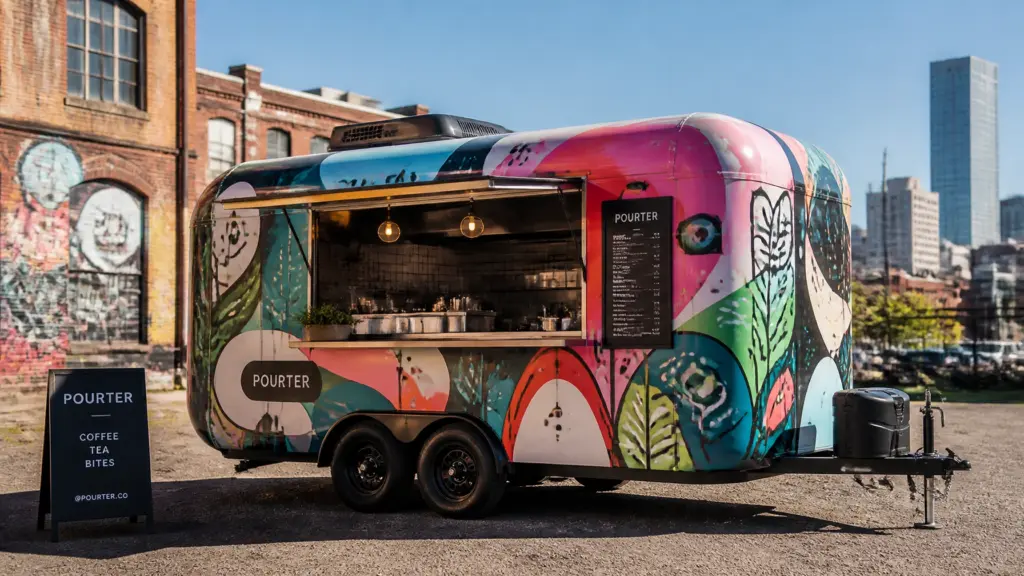
- Rounded-Corner Aesthetics: Our signature rounded edges aren't just for style, they offer improved aerodynamics during transport across the Front Range and provide a modern, approachable silhouette that stands out at high-end events.
- Full-Unit Wraps: We don't just slap a logo on a box. Every Pourter unit comes with a sleek, full-body wrap that acts as a mobile billboard, designed to catch the eye of Denver’s design-conscious consumers.

Where to Find Success: Top Denver Vending Locations
Identifying the right "neighborhood fit" is vital for ROI. In 2026, several districts stand out as primary targets for mobile food and bar trailers.
- RiNo (River North): The heart of Denver's creative class. Brewery lots here are a historic staple for food trailers, providing a consistent evening and weekend crowd.
- Civic Center Park: Home to the "Civic Center EATS" series. This is a high-volume lunch destination where speed and branding are paramount.
- South Broadway (Baker): Ideal for late-night service. With a dense concentration of bars, this area is a popular choice for units offering high-value "after-hours" snacks.
- LoDo/Union Station: The corporate lunch hub. Professionals here look for high-quality, efficient service and modern, clean branding.
Why Pourter is the Preferred Choice for Denver Entrepreneurs
Choosing a mobile unit is a significant investment. While many opt for standard box-style trucks, the industry is shifting toward custom-built trailers. Why? Because a trailer allows you to separate your business asset from your vehicle asset. If your truck engine dies, your business doesn't have to.
Pourter has established its reputation as a leader in this space by focusing on the "mobile experience" rather than just the vehicle. Our units are built with a documentary sensibility, meaning they are designed to look as good in person as they do in your marketing photography. With our signature rounded corners and professional-grade wraps, a Pourter unit isn't just a kitchen; it's a brand activation.
Whether you are an existing restaurant looking to expand into the Denver suburbs or an entrepreneur launching a new concept, our team works to ensure your build is fully compliant with DDPHE and DFD standards before it ever hits the road.
Frequently Asked Questions about Denver Food Trailers
Q: Can I use a state health license to operate in Denver in 2026?
A: Yes, under 2026 reciprocity laws, you can use a state license, but you must still apply with Denver Excise & Licenses and provide a 14-day notice before you start vending.
Q: Are there specific requirements for water tanks in Denver?
A: Yes, Denver requires specific ratios for potable water versus wastewater tanks (typically the waste tank must be 15% larger). All Pourter builds are designed to meet these exact plumbing specifications.
Q: Do I need a permit to park on private property?
A: If you are operating on a private lot (like a brewery) for more than 30 minutes, you generally need a Zoning Use Permit. These are typically affordable (around $50/year) but essential to avoid heavy fines.
Q: How do I handle the cold Denver winters?
A: We recommend our winterization package, which includes heated water lines and enhanced wall insulation, ensuring you can continue to serve the Denver community even when the temperature drops below freezing.