
INTRODUCTION
Pourter, a premier manufacturer of custom-built mobile food and beverage units, stands as a cornerstone of the modern mobile commerce industry. As established brick-and-mortar brands and ambitious entrepreneurs look to expand their footprints, the choice of power source has become a critical pivot point for success. The shift from traditional combustion generators to advanced battery-powered systems is not merely a technical upgrade; it is a strategic necessity for those navigating the increasingly regulated urban landscapes of America’s fastest-growing markets. From the vibrant streets of Austin to the historic districts of Nashville, the move toward silent, zero-emission operation is transforming how mobile businesses interact with their communities and their bottom lines.
The Hidden Costs of the "Hum"
For decades, the low-frequency drone of a portable generator was the soundtrack of the food truck industry. However, as the market matures and moves into high-end retail and upscale event spaces, that "hum" has become a liability. Traditional generators present a trifecta of operational hurdles: noise pollution, logistical friction, and constant maintenance.
The noise of a standard gas-powered generator, often exceeding 70-80 decibels, can alienate customers and prevent operators from securing prime locations near outdoor seating or quiet residential areas. Logistically, the "fuel run" is a daily chore that introduces safety risks and the potential for messy spills. Furthermore, the mechanical complexity of internal combustion engines requires frequent oil changes, filter replacements, and the ever-present risk of a mid-shift breakdown. In contrast, a battery powered food trailer eliminates these points of failure, offering a stable and silent alternative that aligns with the professional standards of modern hospitality.
Navigating the Urban Soundscape: A City Guide
Expansion into top-tier markets like Dallas, Austin, Atlanta, Seattle, and Nashville requires a deep understanding of local ordinances. Municipalities are increasingly cracking down on noise and idling, making the case for battery power more compelling than ever.
Dallas: The Anti-Idling Frontier
In Dallas, city officials have prioritized air quality and neighborhood tranquility. Commercial vehicles are subject to strict anti-idling ordinances. Specifically, operators can face fines of up to $500 for idling commercial vehicles for over five minutes when near residential zones. For a custom food truck or trailer, this means that running the truck engine to power equipment is a non-starter. A Pourter battery-powered unit allows you to operate indefinitely without ever turning a key, keeping you compliant and out of the crosshairs of local enforcement.
Austin: Protecting the "Live Music Capital"
Austin is famous for its outdoor culture, but that culture is protected by rigorous sound standards. The city maintains strict decibel limits, where even 85 dB can be classified as a public nuisance. Nightly noise bans in certain districts can prematurely end a shift for a loud, generator-dependent vendor. Navigating Austin food truck permits is easier when your unit is a "good neighbor." Our silent units are a staple in Austin’s parks and entertainment districts, providing a seamless experience that doesn't compete with the local live music.

Atlanta: Respecting Sacred and Scholastic Spaces
In Atlanta, the regulatory environment is particularly sensitive to the context of the location. The city enforces rules against vehicle sound equipment operating near churches on Sundays and maintains strict limits in school zones. A loud generator can lead to immediate complaints and a revoked permit. By choosing a battery-powered food cart or trailer, operators can serve these high-value community hubs without disruption.
Seattle: The Green Initiative
Seattle remains at the forefront of environmental regulation. The city enforces a five-minute diesel idling limit and utilizes a complaint-based noise enforcement system that is famously efficient. In a city that values sustainability, a zero-emission Pourter unit isn't just a compliance choice: it’s a branding advantage that resonates with the local demographic.
Nashville: Managing the Downtown Core
Securing a spot for a Nashville food truck in the crowded Downtown Core means operating under the watchful eye of the Metro Government. The city’s strict management of noise and traffic in the entertainment district means there is little patience for the exhaust and noise of traditional units. Our sleek, rounded-corner designs fit perfectly into the upscale aesthetic of the Music City without adding to the urban cacophony.
The Pourter Advantage: Engineering Silence
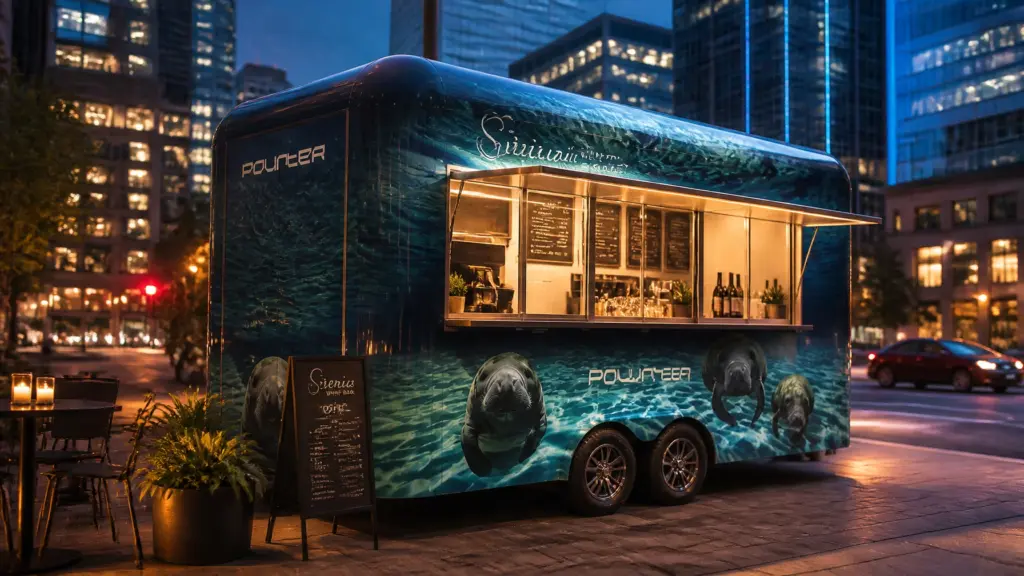
The transition to battery power is more than just swapping out a generator; it is about a holistic approach to custom food trailers. At Pourter, our units are engineered from the ground up to be energy-efficient. Our signature rounded corners aren't just for a fast-growing, modern aesthetic: they contribute to a more aerodynamic and structurally sound unit that houses our proprietary battery systems safely.

Every unit we build features a full-unit wrap, ensuring that your brand looks as professional as the technology inside. We avoid the "blocky" look of traditional manufacturers, instead delivering a high-resolution, polished product that commands attention for its design rather than its noise.
Powering the Full Shift: Reliability Without the Hum
One of the most common questions in our "Ask Pourter" series is whether a battery can truly handle the load of a commercial kitchen. The answer is a resounding yes. Our systems are designed to power high-draw equipment including:
- Commercial Fryers: Sustaining the high temperatures needed for high-volume service.
- Espresso Machines: Handling the constant heating and pumping required for a busy morning rush.
- Refrigeration: Maintaining precise temperatures for food safety throughout a full 10-12 hour shift.
The stability of battery power also protects your sensitive electronics: like POS systems and digital displays: from the power surges and "dirty power" often associated with cheap generators.

A Strategic Move for Long-Term Growth
As you look toward expansion, the goal is to eliminate friction. The traditional generator is a source of friction: with the city, with the neighbors, and with your own maintenance schedule. By investing in a battery-powered unit, you are future-proofing your business against tightening environmental regulations and positioning your brand as a modern, responsible leader in the mobile industry.
The momentum of the "Quiet Revolution" is growing. Whether you are a multi-unit restaurant group or a boutique coffee roaster, the choice is clear. Join the movement toward a cleaner, quieter, and more profitable future with a food truck manufacturer that understands the demands of the modern expansion city.