
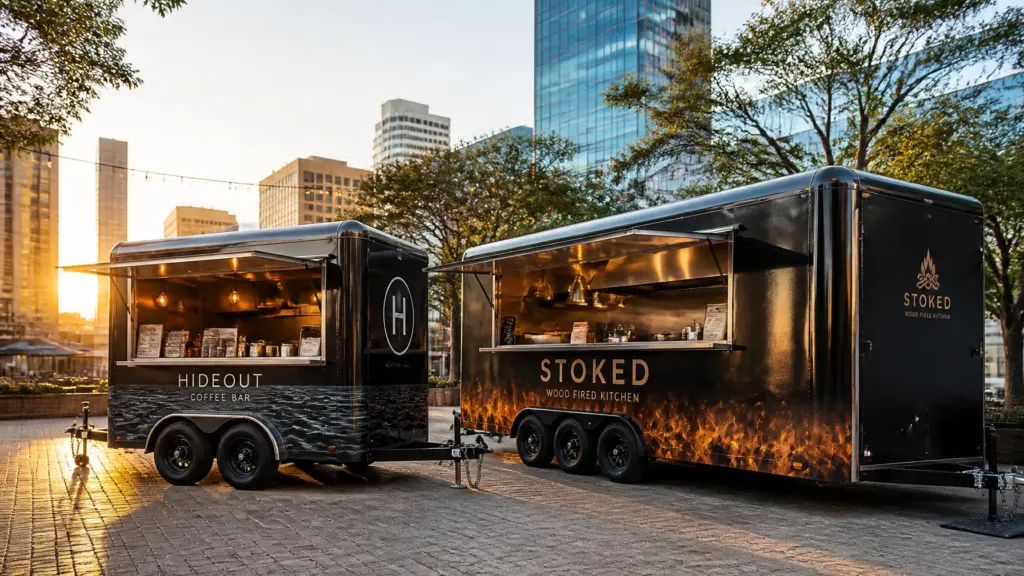
INTRODUCTION. Pourter, a cornerstone of the custom manufacturing industry, has established itself as a premier partner for businesses transitioning from brick-and-mortar stability to mobile flexibility. As a fast-growing leader in the production of high-end mobile food and beverage units, we understand that the most critical decision an entrepreneur or restaurant group makes: aside from the menu itself: is the physical footprint of their operation. The choice between a 16ft and a 24ft unit is not merely a matter of square footage; it is a strategic determination that dictates your production volume, staffing requirements, and overall market reach.
Key Takeaways
- A 16ft trailer is typically the right fit for focused menus, lower overhead, and tighter urban or event-site maneuverability.
- A 24ft trailer is better suited to high-volume service, multi-station kitchen layouts, and more complex menus.
- Menu complexity, health code requirements, towing capacity, and storage needs should drive your size decision.
- Businesses comparing custom food trailers near me should focus on workflow and long-term growth, not just starting footprint.
- Pourter’s urban food trailers and portfolio offer useful examples of how different trailer sizes support different concepts.
The 16-Foot Unit: A Staple of Maneuverability and Focused Menus
The 16-foot trailer is often the historic starting point for successful mobile expansions. This size offers a balanced combination of kitchen capacity and logistical ease, making it a favorite for coffee shops, cocktail bars, and specialized dessert concepts. When maneuverability is a priority: such as navigating tight urban streets or fitting into crowded farmers' markets: the 16ft footprint is the gold standard.
For concepts like the Sirenia Coffee and Wine Bar, a 16-foot unit provides ample space for high-end espresso machines, refrigeration for perishables, and a service window that keeps the staff close to the customers. In this environment, a crew of two to three people can operate with maximum efficiency, as every piece of equipment is within a single step’s reach. For founders starting their research with searches like custom food trailers near me, this size often represents the most practical entry point into a well-designed mobile operation.

Key Advantages of the 16ft Footprint:
- Accessibility: Fits into standard event spaces and parking spots that would be off-limits to larger rigs.
- Lower Overhead: Generally requires a less heavy-duty tow vehicle and incurs lower fuel and maintenance costs.
- Speed of Service: Ideal for "menu-first" operations that focus on 4–6 high-quality items served at high speed.
The 24-Foot Unit: A Powerhouse for Full-Service Culinary Expansion
As businesses scale, the 24-foot unit emerges as a popular choice for multi-unit restaurant chains and established catering companies that refuse to compromise on their menu's complexity. A 24-foot custom food trailer is essentially a professional restaurant kitchen on wheels. For operators comparing food trailers for sale near me, this category often becomes the benchmark once menu depth, staffing, and output begin to expand.
This size is designed for high-volume production, capable of supporting a staff of four to five people. With the extra eight feet of length, you gain the ability to install separate stations: a hot line for grilling and frying, a cold prep station for salads or sandwiches, and even a dedicated expo area. This separation of tasks is what allows a mobile unit to mirror the output of a traditional kitchen.

Why Choose a 24ft Unit?
- Menu Depth: If your menu features 7 or more items that require multiple cooking methods (e.g., pizza ovens, deep fryers, and flat-tops), the 24ft unit is a necessity.
- Integrated Technology: These larger units are often the first to utilize the latest technology, such as self-pour draft systems and advanced digital POS setups that require more interior real estate.
- Storage and Prep: Perfect for multi-day festivals where onboard storage for inventory is critical to maintaining momentum without constant restocking.
Menu Complexity and Layout Efficiency
The decision between these two sizes should always be driven by your menu. A common mistake in the industry is over-building. If you are serving artisanal grilled cheese and tomato soup, a 24-foot unit might actually decrease your efficiency. The increased walking distance between the fridge and the grill can slow down service times during a rush.
Conversely, attempting to cram a full-service burger and wings menu into a 16-foot unit can create a hazardous and frustrating work environment. At Pourter, we emphasize layout efficiency through "zoning." In a 16ft unit, zoning is vertical and compact. In a 24ft unit, zoning is horizontal and station-based.
For high-end activations like the Aire event setup, a larger footprint allows for an integrated aesthetic that includes digital displays and wood paneling, turning the unit from a simple food kiosk into a brand destination.

The Technical Reality: Health Codes and Towing
Regardless of size, every mobile food kiosk must adhere to rigorous NSF and local health department standards. This includes specific requirements for three-compartment sinks, handwashing stations, and wastewater tank ratios.
A 16-foot unit often reaches its weight and space limit more quickly when these technical requirements are added. If your local health code requires oversized grease traps or multiple hand sinks, you might find that a 24-foot unit offers the "breathing room" necessary to pass inspection without sacrificing prep space.
Furthermore, the power requirements for these units have evolved. Many Pourter clients are now opting for lithium battery power systems to eliminate the noise and fumes of traditional generators. While battery tech is compact, the storage racks for larger banks are more easily integrated into the chassis of a 24-foot trailer.
Branding and the Pourter Aesthetic
One of the defining characteristics of a Pourter unit is our commitment to a modern, approachable aesthetic. Every unit we build features our signature rounded corners: a design choice that is both aerodynamic for towing and visually softer than the blocky, industrial look of traditional trailers.
Whether you choose a 16ft or a 24ft unit, the visual impact of a full-unit wrap is undeniable. A 24-foot trailer provides a massive canvas for your brand’s storytelling, acting as a moving billboard that builds credibility before the customer even sees the menu. For brands looking to stand out at a TILIT Utility Show or a major festival, the scale of a 24-foot unit combined with a sleek, vibrant wrap creates an immediate sense of authority.

Making the Final Call
Choosing the right size is about more than just the present; it is about where your brand is headed.
- Choose 16ft if: You are an entrepreneur or small business focusing on high-speed service, lower overhead, and specialized menus.
- Choose 24ft if: You are a restaurant group or high-volume caterer needing full kitchen capabilities, multi-station workflows, and a massive brand presence.
At Pourter, we don't just build trailers; we build the future of your brand's mobility. By focusing on the intersection of menu complexity, technical requirements, and aesthetic appeal, we ensure that whether you go with 16 or 24 feet, your unit is a cornerstone of your success.
Ready to start your build? Explore our urban food trailers and recent projects to see how we’ve helped brands like yours go mobile.