
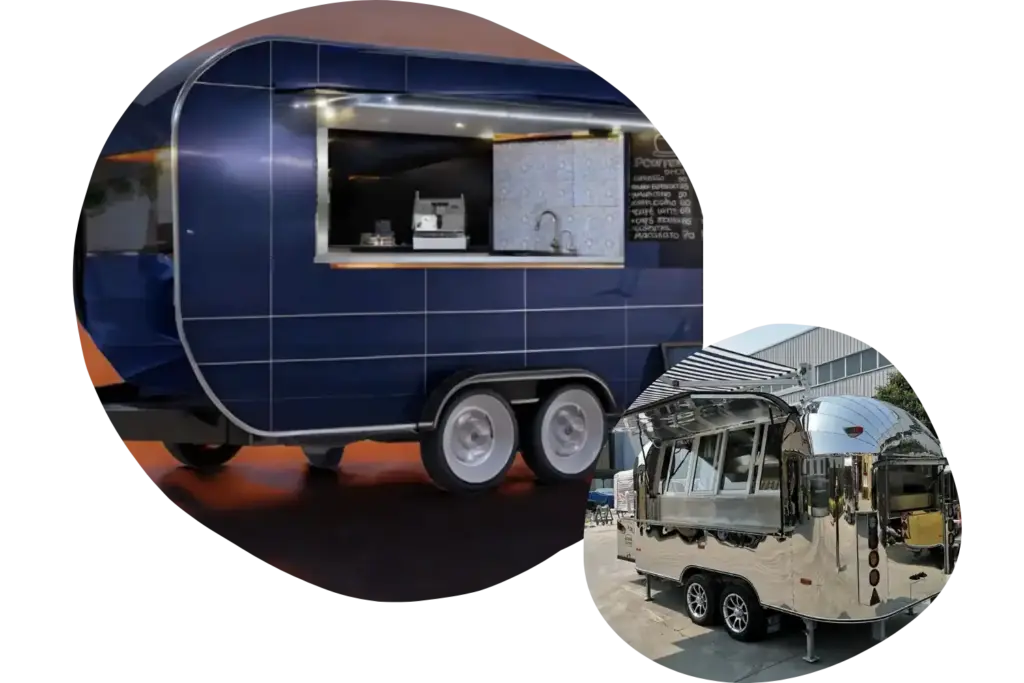
Meta description: Learn how to finance a custom food trailer in 2026 with SBA loans, equipment financing, leasing, working capital, and a lender-ready business plan.
Focus keyword: custom food trailer
Key Takeaways
- SBA 7(a) loans can cover equipment, build costs, working capital, and other approved business expenses.
- Equipment loans and lease-to-own programs can be faster and more focused on the trailer itself.
- Lenders want a clear business plan, realistic financial projections, documented personal and business finances, and a detailed builder quote.
- Plan for a deposit and milestone payments rather than assuming the entire build cost is paid upfront.
- Compare total repayment, fees, buyout terms, and cash-flow impact: not only the monthly payment.
- Pourter offers financing resources and a structured design-to-delivery process for entrepreneurs, restaurants, cafés, bars, and expanding brands.
INTRODUCTION
A custom food trailer is a flexible growth asset for restaurants, cafés, caterers, beverage brands, and first-time entrepreneurs entering the mobile food industry. In 2026, financing is available through SBA-backed loans, equipment lenders, lease-to-own programs, business lines of credit, and revenue-based products.
The challenge is choosing a structure that supports the entire launch: not just the trailer invoice. A lender will want to understand your concept, operating plan, expected revenue, equipment needs, permits, locations, and ability to repay. The stronger your plan, the easier it becomes to match the right financing product to your business.
Which financing options are available in 2026?
SBA 7(a) loans
The SBA 7(a) program is often the most flexible option for an established operator or a well-prepared startup. According to the U.S. Small Business Administration, eligible uses can include equipment, furniture, fixtures, supplies, short- and long-term working capital, real estate, and multiple-purpose projects.
For a mobile food business, one 7(a) loan may potentially combine:
- The trailer build
- Commercial kitchen or beverage equipment
- A tow vehicle
- Initial inventory and packaging
- Permits, insurance, and marketing
- Payroll and operating reserves
The SBA lists a maximum 7(a) loan amount of $5 million, although the amount available to an individual business depends on lender underwriting, repayment ability, collateral, and project size. Eligibility generally requires a for-profit business operating in the United States, compliance with SBA size standards, creditworthiness, and a reasonable ability to repay.
Startups are not automatically excluded, but they typically need a strong owner profile, relevant experience, meaningful equity, and detailed financial projections.
SBA 504 loans
The SBA 504 program provides long-term, fixed-rate financing for major fixed assets. It can support eligible buildings, real estate, and long-term machinery or equipment, but it cannot be used for working capital or inventory.
That makes 504 financing less common for a standalone trailer launch. It may become more relevant when a growing operator is also investing in a commissary, production facility, or significant long-term equipment. For most new mobile operators, a 7(a) loan or equipment financing is usually easier to evaluate.
Equipment financing and lease-to-own
Equipment financing is designed around the value of the trailer and its installed equipment. The trailer generally serves as the primary collateral, which can make this option attractive when you want a faster process or need to finance a defined build.
Lease-to-own structures can reduce the upfront cash requirement. However, the business may not own the unit until the lease is completed or a buyout is paid. Review the full payment schedule, purchase option, fees, end-of-term conditions, and restrictions before signing.
Pourter’s financing page outlines financing resources, including partnerships intended for food and beverage businesses and equipment buyers. Approval, rates, terms, and tax treatment are determined by the financing provider.
Working capital and revenue-based financing
The trailer is only one part of the launch budget. You may also need cash for commissary rent, insurance, permits, fuel, payroll, inventory, packaging, and launch marketing.
Working capital can come from an SBA loan, microloan, bank line of credit, business term loan, or online lender. Revenue-based financing may be available to an operating business with consistent sales. Instead of a fixed monthly payment, the provider typically collects a percentage of revenue until an agreed repayment amount is reached.
This can align payments with sales volume, but the total cost may be higher than a conventional loan. Always compare the effective cost, repayment cap, collection percentage, estimated payoff period, and impact on daily cash flow.

What do lenders want to see in a mobile food business plan?
Lenders are not only evaluating the unit. They are evaluating the business that will operate it.
A lender-ready plan should explain:
- The concept: Describe your menu, service model, brand position, and customer base.
- The operating model: Explain where you will work, how often you will move, and whether revenue will come from events, catering, recurring sites, private bookings, or a combination.
- The market: Identify competitors, local demand, permits, event calendars, and realistic sales opportunities.
- The use of funds: Separate the trailer build from equipment, vehicle costs, permits, inventory, payroll, marketing, and reserves.
- The financial forecast: Include monthly sales assumptions, average ticket size, service volume, food cost, labor, insurance, fuel, commissary costs, debt payments, and owner compensation.
- The repayment plan: Show how projected operating cash flow will cover the loan payment while leaving room for maintenance and slower periods.
If you are an established restaurant adding a mobile unit, include historical financial statements and explain how the trailer expands your current business. If you are a startup, emphasize industry experience, owner investment, signed event commitments, catering contracts, or other evidence of demand.
The SBA’s Lender Match tool recommends preparing a business plan, amount and use of funds, credit history, financial projections, collateral information, and industry experience before contacting lenders.
How much should you put down, and when are payments made?
Custom builds are usually funded through a deposit and staged payments. The exact structure depends on the builder and lender, but your budget should account for:
- Initial deposit to reserve production
- Design, engineering, and approval milestones
- Equipment purchases and installation
- Plumbing and electrical completion
- Branding, wrap, and final finish work
- Inspection, delivery, and training
Before applying, request a formal proposal with the layout, specifications, equipment list, total price, estimated production schedule, and payment milestones. A lender may also request manufacturer information and documentation showing what each draw will accomplish.
Pourter describes its process as Plan & Propose, Secure & Design, Build & Prepare, and Deliver & Train. Its project process states that the Michigan team typically crafts a mobile food and beverage trailer in 12–16 weeks, subject to project details and production scheduling.
A clearly documented build schedule helps the lender understand when money is needed and helps you avoid a cash shortfall during production.
How should you compare the total cost?
A lower monthly payment does not always mean a better financing offer. Compare every proposal using the same project amount and repayment period.
Review:
- Amount borrowed
- Down payment
- Interest rate or factor rate
- Origination and documentation fees
- Monthly or weekly payment
- Number of payments
- Total repayment
- Prepayment terms
- Personal guarantee requirements
- Collateral requirements
- Lease buyout or residual value
- Whether taxes, shipping, or equipment are included
For example, extending a loan term can lower the monthly payment but increase the total interest paid. A lease may require less money upfront but cost more over the full term. Revenue-based financing may seem manageable during busy months but reduce operating cash during slower periods.
Build a comparison table and calculate the total dollars paid before choosing. Your goal is not simply to qualify. It is to preserve enough cash for the business to operate successfully after delivery.
Where can you finance a mobile unit near me?
Location affects both financing and business planning. Permit requirements, commissary rules, event demand, insurance costs, and seasonal traffic vary by market.
In Austin, a coffee concept, taco operation, or beverage-focused unit may evaluate festivals, corporate campuses, breweries, and recurring private locations. An entrepreneur searching for custom food trailers near me should confirm local health department rules and identify a commissary before finalizing the design.
In New York City, operating conditions, site restrictions, parking, licensing, and event access require careful planning. A mobile brand should document how it will manage storage, service logistics, transportation, and approved operating locations. Businesses researching custom food trailers near me should also compare the cost of permits, insurance, and local support services: not only the build price.
The same principle applies whether you are searching for a food trailer near me in Dallas, Chicago, Los Angeles, or another market: location-specific operating costs belong in the financing plan.
Which Pourter unit is right for a financed launch?
Your financing request should match the unit and the business model.
- The Urban collection can suit operators seeking a compact, contemporary platform for food, beverage, or coffee service.
- The Classic/Vintage collection can support brands that want a distinctive visual identity for events, hospitality, or street service.
- The bar and beverage trailer collection is relevant for beverage programs, private events, hospitality groups, and mobile bar operations.
- The Next Gen collection provides another option for businesses planning a modern, technology-forward mobile presence.
Pourter’s approach combines concept development, layout planning, branding, engineering, and delivery. That integrated process can make it easier to prepare a complete lender package because the proposal connects the physical unit to the intended business operation.
For additional planning guidance, read How to Start a Mobile Food Business Using a Custom Trailer and Why Urban Food Trailers Are Transforming the Mobile Food Business in the USA.

What should you do before applying?
Use this sequence to make the process more efficient:
- Define the menu, service model, locations, and required equipment.
- Obtain a detailed quote for the unit and separate optional upgrades from required costs.
- Build a complete startup budget with three to six months of operating reserves.
- Review personal credit, business credit, tax returns, bank statements, and existing debt.
- Prepare a three-year forecast with conservative, expected, and strong performance scenarios.
- Ask lenders how they handle deposits, progress payments, inspections, and final disbursement.
- Compare SBA, equipment, lease-to-own, working capital, and revenue-based offers by total cost.
- Confirm permits, insurance, towing, delivery, commissary, and local operating requirements.
Whether you are evaluating food trailers for sale, planning a coffee trailer, expanding into a mobile bar, or comparing custom concession trailers, the financing decision should support the whole operating model. A well-scoped project, realistic forecast, and transparent build schedule give lenders the information they need: and give you a clearer path to a sustainable launch.
Financing terms, SBA eligibility, tax treatment, and local requirements vary. Consult qualified lenders, accountants, attorneys, and local regulators before making a financing decision.