
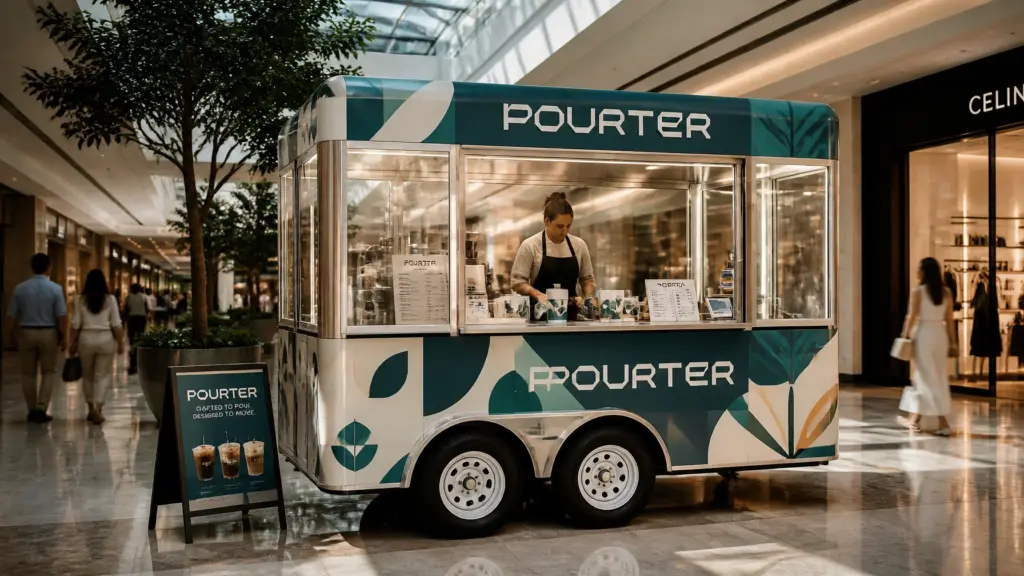
INTRODUCTION: Pourter, a cornerstone of the custom mobile unit manufacturing industry, has established itself as the premier solution for businesses seeking to transcend the traditional boundaries of brick-and-mortar retail and food service. As the market for experiential brand activation continues to surge, the transition from outdoor festivals to high-traffic indoor environments has become a critical objective for fast-growing restaurant chains, boutique coffee roasters, and luxury retail brands alike. By engineering battery powered food carts and mobile retail units that operate without the logistical constraints of traditional fuel-based setups, Pourter is enabling a new era of indoor mobility.
When you think of "mobile food," your mind probably jumps to a sprawling truck parked on a sun-drenched street corner. But what if you want to bring that same energy into the Mercedes-Benz Stadium in Atlanta or a luxury mall in downtown Dallas? Suddenly, the "truck" part of the equation becomes a massive liability. You can’t exactly park a diesel engine in the middle of a convention center floor.
That’s where the "Ask Pourter" series comes in. We’re diving into how a new generation of custom food trailers and kiosks is changing the game for indoor events.
The 'Zero Fumes' Advantage: Why Batteries Win
If you’ve ever tried to plan an indoor activation in a city like Seattle or Nashville, you know that the "no exhaust" rule is non-negotiable. Stadiums, convention centers, and hotel lobbies are airtight ecosystems. Bringing in a gas-powered generator or a propane-fueled kitchen is a fast way to get your permit denied and your event shut down.
Our battery-powered mobile food kiosks eliminate this hurdle entirely. Because these units run on high-capacity internal power systems, they produce zero emissions. This "Zero Fumes" advantage makes them the only viable option for the most prestigious indoor venues. You get the full power of a professional kitchen or a high-end retail shop without the carbon monoxide or the heavy scent of fuel hanging over your customers.

Navigating NFPA 96: Simplifying the Approval Process
Fire safety is the biggest hurdle for indoor mobile vending. In the industry, we talk a lot about NFPA 96: the standard for ventilation control and fire protection of commercial cooking operations. If you’re cooking anything that creates grease-laden vapors (think burgers, tacos, or even certain grilled paninis), you’re essentially running a commercial kitchen in a mobile box.
Traditionally, this meant you needed complex, permanent exhaust systems. However, electric units simplify the fire marshal’s job. By using electric induction and high-efficiency ventless hood systems, our units are much easier to permit. Since there are no propane tanks on board, you bypass many of the strict NFPA 58 rules that usually keep food trailers stuck outside. At Pourter, we build with these regulations in mind, ensuring our engineering and design process meets the high standards required by the toughest city inspectors.
Brand Activation: Aesthetics Matter
Indoor events are often high-end environments. Whether it’s a corporate lobby in Dallas or a luxury hotel in Nashville, a blocky, industrial-looking trailer just won't cut it. Your unit needs to look like it belongs in the room.
That’s why we’ve standardized two key design elements:
- Rounded Corners: Every Pourter unit features sleek, rounded edges. This softens the silhouette and gives the unit a modern, high-tech feel that fits perfectly in a contemporary retail space.
- Full-Unit Wraps: We don’t just slap a logo on a white box. Every unit is treated with a high-resolution, full-unit wrap. This allows your brand to own the entire visual space, turning a simple cart into a powerful brand activation unit.

Mobility and Access: The Double Door Test
The biggest secret to a successful indoor mobile unit is its footprint. If you can’t get it through the door, you can’t use it. We’ve designed our indoor mobile retail units to fit through standard commercial double doors.
This level of engineering means you aren’t limited to the loading dock. You can wheel your mobile bar directly onto the convention floor or into a VIP suite. This mobility allows brands to follow the foot traffic as it shifts throughout the day, providing a level of flexibility that fixed kiosks simply can't match.

The Vibe: Creating Quiet Zones
The customer experience indoors is vastly different from the outdoors. Outside, there’s ambient city noise, wind, and traffic. Inside, every sound is amplified. A traditional generator creates a constant vibration and a low-frequency hum that can ruin the "vibe" of a luxury event or a professional conference.
Battery power provides the "Quiet Zone" advantage. Our units operate in near silence. Whether you’re serving espresso during a keynote speech in a Nashville hotel or selling merchandise in a quiet museum atrium, the only thing your customers will notice is your brand and your service: not the hum of an engine.
Versatility: From Pop-Up Retail to Indoor Coffee Bars
The use cases for these units are as varied as the brands that use them. We’ve seen entrepreneurs in Seattle launch pop-up retail shops in the middle of busy malls, and established coffee chains in Atlanta use them to service massive crowds at indoor stadiums.
By removing the need for a "truck" and a generator, you open up the entire map. You can check out our full gallery to see how various brands have integrated these units into their growth strategies. From high-volume concessions to intimate brand activations, the portability and power of a battery-operated system change what's possible.

Moving Toward an Indoor Future
The trend is clear: the future of mobile retail and food is moving indoors. As venues look for more ways to monetize their hallways and concourses, they are looking for partners who can provide safe, clean, and beautiful solutions.
If you’re a brick-and-mortar looking to expand or an entrepreneur ready to launch your next big idea, it’s time to think beyond the curb. A battery-powered cart isn’t just a piece of equipment; it’s a key that unlocks the most valuable real estate in the city.
Ready to start your indoor journey? Let's talk about building something that fits your brand: and your next indoor venue.