
Quick Summary
- Clean, operational trailers with complete records attract more serious buyers and stronger offers.
- Document the age, service history, and remaining useful life of every major appliance and battery system.
- A professional full wrap can increase perceived value when it is well maintained, but highly personal branding may narrow the buyer pool.
- Price against comparable listings: not only against your original investment.
- Listing before peak demand can improve visibility and reduce time on the market.
- A trade-in toward a larger or newer unit may make sense when speed, continuity, and expansion are more valuable than maximizing a private-sale price.
INTRODUCTION
A food trailer is a productive business asset, a recognizable customer touchpoint, and: when properly maintained: a valuable piece of commercial equipment. For owners preparing to sell in 2026, the strongest results usually come from treating the trailer like a complete operating system rather than a used shell.
The resale market rewards clarity. Buyers want to know how the unit was built, how it was used, which systems have been serviced, and what work they will need to complete after purchase. Whether you operate a coffee trailer, mobile bar, concession trailer, or full-service kitchen, preparation can have a direct effect on the final offer.
The goal is not simply to make the trailer look newer. It is to make the buyer confident that the unit can begin generating revenue with minimal downtime.
What should you do before listing a food trailer for sale?
Begin with a structured inspection 30 to 45 days before you plan to publish the listing. Divide the work into four areas: appearance, structure, equipment, and documentation.
First, deep-clean the interior and exterior. Degrease cooking surfaces, clean floors and walls, empty storage areas, and remove residue around sinks, refrigeration, and service windows. A clean trailer signals disciplined ownership and allows buyers to focus on value instead of deferred maintenance.
Next, inspect the physical trailer. Check the roof, seals, flooring, frame, suspension, coupler, safety chains, brakes, tires, exterior lights, and wiring. Repair water intrusion, soft flooring, rust, damaged trim, or loose hardware before showing the unit.
Then test every operating system. A buyer may want to see refrigeration, cooking equipment, ventilation, plumbing, electrical service, lighting, HVAC, and battery systems working under normal conditions. Schedule professional service for any equipment that is unreliable or overdue for maintenance.
Finally, assemble a sales folder containing:
- Title, registration, VIN, and build information
- Original invoices and equipment manuals
- Maintenance and repair records
- Warranty documents
- Health department or inspection records, where transferable
- Electrical, plumbing, propane, and battery specifications
- A current equipment list with model numbers and installation dates
This level of preparation is useful whether you sell privately, work with a dealer, or contact concession trailer manufacturers about a replacement unit.
How does a full brand wrap affect resale value?
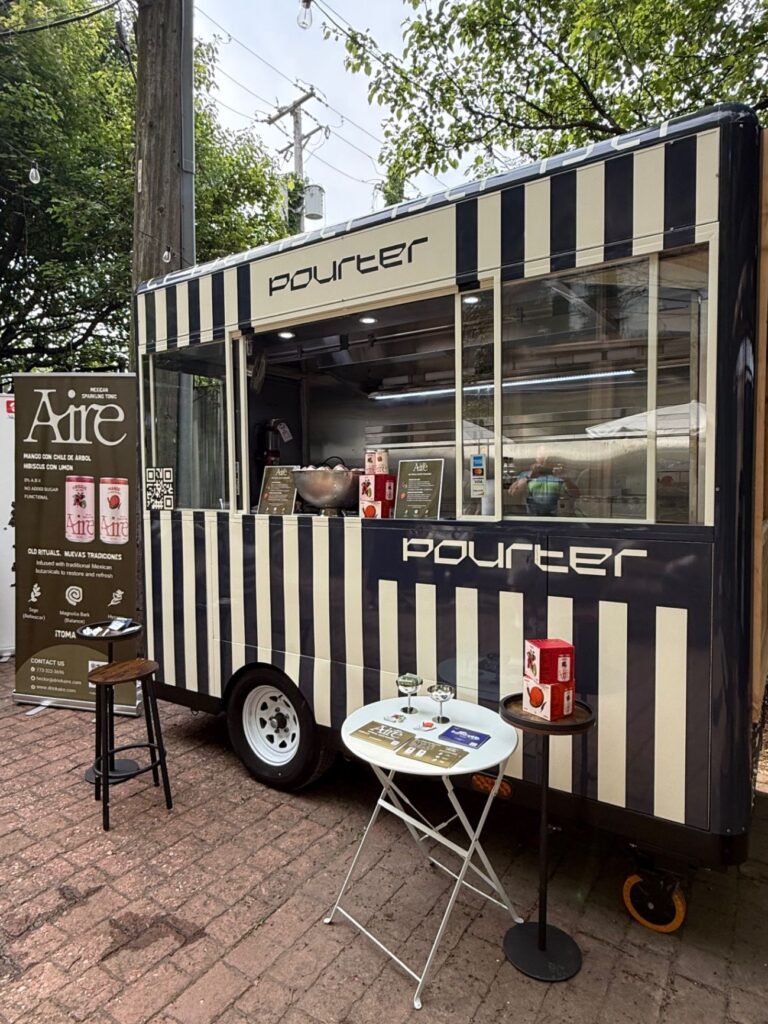
A full wrap can support resale value because it protects exterior panels, creates a polished first impression, and shows buyers how effectively the trailer can function as a branded customer destination. Pourter’s Next-Gen trailers are designed around high-impact branding, with custom vinyl wrap included as part of the listed configuration.
The effect depends on the condition and flexibility of the graphics. A clean, professionally installed wrap with no significant fading, peeling, bubbling, or damage can make the trailer easier to market. It may also help buyers visualize their own concept.
However, a highly specific wrap can limit interest if it is closely tied to one restaurant, menu, or location. Before listing, decide whether to:
- Sell the trailer with the existing wrap and price it as a turnkey branded asset.
- Offer a removal or rewrap allowance.
- Remove the graphics and present a clean, neutral exterior.
- Include editable design files so the buyer can adapt the artwork.
Do not describe a wrap as an automatic dollar-for-dollar improvement. Its value comes from condition, quality, and usefulness to the next operator.

What will buyers inspect inside the trailer?
A serious buyer will evaluate both the trailer and the business risk attached to it. They may inspect:
- Frame, axle, tires, brakes, hitch, and suspension
- Roof, seals, flooring, and evidence of leaks
- Electrical panels, outlets, lighting, and generator connections
- Freshwater, wastewater, plumbing, and sinks
- Refrigeration, cooking appliances, hood, and fire suppression
- Battery capacity, charging equipment, and inverter performance
- Service windows, counters, storage, and ventilation
- Compliance documents and inspection history
Equipment age deserves special attention. List the installation year and, when available, the manufacture date for refrigerators, freezers, fryers, ovens, espresso machines, HVAC units, generators, and other major appliances. If a component has been replaced, identify the replacement date rather than using the age of the original trailer.
Battery systems require the same transparency. Disclose the battery chemistry, installation date, rated capacity, charge cycles if available, warranty status, and any measurable reduction in capacity. A newer lithium-ion system may support value, but buyers will want to understand its remaining useful life and replacement cost.
Accurate disclosure builds trust. It also prevents a buyer from discovering an undocumented issue during inspection and using it to renegotiate the entire deal.
How should you price a used trailer against comparable listings?
Start with the market, not emotion. Search listings that match your trailer by:
- Year and overall condition
- Length, width, and weight
- Builder and construction quality
- Kitchen or beverage configuration
- Equipment brand and age
- Battery and power system
- Wrap, menu system, and included branding
- Location and delivery requirements
Review asking prices for used food trailers for sale across multiple marketplaces and regional listings. Asking price is not the same as final sale price, so look for repeated listings, price reductions, and units that appear to have sold quickly.
As a broad planning reference, well-maintained trailers are often discussed in the range of 60% to 80% of original build cost, depending on age, equipment, documentation, and demand. That range is not an appraisal. A five-year-old trailer with worn equipment and limited records may fall below it, while a newer, professionally built unit with strong documentation and a flexible layout may compete at the upper end.
Separate asset value from business value. If you are selling only the trailer and equipment, price those assets directly. If the sale includes a profitable operating business, social accounts, recipes, contracts, permits, or established event relationships, prepare financial records to support the additional value.
When is the best time to sell?
Demand often increases before the main operating season, when entrepreneurs and established restaurants are planning festivals, private events, patios, and seasonal locations. In many regions, late winter and early spring can provide strong visibility for sellers preparing for spring and summer operations.
Local conditions matter. A trailer designed for warm-weather events may attract more attention before the season begins. A coffee trailer or mobile bar may have different demand patterns depending on festivals, corporate events, and private bookings.
If you are searching for a food trailer near me to benchmark your price, compare listings within your delivery radius as well as national listings. A trailer that appears competitively priced in one region may be expensive after transportation, permitting changes, and equipment modifications in another.
Should you trade in the trailer toward a new build?
A trade-in can be a practical option when the priority is continuity. A builder may evaluate the existing trailer, apply an agreed value toward a new unit, and coordinate the transition around your operating calendar. The trade-in offer may be lower than the highest possible private-sale price, but it can reduce advertising time, buyer screening, storage, and transaction risk.
Pourter offers several paths for an owner preparing to scale:
- An Urban trailer provides a compact platform for food, beverage, and coffee concepts.
- A Classic or Vintage trailer adds a distinctive exterior while supporting modern commercial functions.
- A bar and beverage trailer can support drink service, tasting rooms, and event-based operations.
A trade-in discussion should cover the existing unit’s condition, equipment, title status, wrap, battery age, and delivery requirements. Ask for the trade value, new-build price, removal costs, and any credits in writing.

When does upgrading to a larger unit make financial sense?
A larger trailer is justified when capacity is limiting revenue: not simply because more space would be convenient. Look for measurable indicators:
- Customers regularly wait because the service line is too slow.
- You turn down events because the current layout cannot support the menu.
- Storage, refrigeration, or prep space limits your daily sales.
- Two operators cannot work safely and efficiently inside the unit.
- Your event calendar supports higher volume consistently.
- The cost of temporary equipment and off-site prep is increasing.
- Your current trailer requires frequent modifications to meet demand.
Compare the expected contribution from the larger unit with the full upgrade cost. Include the new trailer, equipment, towing vehicle, insurance, permits, storage, financing, downtime, and staff requirements. A larger unit makes financial sense when the additional capacity can produce reliable revenue and the existing trailer still has enough resale or trade-in value to reduce the capital gap.
Owners searching for custom food trailers near me or coffee trailers near me should also consider delivery logistics, local inspection requirements, and service support before choosing a builder. A larger unit is an operational decision as much as a design decision.
What should the final listing include?
Use bright, accurate photography showing every side of the trailer, the hitch, undercarriage, interior, equipment, service area, battery system, and storage. Include close-ups of any wear instead of hiding it. A detailed listing reduces unnecessary inquiries and attracts better-qualified buyers.
State the trailer’s dimensions, weight, power requirements, equipment ages, maintenance history, included branding, title status, location, and asking price. Explain whether the sale includes inventory, permits, recipes, social accounts, or only the physical assets.
For owners comparing custom food trucks and trailers, the documentation can be as important as the design. A clear history helps demonstrate why a professionally built, properly maintained unit deserves serious consideration.
For more perspective on how mobile units support established businesses, see Why Urban Food Trailers Are Transforming the Mobile Food Business in the USA.
FAQ: Selling a Food Trailer in 2026
How can I sell my trailer faster?
Clean it thoroughly, repair visible defects, document all equipment, price it against comparable units, and publish complete photography and specifications.
Does a full wrap increase resale value?
It can improve presentation and buyer confidence when it is high quality and in good condition. Highly personal graphics may reduce the number of interested buyers, so consider offering a rewrap allowance or editable artwork.
Should I disclose old equipment if it still works?
Yes. List the age, service history, and current condition of every major appliance. Transparency helps prevent inspection surprises and supports a more credible asking price.
Is a private sale better than a trade-in?
A private sale may produce a higher gross price, while a trade-in can provide speed, convenience, and a simpler path into a new build. Compare the net proceeds and the value of your time.
What matters most to buyers?
Buyers typically focus on structure, safety, equipment condition, power and plumbing systems, compliance, documentation, and whether the layout can support a profitable concept.
Selling a food trailer is a commercial transition, not just a classified listing. Prepare the unit, document its history, price it against the market, and be direct about its strengths and limitations. A well-presented trailer gives the next operator a clearer path to revenue: and gives you stronger leverage for a private sale, trade-in, or larger custom build.