
Key Takeaways
- Texas HB 2844 creates a statewide framework for mobile food vendors and limits when local governments can require commissary agreements.
- A properly engineered self-contained trailer can help Texas operators reduce recurring commissary costs and operate with more flexibility across markets.
- For buyers searching for self-contained food trailers near me or food trailers for sale near me, the most important factor is not just availability, but whether the unit is built to meet water, waste, sanitation, and power requirements under Texas rules.
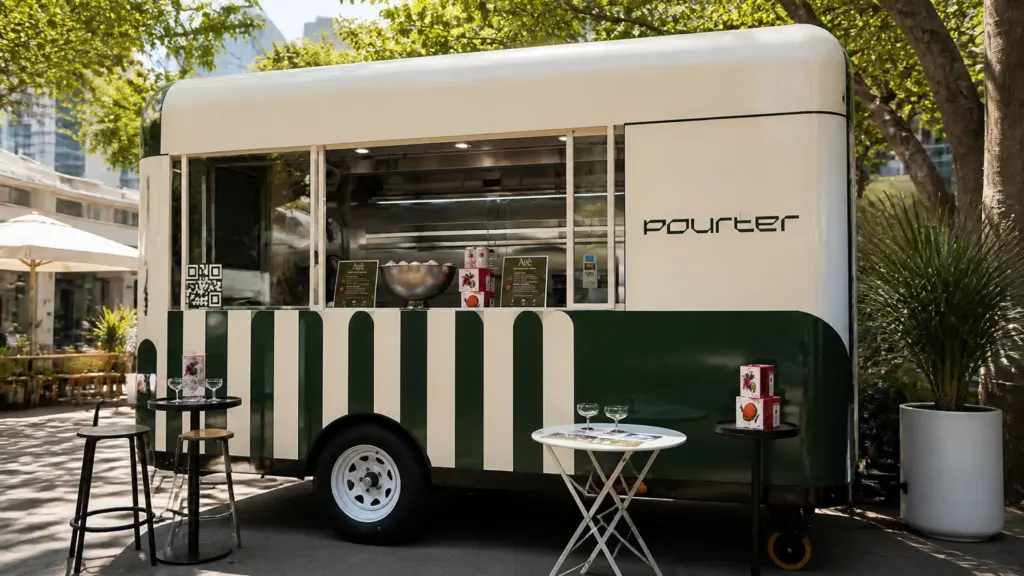
- Pourter’s process page outlines how a custom build moves from concept to compliant production, and our gallery shows how finished units balance performance with strong brand presentation.
INTRODUCTION. Texas House Bill 2844, a landmark legislative shift for the Lone Star State’s mobile food industry, is fundamentally altering the operational landscape for entrepreneurs and established restaurant groups alike. This new mandate, signed into law to streamline the patchwork of local health regulations, creates a unified statewide "mobile food vendor" license that supersedes many restrictive municipal ordinances. For business owners in fast-growing markets like Dallas, Austin, and Houston, the most significant provision of HB 2844 is the ability to operate a "self-contained" unit without the mandatory: and often expensive: association with a traditional commissary or central preparation facility.
The transition to this statewide system, which fully implements in July 2026, represents a transformative event for the mobile hospitality sector. Historically, local authorities could force mobile vendors to sign ironclad contracts with brick-and-mortar commissaries for daily cleaning, water refills, and waste disposal. Under the new law, if your vehicle is equipped with the necessary onboard systems to meet state food-safety standards, local cities can no longer mandate a commissary partnership. This shift places a premium on high-performance food trailers that are engineered to be fully autonomous. For operators researching self-contained food trailers near me, that distinction matters because not every trailer on the market is configured to satisfy these self-sufficiency standards.
The Core of the Change: What is HB 2844?
HB 2844 was designed to eliminate the "patchwork" problem where a food truck might need five different permits to operate across the Dallas-Fort Worth metroplex or the Greater Houston area. By establishing a single license through the Texas Department of State Health Services (DSHS), the state is fostering a more stable environment for business expansion.

The cornerstone of the bill is the protection it offers to "self-contained" vendors. A local authority may not require a mobile food vendor to associate with a commissary if the vehicle carries the equipment necessary to comply with state law. For a state known for its vast geography and entrepreneurial spirit, this means a custom mobile bar or kitchen can now move between cities with unprecedented flexibility, provided the unit’s internal infrastructure is up to the task. For entrepreneurs comparing food trailers for sale near me, that makes build quality and onboard utility design far more important than simply finding the closest available unit.
Defining the "Self-Contained" Unit
To skip the commissary and maintain compliance under HB 2844, your trailer must function as a stand-alone facility. This is not merely about having a sink; it is about a sophisticated integration of plumbing, storage, and sanitation systems that meet NSF standards. At Pourter, we focus on engineering units that exceed these requirements, ensuring our clients are ready for the 2026 implementation and beyond.
A fully self-contained mobile food unit typically requires:
- Expanded Potable Water Capacity: A large, dedicated tank for clean drinking water to support handwashing and warewashing throughout a full shift.
- Oversized Wastewater Management: Texas health rules generally require a gray-water tank that is at least 15% larger than the fresh water supply.
- Advanced Filtration and Heating: On-demand hot water systems and high-grade filtration to ensure all water used in food prep is safe and compliant.
- Three-Compartment Sinks: Sinks large enough to fully submerge the largest piece of equipment used in the unit for the wash-rinse-sanitize cycle.
- Integrated Power Systems: Reliable, quiet power sources that maintain strict temperature controls for refrigeration and hot-holding without interruption.

Why This Matters for Dallas, Austin, and Houston Markets
In cities like Austin, where the food truck scene is a cornerstone of the local culture, commissary fees can range from $500 to over $1,500 per month. For a multi-unit restaurant brand looking to expand, these recurring costs across a fleet of trailers can significantly dampen ROI.
By investing in a self-contained unit, owners can redirect those monthly fees toward high-quality ingredients, staff training, or further expansion. The ability to document compliant water and waste handling: using approved dump sites and potable water fill stations: replaces the need for a "home base" commissary. This gives vendors the freedom to follow the crowds, whether it’s a high-volume stadium activation in Arlington or a month-long residency in a Houston entertainment district.
Strategic Engineering with Pourter
Building a unit that meets the "self-contained" definition requires more than just adding bigger tanks; it requires a strategic approach to weight distribution and interior layout. A trailer carrying 50 to 100 gallons of water needs a heavy-duty chassis and precise engineering to remain safe on Texas highways.

Our manufacturing process prioritizes these technical requirements without sacrificing the sleek, modern aesthetic Pourter is known for. We utilize:
- Full-Unit Brand Wraps: Moving away from simple logos to immersive, high-resolution graphics that turn the trailer into a mobile billboard.
- Rounded Corner Geometry: A signature design choice that improves aerodynamics and provides a polished, professional look that stands out in a crowded market.
- High-Capacity Infrastructure: Designing custom tank systems that fit seamlessly within the frame, maintaining a low center of gravity while maximizing capacity.
The Path to a Statewide License
The momentum toward the July 2026 deadline is already influencing how savvy entrepreneurs are ordering their next units. While current local rules in cities like San Antonio or El Paso may still require a commissary today, any unit built now should be "future-proofed" for the HB 2844 era.
The state mobile food vendor license will eventually act as a "passport," allowing you to pass a single state-level inspection and operate across city lines. This reduces administrative overhead and allows operators to focus on what they do best: serving high-quality food and beverages to the people of Texas.

Conclusion: A New Era for Texas Entrepreneurs
Texas HB 2844 is more than just a regulatory update; it is a catalyst for innovation in the mobile food and retail space. By removing the commissary bottleneck for self-contained units, the state has opened the door for more autonomous, profitable, and flexible business models.
Whether you are an established restaurant brand looking to take your menu on the road or a new entrepreneur ready to launch a flagship mobile unit, the technical specifications of your build have never been more critical. Investing in a high-performance, self-contained trailer today ensures that you are positioned to lead the market when the new state rules take full effect.
To see how we can build your future-ready, self-contained mobile unit, explore our full gallery of custom builds, review our process page, or contact our team to discuss your Texas-specific requirements.