
INTRODUCTION. Texas HB 2844, a transformative piece of legislation for the mobile food industry, is set to revolutionize how entrepreneurs operate across the Lone Star State. Starting July 1, 2026, the Texas Department of State Health Services (DSHS) will launch a statewide food truck permit, an administrative cornerstone that replaces the fragmented, city-by-city licensing system that has long hindered the growth of mobile culinary businesses. This historic shift moves Texas toward a more streamlined, business-friendly environment, allowing operators to move their units across county lines without the administrative burden of dozens of overlapping local health permits.
For years, the mobile food industry in Texas was a patchwork of red tape. An entrepreneur based in Austin who wanted to serve a festival in Round Rock or a corporate event in San Antonio was forced to navigate a labyrinth of different fees, inspection schedules, and equipment requirements. HB 2844 effectively dismantles these barriers, creating a unified standard that prioritizes safety while fostering economic expansion. At Pourter, we have spent years engineering high-efficiency units designed for durability and compliance; now, with HB 2844, the hardware we build is finally matched by the software of state regulation.
Understanding the Three-Tier Classification System
The core of HB 2844 is its risk-based classification system. The DSHS has categorized mobile food units into three distinct types: Type I, Type II, and Type III. This structure ensures that a simple coffee trailer isn't subjected to the same rigorous inspection requirements as a full-service, multi-step catering kitchen.
Type I: Low-Risk Operations
A Type I vendor typically dispenses prepackaged foods and non-TCS (Time/Temperature Control for Safety) beverages. If you are running a retail-focused unit or a simple beverage trailer selling bottled drinks and shelf-stable snacks, you fall into this category.
- Best For: Retail pop-ups, packaged snack trailers, and simple dry-goods mobile shops.
- Regulatory Burden: Lowest application fees and minimal inspection requirements.
Type II: Limited Handling and Preparation
This is the "sweet spot" for many food trailers. Type II units dispense food that requires limited handling. Think of cook-and-serve operations like burger trailers, taco units, or hot dog stands where items are prepared fresh to order but do not involve complex cooling or reheating processes.
- Best For: Fast-casual mobile units, most coffee shops with simple food menus, and mobile bars.
- Regulatory Burden: Moderate fees and a pre-licensing health inspection to ensure sanitation standards are met.
Type III: Full-Service and Complex Preparation
Type III vendors are the heavy hitters of the mobile food world. These units prepare, cook, hold, and serve food that involves complex processes: such as multi-step preparation, cooling, and reheating. If you are operating a mobile version of a brick-and-mortar restaurant or a high-volume catering truck, you are likely a Type III.
- Best For: Full-service mobile kitchens, BBQ units with extensive holding times, and gourmet catering trailers.
- Regulatory Burden: Highest fee tier with the most comprehensive inspection protocols.

The Preemption of Local Red Tape
One of the most significant victories within HB 2844 is the preemption of restrictive local ordinances. Historically, certain municipalities implemented "protectionist" rules that had little to do with public health and everything to do with limiting competition for traditional brick-and-mortar restaurants.
With the implementation of this statewide permit, local governments are now prohibited from enforcing several common but burdensome requirements:
- GPS Tracking Mandates: Some cities previously required food trucks to install GPS units so code enforcement could track their movements. HB 2844 removes this invasive requirement.
- Proximity Rules: Rules that prohibited a food truck from parking within a certain distance of a physical restaurant are being phased out in favor of standardized state zoning allowances.
- Redundant Health Permits: You no longer need to pay for a separate health permit in every city you visit. Once you have your DSHS statewide permit, your health compliance is recognized from El Paso to Houston.
It is important to note, however, that local authorities still maintain control over zoning, parking, and fire safety. You will still need to ensure your custom trailer meets local fire codes and is parked in a legally designated zone.
Massive Cost Savings for Multi-Unit Operators
For the entrepreneur looking to scale, the financial impact of HB 2844 cannot be overstated. Under the old system, a mobile bar or food trailer fleet operating across the Dallas-Fort Worth metroplex could easily spend upwards of $10,000 annually just on various municipal health permits.
Under the new 2026 fee structure, a Type II unit might pay a $600 application fee and a $400 annual inspection fee. While these state fees are higher than a single city's permit used to be, they provide the freedom to operate across the entire state. For a multi-unit operator, the return on investment is immediate. You can now deploy your fleet to whichever city has the highest demand on any given weekend without worrying about whether your paperwork is valid in that specific zip code.

Why Pourter Units are Built for the New Texas Standard
At Pourter, we don't just build trailers; we build compliant, high-efficiency business tools. Our manufacturing process has always prioritized the exact standards that HB 2844 now codifies into state law.
Rounded Corners and Modern Aesthetics:
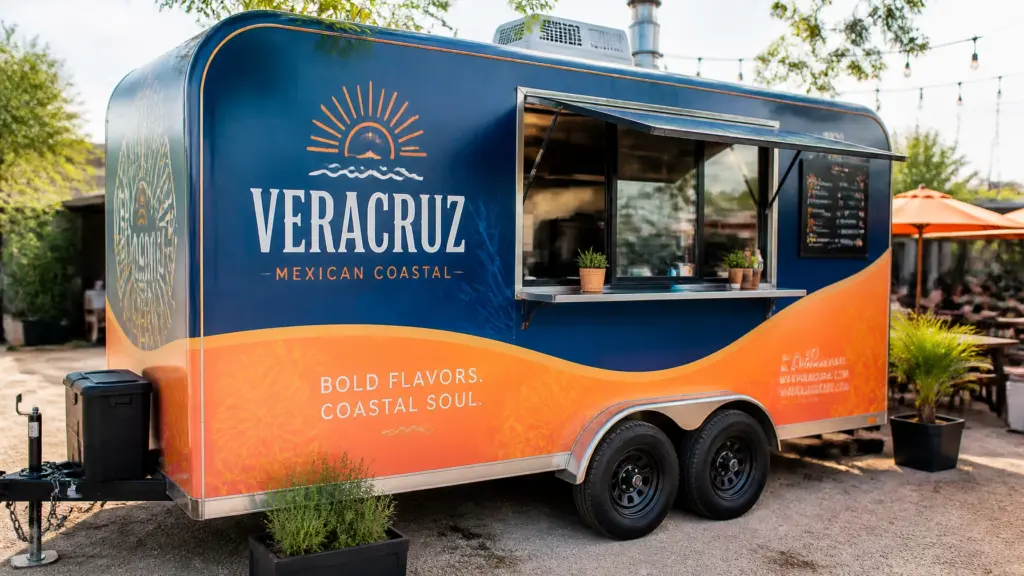
While many manufacturers still produce blocky, utility-style trailers, Pourter units feature signature rounded corners. This isn't just for style: it facilitates better aerodynamics and creates a sleeker, more professional brand presence that city councils and park owners prefer.
Full-Unit Wraps:
The new Texas market is more competitive than ever. A simple logo on a white trailer won't cut it. Every Pourter unit comes ready for a full, sleek brand wrap, ensuring that your Type II or Type III kitchen looks as professional as any permanent storefront.
High-Efficiency Engineering:
Whether you are a Type II "cook-and-serve" operation or a Type III "complex prep" kitchen, our units are engineered with high-efficiency electrical and plumbing systems that exceed DSHS requirements. We focus on maximizing every square inch of your 5×10 or 8×20 footprint so you can handle the volume that a statewide market allows.

Preparing for July 1, 2026
The transition to a statewide permit is a fast-growing movement, but it requires preparation. If you are currently operating with a local permit, it will remain valid until the July 1 deadline. However, there will be no "grandfathering" of local permits. Every operator in Texas must be ready to apply for their DSHS license well before the summer of 2026.
Now is the time to audit your current equipment. Does your current trailer meet the rigorous standards of a Type III kitchen? Is your branding ready for the statewide stage? At Pourter, we are helping our clients navigate this transition by building units that are "DSHS-Ready" from day one.
The Lone Star State has finally opened its doors wide for the mobile food industry. By removing the friction of local bureaucracy, HB 2844 allows the best concepts to rise to the top. Whether you are an existing brick-and-mortar looking to expand or an entrepreneur launching your first unit, the future of Texas mobile food is bright, unified, and ready for action.