
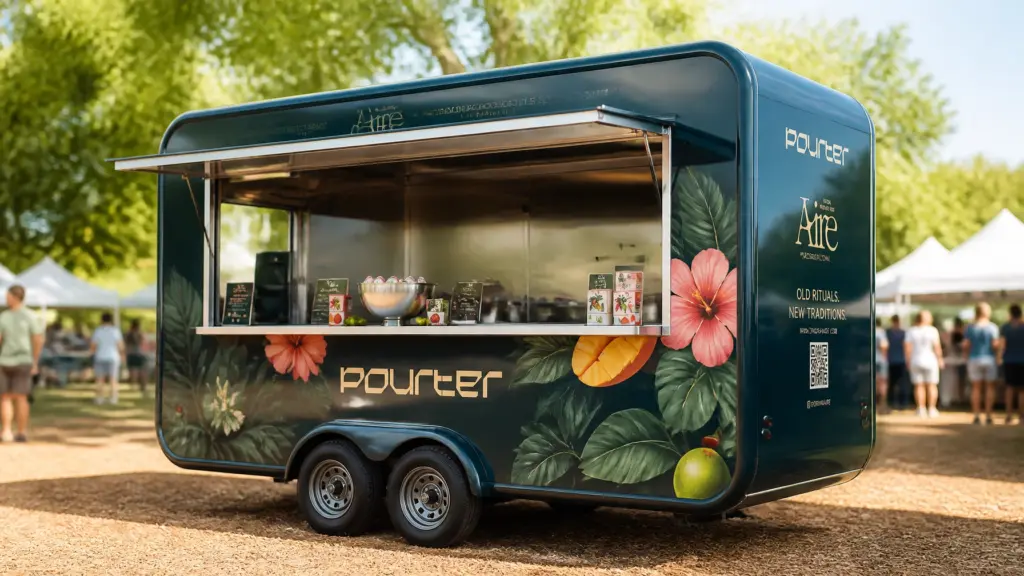
INTRODUCTION. Pourter, a premier manufacturer of custom-built mobile food and beverage units, has become a cornerstone of the burgeoning mobile hospitality sector by offering a strategic alternative to traditional motorized food trucks. As the industry evolves, a fast-growing segment of entrepreneurs and established brick-and-mortar restaurants is pivoting toward custom trailers to anchor their expansion efforts. This shift is driven by a focus on operational stability, long-term ROI, and the elimination of the mechanical vulnerabilities inherent in self-powered vehicles. For high-volume operators, the transition from a truck to a custom food trailer represents a move toward a more resilient and scalable business model.
The Mechanical Liability: Ending the Single Point of Failure
The most significant challenge facing traditional food truck operators is the integration of the kitchen and the drivetrain. In a standard food truck, the entire business is dependent on the health of a single engine. When a motorized unit requires mechanical repair: whether for a transmission issue, an alternator failure, or routine engine service: the entire kitchen is sidelined. For a popular brand, a week of downtime can result in thousands of dollars in lost revenue and missed event opportunities.
Custom trailers solve this problem through separation. By decoupling the culinary workspace from the automotive component, operators gain a level of flexibility that motorized trucks cannot match. If a towing vehicle requires maintenance, the business remains operational; any truck with the appropriate towing capacity can move the trailer to its destination. This stability is why many multi-unit restaurant groups are choosing bar and beverage trailers over motorized vans to ensure their brand activations remain on schedule regardless of mechanical setbacks.

Spatial Efficiency: More Kitchen, Less Cab
One of the most immediate advantages of a custom trailer is the significant increase in usable interior square footage. In a motorized food truck, a substantial portion of the vehicle’s footprint is permanently occupied by the driver’s cab, the steering column, and the engine housing. This space is effectively wasted during hours of operation, serving no purpose for food preparation or service.
A Pourter custom trailer maximizes every inch of its frame for production. Because there is no driver’s compartment, the kitchen can extend the full length of the unit, allowing for larger prep areas, more cold storage, and additional specialized equipment like full-sized pizza ovens or multi-tap draft systems. This increased capacity is a staple requirement for high-volume food trailers that must serve hundreds of customers during a short festival window. The layout efficiency of a trailer allows for better staff flow and higher throughput, directly impacting the bottom line.
The Insurance Advantage: Lower Premiums and Simplified Compliance
Insurance costs for mobile food businesses have seen a steady rise, but trailers consistently offer a more cost-effective path to coverage. A motorized food truck requires a comprehensive commercial auto policy that includes high-limit liability for the vehicle itself, as it is a multi-ton machine moving through public streets. Additionally, the specialized kitchen equipment must be insured as part of that same complex policy.
In contrast, a custom trailer is often classified as a towable unit, which typically results in lower insurance premiums. The liability for moving the unit is often covered by the towing vehicle’s policy, while the trailer itself is insured for its physical value and its specific business operations. For entrepreneurs looking to minimize overhead, the reduced insurance burden of a trailer: combined with the fact that trailers do not require the same rigorous smog or emissions testing as aging trucks: makes them a far more attractive financial proposition.

Longevity and Resale Value
The lifespan of a motorized food truck is limited by the wear and tear on its engine and chassis. A truck with 100,000 miles and a decade of use often loses a significant portion of its resale value, even if the kitchen inside is perfectly maintained. The depreciation of the automotive components drags down the value of the culinary assets.
Custom trailers, however, are built for longevity. Without an internal combustion engine to maintain or replace, the primary structure of a Pourter trailer remains robust and functional for decades. The focus is on the quality of the build and the durability of the materials. Because the trailer does not "age" in the same way a truck does, it holds its value much more effectively. When it comes time to upgrade or pivot concepts, an established brand can often sell a used Pourter unit for a premium, as the buyer is investing in a high-quality, mobile kitchen rather than a high-mileage vehicle.
Scalability for Multi-Unit Operations
For multi-unit restaurant groups and fast-growing franchises, trailers provide a level of scalability that motorized fleets cannot. Managing a fleet of ten food trucks means managing ten engines, ten transmissions, and ten sets of tires. It is a logistics intensive operation that requires dedicated mechanical oversight.
A trailer-based model allows for a more streamlined fleet management strategy. A single heavy-duty truck can manage the movement of multiple trailers across different event sites. This "hub and spoke" model is particularly effective for brand activations and semi-permanent installations where a unit may sit at a high-traffic location for several weeks at a time. The ability to drop the trailer and use the towing vehicle for other logistics: like hauling supplies or moving other units: creates a level of operational efficiency that is impossible with a fleet of trucks.

Brand Identity and Aesthetic Impact
In the competitive landscape of mobile retail and dining, visual impact is a key driver of customer engagement. Pourter units are distinguished by their signature rounded corners and sleek, modern silhouettes. Unlike the boxy, industrial look of traditional food trucks, these units are designed to function as high-end brand extensions.
Every unit leaves the facility with a professional, full-unit wrap, ensuring that the branding is integrated into the very fabric of the design. This level of polish is essential for businesses looking to transition from brick-and-mortar locations into the mobile space without sacrificing their premium image. Whether it’s a coffee trailer at a corporate campus or a luxury retail unit at a high-end mall, the aesthetic consistency of a Pourter trailer ensures the brand remains a popular and trusted destination for consumers.

Conclusion: The Future of Mobile Hospitality
The transition from motorized food trucks to custom trailers is not merely a trend; it is a calculated move toward a more sustainable and profitable future for the mobile industry. By prioritizing space, reducing mechanical risk, and optimizing for long-term ROI, operators are positioning themselves to better serve their communities and grow their brands. Pourter continues to lead this evolution, providing the tools and craftsmanship necessary for entrepreneurs to succeed on their own terms. If you are ready to expand your footprint and leave the engine maintenance behind, our team is ready to help you design a custom solution that moves your business forward.