
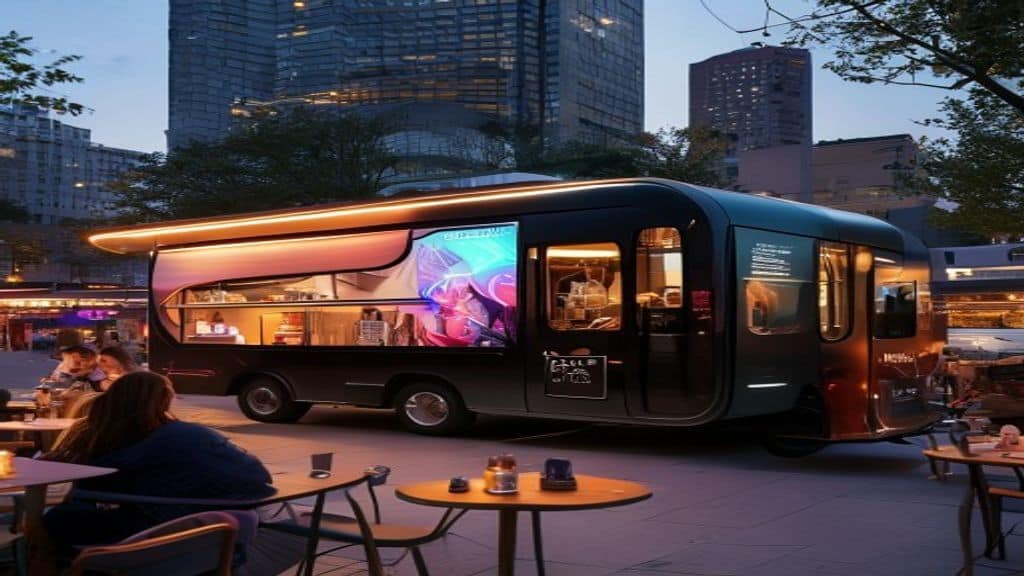
INTRODUCTION Pourter, a cornerstone of the custom mobile manufacturing industry, is leading a transformative shift in how food and beverage entrepreneurs approach mobile power. As urban centers become increasingly sensitive to environmental impact and noise pollution, the traditional gas-powered generator: once a staple of the industry: is rapidly becoming an operational liability. For established brick-and-mortar brands and ambitious entrepreneurs alike, the transition to lithium battery power is not merely an upgrade; it is a strategic repositioning that unlocks new markets, slashes overhead, and secures long-term compliance in a tightening regulatory landscape.
The Silent Revolution: Solving the Noise Problem
In the competitive world of mobile hospitality, location is everything. However, the most lucrative locations: high-end residential neighborhoods, bustling outdoor malls, and historic downtown districts: are also the most sensitive to noise. Traditional generators produce a constant, industrial drone that can reach 70 to 80 decibels, often violating the strict noise codes enforced in cities like New York and Los Angeles.
A battery powered food trailer operates in near-total silence. By replacing the internal combustion engine with a high-capacity lithium iron phosphate (LiFePO4) system, Pourter units eliminate the mechanical roar that often leads to resident complaints and municipal fines. In New York City, for instance, "unreasonable noise" during late-night hours can trigger heavy penalties under the Administrative Code. A silent unit allows you to operate during the most profitable "after-hours" windows without the fear of a 311 complaint shutting down your service.

Fume-Free Dining: Enhancing the Customer Experience
The smell of burning gasoline and the sight of exhaust plumes are the antithesis of a premium dining experience. For brands focused on high-quality coffee, craft cocktails, or artisanal cuisine, the environmental "exhaust" of a generator actively degrades the product.
When you utilize a battery powered food cart or trailer, you create a pristine environment for your customers. There is no odor of unburnt fuel drifting toward the service window and no heat shimmering off an external engine. This clean operation allows Pourter units to move into spaces that were previously off-limits, including:
- Indoor Stadium Concourses: Where exhaust ventilation is impossible.
- Luxury Hotel Courtyards: Where air quality and tranquility are paramount.
- Corporate Atriums: For high-end brand activations and employee appreciation events.
By removing the physical and sensory barriers of a generator, you invite customers to linger longer and engage more deeply with your brand.
The Economic Edge: 1/10th the Operating Cost
While the initial investment in a lithium power system is higher than a standard gas generator, the long-term ROI is staggering. Research indicates that the daily energy cost of running a lithium-powered trailer: when charged at a home base or commissary: is roughly one-fifth to one-tenth the cost of purchasing gasoline for a generator.
Beyond fuel savings, lithium systems are virtually maintenance-free. Traditional generators require frequent oil changes, spark plug replacements, and fuel filter swaps. They are prone to mechanical failure under the heavy, continuous load required for commercial refrigeration and cooking equipment. A Pourter lithium system has no moving parts, no fluids to leak, and a lifespan that can span up to 8,000 charge cycles: providing over a decade of reliable service.
%20with%20a%20glowing%20digital%20interface%20inside%20a%20custom%20food%20trailer.%20The%20interface%20shows%20energy%20levels%20and%20power%20consumption%20in%20a%20clean%2C%20modern%20UI.%20The%20wiring%20is%20organized%20and%20professional%2C%20reflecting%20the%20high-end%20R%26D%20at%20Pourter.?width=1280&height=720&nologo=true)
Future-Proofing Against "No-Idle" and Emission Zones
The regulatory tide is turning. Cities across the United States are tightening anti-idling laws and exploring "Green Zones" where internal combustion engines are restricted. In California, the Air Resources Board (CARB) has already implemented strict 5-minute idling limits for diesel vehicles.
By investing in a custom food trailer with integrated battery power, you are future-proofing your business. You won't have to scramble to retrofit your unit when a city council passes a new ordinance; you will already be the compliant, preferred vendor for city-sponsored events and public parks. This stability is essential for multi-unit operators and chain restaurants looking to expand their footprint without the risk of geographic restrictions.
The Pourter Advantage: Engineering Meets Design
At Pourter, we don't just "drop in" a battery. Our R&D team treats the power system as the heart of the unit’s design. We specialize in creating high-performance, mobile environments that feel like a permanent extension of your brand.
Every Pourter unit is characterized by:
- Rounded, Aerodynamic Corners: Avoiding the blocky, DIY look of traditional trailers.
- Sleek Full-Unit Wraps: Using high-grade vinyl and custom graphics that turn your trailer into a mobile billboard.
- Integrated Tech: Monitoring your power levels, refrigeration, and POS systems from a single, intuitive interface.

Scaling Your Business with Confidence
For the entrepreneur, lithium power removes "generator anxiety." You no longer have to worry if the generator will start on a cold morning or if you’ll run out of gas mid-rush. You simply arrive, open the service window, and start generating revenue.
For the established brick-and-mortar looking to expand, these units offer a low-risk way to test new markets. With available financing options, the transition to a high-tech, battery-powered fleet is more accessible than ever. You can focus on what you do best: serving your customers: while your Pourter unit handles the rest in total silence.
Conclusion: The Move to Modern Mobility
The choice between a noisy, fuming generator and a silent, efficient lithium battery system is clear. As city regulations tighten and customer expectations rise, the "old way" of powering mobile food is becoming a liability.
If you are ready to elevate your mobile operation with a unit that is as reliable as it is beautiful, it’s time to explore the Pourter process. From initial design to final wrap, we build the trailers that are defining the future of the industry.
