
Quick Summary
- Entry builds: Plan on approximately $35,000–$50,000 for a compact, lightly customized unit.
- Mid-tier builds: Expect roughly $45,000–$85,000 for expanded layouts, stronger finishes, and more equipment.
- Flagship custom builds: Budget $85,000–$150,000 or more for complex kitchens, advanced power systems, premium branding, and high-volume service.
- The most important specifications are footprint, kitchen workflow, electrical capacity, water systems, hood and ventilation, and storage.
- A qualified builder should understand health department plan review, fire code, plumbing, electrical systems, towing, and local permits.
- Seattle and Denver each have different licensing and inspection requirements. Confirm local rules before finalizing a design.
- Pourter builds rounded-corner mobile food and beverage units with full-unit wrap graphics, custom layouts, and a guided design-to-delivery process.
Meta description: Compare food service trailers near me by 2026 cost tiers, key specifications, builder credentials, Seattle and Denver requirements, and questions to ask before signing.
INTRODUCTION
Food service trailers are a practical expansion platform for established restaurants, fast-growing chains, caterers, coffee shops, bars, and first-time entrepreneurs. If you are searching for food service trailers near me, the real buying decision is not simply which trailer looks best; it is which unit can support your menu, pass inspection, serve efficiently, and represent your brand in every location.
The market now includes compact coffee trailers, concession trailer builds, custom food trucks, mobile bars, and larger high-volume kitchens. The right choice depends on your operating model, service volume, towing capacity, permitting jurisdiction, and long-term growth plan.
How much does a custom food trailer cost in 2026?
The following ranges are useful planning figures for a new build. Your final price will depend on equipment, materials, utility systems, finish level, shipping, permitting support, and the complexity of your menu.
Entry tier: approximately $35,000–$50,000
An entry build is usually a compact unit with a straightforward service model. It may include:
- A 5×10 or similar compact footprint
- Basic plumbing and electrical systems
- Stainless countertops
- Three-compartment and hand sinks
- Internal lighting
- A service window
- Essential storage
- Limited cooking equipment
Pourter’s Urban Trailer collection starts at $35,000 and is designed for entrepreneurs who need an efficient, approachable platform for a café, beverage concept, or light food operation.
Mid-tier: approximately $45,000–$85,000
Mid-tier builds provide more layout flexibility and a broader equipment package. This range may include:
- Larger refrigeration capacity
- More extensive cooking equipment
- Custom counters and service areas
- Upgraded finishes
- Heating and air conditioning
- Digital menu displays
- Expanded water and power systems
- Brand-specific exterior graphics
A classic or vintage unit may also fall into this category. Pourter’s Classic and Vintage trailers start at $45,000 and combine a distinctive exterior with modern mobile-service infrastructure.
Flagship custom builds: approximately $85,000–$150,000-plus
Flagship builds are designed for multi-unit operators, established restaurants, stadium activations, and high-volume service. They may include:
- Multiple cooking stations
- Larger refrigeration and freezer systems
- Commercial hood and fire suppression
- Higher-capacity electrical or battery systems
- Specialized bar, draft, or self-pour equipment
- Premium interior finishes
- Complex branding and digital technology
- Redundant storage and utility capacity
These numbers are budgeting ranges, not guaranteed quotes. Ask each builder to separate the trailer, equipment, branding, delivery, taxes, permitting support, and site-related costs.

What specifications actually matter?
A trailer can look impressive and still operate poorly. The following specifications have the greatest effect on productivity, compliance, and ownership cost.
What footprint should a food trailer have?
Start with your menu and service volume, then work backward into the footprint. A compact 5×10 layout may suit espresso, packaged foods, limited-prep menus, or beverage service. Larger formats provide room for cooking, refrigeration, prep, and staff movement.
Do not measure only the exterior. Ask for the usable interior dimensions, door and window locations, axle placement, tongue length, gross vehicle weight rating, and total towing length. A trailer that fits the kitchen but exceeds your vehicle’s towing capacity is not a practical purchase.
How should the kitchen line be arranged?
The kitchen line should follow the movement of food and staff:
- Receive and store ingredients.
- Prepare and portion food.
- Cook or assemble orders.
- Pass completed orders through the service area.
- Clean, sanitize, and manage waste.
Avoid placing high-use equipment across the trailer from the prep area. Every unnecessary step slows service and increases congestion. Ask the builder to show the layout at working scale, including staff positions, refrigerator doors, sink access, and customer queues.
How much power does the trailer need?
Power requirements should be calculated from the complete equipment schedule, not estimated from a standard package. Refrigeration, induction cooking, water heaters, lighting, POS systems, ventilation, HVAC, and digital displays all draw power.
Ask for:
- Total electrical load
- 120V and 240V circuit requirements
- Shore power specifications
- Generator requirements, if applicable
- Battery capacity and recharge time
- Emergency shutoffs and panel access
Pourter’s Urban page highlights lightweight battery-powered options, which can be useful in locations where noise, emissions, or generator idling create operational challenges.
What water and plumbing systems are required?
A compliant trailer generally needs a handwashing sink, a three-compartment sink, fresh-water storage, wastewater storage, a water heater, pumps, and accessible plumbing shutoffs. Exact requirements vary by jurisdiction and menu.
Your builder should provide tank capacities, plumbing diagrams, drain locations, winterization instructions, and a clear explanation of how the unit connects to a commissary or approved water and waste service.
Does the trailer need a hood and ventilation?
If your menu includes grease-producing cooking, open flame, griddles, fryers, or ranges, you may need a commercial hood, exhaust fan, make-up air, fire suppression, and clearance from combustible materials.
Do not add a fryer late in the process without revisiting the hood design. Ventilation affects the roof structure, electrical demand, fire system, interior temperature, and permitting timeline.
How much storage is enough?
Storage is often underestimated. Plan for dry goods, packaging, smallwares, cleaning products, employee items, backup inventory, and waste handling. Include under-counter storage, overhead cabinets where appropriate, shelving, and dedicated locations for propane or electrical equipment.
A good layout protects your most valuable resource: service speed.
What should I look for in food service trailers near me?
When comparing builders, look beyond online listings for food trailers for sale. A low advertised price may exclude essential equipment, compliance work, delivery, or brand finishing.
Evaluate each builder against these standards:
- Relevant experience: Can they show completed food, beverage, coffee, or concession units?
- Code knowledge: Do they understand the health, fire, plumbing, electrical, and structural requirements in your operating state?
- Plan documentation: Will they provide equipment schedules, utility drawings, and plans for local review?
- Transparent pricing: Are allowances, exclusions, change orders, and delivery costs clearly stated?
- Construction quality: Ask about chassis, insulation, flooring, wall finishes, roof sealing, and service-window construction.
- Warranty support: Get warranty coverage for structure, plumbing, electrical systems, appliances, and finish work in writing.
- Production timeline: Pourter’s stated build process is approximately 12–16 weeks after design and project approval, although permitting and revisions may add time.
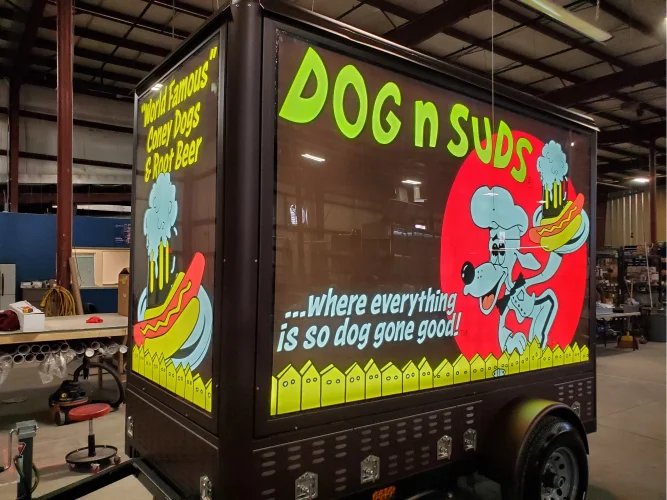
- Brand integration: The exterior should function as a mobile storefront, not a blank utility box.
Pourter’s design and build process includes planning, design, construction, delivery, and training. Its approach also emphasizes rounded corners and full-unit wrap graphics rather than a basic logo applied to a hard-edged trailer.

What should operators in Seattle know?
Seattle operators must coordinate business licensing, location permissions, health approval, fire requirements, and Washington State Labor & Industries review.
The City of Seattle’s mobile food vending guidance explains that businesses need the appropriate city and state licenses. Food trailers and trucks may also require L&I plan review and inspection before King County can complete its operating approval.
Important planning items include:
- Washington business registration
- Seattle business license
- King County mobile food service permit
- L&I approval for applicable trailers
- Fire permits for propane, solid fuel, open flame, or charcoal
- Commissary or approved alternative arrangements
- Street-use permits for public right-of-way vending
- Location-specific permissions for private property
If you are searching for coffee trailers near me in Seattle, confirm whether the unit will prepare espresso, heat food, or serve only packaged products. The menu can change ventilation, plumbing, power, and health review requirements.
What should operators in Denver know?
Denver requires a Retail Food Establishment – Mobile license for food trucks, trailers, and carts. New operators generally submit a mobile plan review packet, complete health review through the Denver Department of Public Health & Environment, and pass the required physical inspection.
Denver’s mobile retail food licensing guidance should be checked before construction begins. Units using propane or other flammable materials may also need a Denver Fire Department flammable operational permit and annual inspection requirements.
For Denver, ask your builder specifically about:
- Propane cylinder capacity and storage
- Hood suppression documentation
- Fire inspection scheduling
- Health plan review drawings
- Water, wastewater, and handwashing systems
- Statewide Colorado licensing implications beginning in 2026
Whether you are searching for a food trailer near me in Denver or comparing custom food trailers near me across the region, use local permitting requirements as a design input, not as a final-stage correction.
What questions should I ask before signing?
Before approving a proposal, ask the builder:
- What exactly is included in the quoted price?
- Which appliances, tanks, sinks, hood systems, and electrical components are included?
- Who prepares the plans for health, fire, and building review?
- Which agency requirements does the design currently address?
- What happens if an inspector requests a change?
- What is the realistic production timeline?
- When are design decisions locked?
- How are change orders priced and approved?
- What warranty applies to the chassis, structure, plumbing, electrical system, and equipment?
- Where will service and warranty repairs be handled?
- What towing vehicle and hitch specifications are required?
- Does the design include full wrap graphics and durable exterior materials?
- Are branding, menus, lighting, and digital displays included or optional?
- What training is provided at delivery?
- Can I speak with an operator who owns a comparable unit?
Get the answers in writing. A clear proposal protects your budget and gives the builder a reliable production target.
How can Pourter support a mobile food expansion?
Pourter builds custom mobile food and beverage units for entrepreneurs, brick-and-mortar operators, restaurant groups, coffee brands, bars, and retail activations. The portfolio includes compact urban trailers, food-service units, mobile bars, coffee concepts, and self-pour systems.
Explore the Urban Trailer collection, Classic and Vintage trailers, or Bar and Beverage Trailers to compare starting points for your concept.
For additional market and permitting context, read Pourter’s Nashville mobile vending guide and 2026 NYC street vending legal guide.
The strongest trailer purchase is not necessarily the largest or least expensive. It is the unit that matches your menu, passes local review, supports efficient service, and gives your brand a professional presence wherever it operates.