
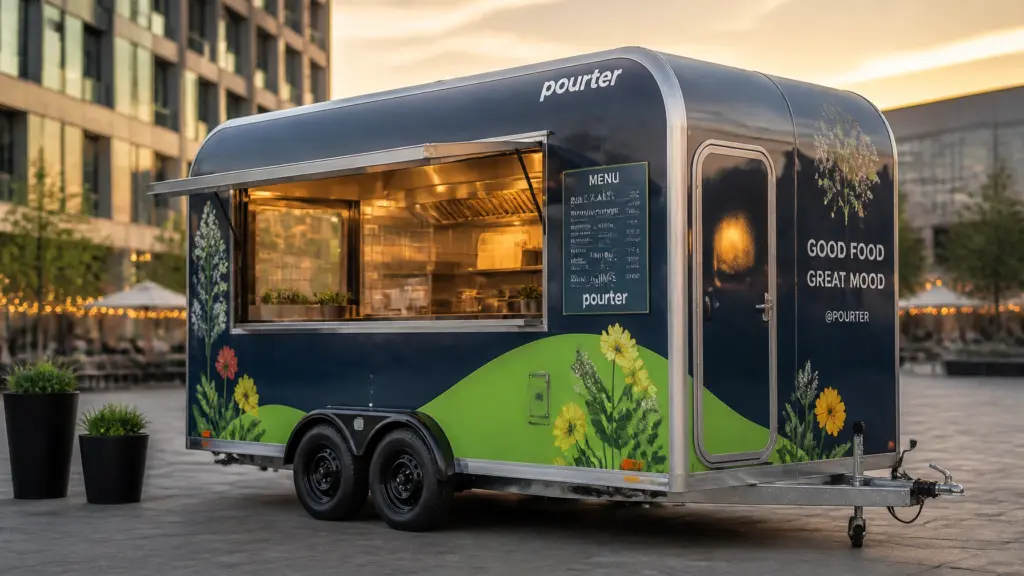
INTRODUCTION. Pourter, a leading manufacturer of custom mobile food and beverage units, has become a cornerstone for entrepreneurs and established restaurant brands looking to expand their physical footprint through high-performance mobile assets. As the industry moves into 2026, the demand for custom food trailers has surged, driven by a market that values agility, lower overhead, and direct-to-consumer engagement. Whether you are a historic neighborhood bistro or a fast-growing regional chain, the transition to a mobile platform requires a strategic understanding of engineering, logistics, and regulatory compliance.
Entering the mobile food industry is no longer just about buying a trailer and hitting the road; it is about building a scalable business on wheels. In 2026, the difference between a successful launch and a stalled project lies in the details of the build. Here are the 10 essential things you must know before starting your custom food trailer project.
1. The Menu-First Rule of Design
Your menu is the primary blueprint for your entire unit. In the manufacturing world, equipment dictates the layout, and the menu dictates the equipment. Before a single piece of steel is cut, you must have a finalized list of every dish you plan to serve. This determines your refrigeration needs, prep space, and the specific ventilation required for cooking equipment. For instance, a unit designed for draft self-pour beverages requires vastly different internal plumbing and weight distribution than a high-volume taco trailer.
2. Navigating the 16–25 Foot Sweet Spot
Data from the 2026 market indicates that trailers between 16 and 25 feet dominate the industry, accounting for nearly 50% of all new builds. This size range offers a balanced ratio of internal capacity to maneuverability. A 20-foot trailer provides enough space for a four-person crew to operate efficiently without requiring a heavy-duty semi-truck for transport. At Pourter, we focus on maximizing this footprint with custom builds that utilize every square inch for productivity while maintaining the sleek, rounded corners that define our brand aesthetic.
3. Advanced Electrical Load Planning
Modern food trailers are tech-heavy environments. In 2026, standard 30-amp service is often insufficient for units running high-capacity induction cooktops, multiple refrigeration units, and digital POS systems. You must calculate your total amperage draw during peak service hours. Many of our clients are now opting for 50-amp or even 100-amp panels to future-proof their operations. This ensures that you can run your espresso machines and fryers simultaneously without tripping breakers during a busy lunch rush.

4. Health Code and NSF Compliance
Health code compliance is a non-negotiable pillar of the mobile food industry. Most jurisdictions in 2026 follow strict NSF standards and require a specific sink configuration: a dedicated handwashing sink and a three-compartment sink for warewashing. Additionally, the "15% rule" for waste tanks: where the gray water tank must be at least 15% larger than the fresh water tank: is a standard requirement to prevent overflows. Working with a manufacturer like Pourter ensures that your plumbing system is built to pass inspection in any city, from Nashville to Austin.
5. The Power of the Full-Unit Wrap
In a crowded market, your trailer is your most valuable marketing asset. Traditional logos on white backgrounds are being replaced by high-impact, full-unit wraps that turn the trailer into a mobile billboard. 2026 trends favor vibrant, storytelling graphics that cover the entire exterior, including the rounded corners of the unit. This level of branding, seen in projects like the Sirenia Coffee and Wine Bar, builds immediate credibility and attracts customers from across a festival or city plaza.

6. Sustainable Energy and Battery Integration
Sustainability is no longer an optional feature; it is a business strategy. Many cities are tightening noise and emission regulations, making traditional loud generators a liability. In 2026, we are seeing a significant shift toward lithium-ion battery banks and solar-assist systems. These "quiet-tech" solutions allow you to operate in noise-sensitive areas, such as luxury malls or outdoor weddings, without the fumes or roar of a gas engine. This investment often pays for itself through reduced fuel costs and expanded access to exclusive event venues.
7. Workflow Optimization and Staff Safety
The interior of your trailer should be designed like a high-end commercial kitchen. This means establishing a clear "work triangle" between the prep area, the cookline, and the service window. Efficient movement reduces service times and increases ticket volume. Furthermore, safety features such as UL-listed fire suppression systems and non-slip, easy-to-clean flooring are essential for protecting your staff and your investment. A well-designed interior allows your team to focus on quality rather than navigating a cramped space.

8. Integrated Technology and IoT
The "smart" food trailer has arrived. 2026 builds frequently include integrated technology such as digital menu boards, remote temperature monitoring for refrigeration, and IoT-enabled equipment diagnostics. These systems allow owners to track inventory and equipment health from their smartphones. By integrating these tools during the manufacturing phase, you avoid the clutter of aftermarket wires and ensure a professional, seamless look at the service window.
9. Budgeting for the Total Cost of Ownership
A custom food trailer is a significant capital expenditure, but the initial build cost is only one part of the financial picture. Smart entrepreneurs budget for the total cost of ownership, which includes insurance, permits, commissary fees, and routine maintenance. While trailers generally have lower acquisition costs than food trucks, investing in high-quality materials: like stainless steel interiors and durable chassis: reduces long-term repair costs and increases the resale value of the unit.
10. Choosing a Manufacturing Partner
The most critical decision you will make is selecting a manufacturer that understands your vision. You need a partner who provides more than just a trailer; you need a team that understands the engineering and design required for a commercial-grade mobile unit. Look for manufacturers with a documented history of successful builds for reputable brands, such as Condado Tacos or Maxwell Air Force Base. A professional manufacturer will guide you through the complexities of lead times, logistics, and final certification.

As you look toward 2026, the opportunities in the mobile food and beverage sector are vast. By focusing on high-quality construction, advanced technology, and striking aesthetics, you can create a mobile unit that serves as a powerful extension of your brand. Whether you are launching a new concept or taking an existing restaurant on the road, these ten points will serve as your roadmap to a successful build.